


מַה נִּשְׁתַּנָּה הַלַּיְלָה הַזֶּה מִכָּל הַלֵּילוֹת?... שֶׁבְּכָל הַלֵּילוֹת אָנוּ אוֹכְלִין בֵּין יוֹשְׁבִין וּבֵין מְסֻבִּין - הַלַּיְלָה הַזֶּה כֻּלָּנוּ מְסֻבִּין.
What differentiates this night from all [other] nights?... On [all] other nights, we eat either sitting or reclining; tonight we all recline.
- What does it mean to recline, and when do we do it?
(ח) כיצד סדר הסעודה אורחין נכנסין ויושבין על גבי ספסלים וע"ג קתדראות עד שיכנסו כולן נכנסו כולן ונתנו להם לידים כל אחד ואחד נוטל ידו אחת מזגו להם את הכוס אחד ואחד מברך לעצמו הביאו להם פרפריות כל אחד ואחד מברך לעצמו עלו והסיבו נתנו להם לידים אע"פ שנוטל ידו אחת נותן לשתי ידיו מזגו להם את הכוס אע"פ שבירך על הראשונה מברך על השניה הביאו לפניהם פרפריות אע"פ שבירך על הראשונה מברך על השניה ואחד מברך לכולן [הביאו לאחד] שלש פרפריות אין [לו] רשות ליכנס רבן שמעון בן גמליאל אומר מנהג גדול היה בירושלים פורסין מטפחות על גבי פתח בזמן שהמטפחות פרוסים אורחין נכנסין נסתלקו אין רשות לאורחין ליכנס ועוד מנהג אחר היה בירושלים מוסר סעודה לטבח נתקלקל דבר בסעודה עונשין את הטבח הכל לפי כבוד בעה"ב והכל לפי האורחין.
(8) What is the order of a meal? Guests come in and sit down on top of benches and on top of soft seats until all [guests] come in. [After] all [guests] came in, and they (i.e. the servants) have given them [water to wash] hands, every one of them washes one hand. [When] they (i.e. the servants) poured them a cup [of wine], each one [of the guests] makes a Beracha (blessing) [for the wine] himself. [When] they (i.e. the servants) brought them appetizers each one [of the guests] makes a Beracha [for the appetizers] himself. [After the guests] have gotten up [from their temporary seats, moved to the main eating hall] and reclined [on sofas], they [i.e. the servants] gave them [water to wash their] hands [again]. Even though he already washed one hand, [still] he [has to] wash both of his hands [again]. [After] they (i.e. the servants) poured them a cup [of wine again], even though he already made a Beracha on the first [cup of wine], he makes [another] Beracha on the second [cup of wine]. [After] they (i.e. the servants) brought in front of them [more] appetizers, even though he [already] made a Beracha on the first [set of appetizers], he makes a [new] Beracha on the second [set of appetizers], but [this time] one [person] makes a Beracha for all of them. [A person] who comes [late] after three appetizers [have been served] does not have permission to enter [the dining hall]. Rebbi Shimon Ben Gamliel says, “There was a great custom in Yerushalayim (Jerusalem). They (i.e. house owners) would hang a towel above the door. While the towel is hanging guests can come in. [After] the towel has been removed guests are not permitted to come in [anymore]. And there was another custom in Yerushalayim. They (i.e. house owners) would give over [the responsibility for] a meal to a butcher (i.e. a caterer). If something went wrong during the meal they would punish the butcher [monetarily]. Everything according to the honor of the owner (i.e. the host) and everything according to the honor of the guests.”
בני חבורה שהיו מסובין לשתות ועקרו רגליהן לצאת לקראת חתן או לקראת כלה כשהן יוצאין אין טעונין ברכה למפרע כשהן חוזרין אין טעונין ברכה לכתחלה בד"א שהניחו שם זקן או חולה אבל לא הניחו שם לא זקן ולא חולה כשהן יוצאין טעונין ברכה למפרע כשהן חוזרין טעונין ברכה לכתחלה
If the members of a company were reclining to drink, and they [precipitately] arose(7) to go out to welcome a bridegroom or a bride, when they go out, they do not need [to recite] a benediction beforehand;(8) when they return, they do not need [to recite] a benediction at the beginning.(9)
חברים שהיו מסובין ועקרו רגליהם לילך לבית הכנסת או לבית המדרש כשהן יוצאין אין טעונין ברכה למפרע וכשהן חוזרין אין טעונין ברכה לכתחלה אמר רבי יהודה
If companions were reclining, and they [precipitately] arose to go to the synagogue or to the Beth Hamidrash, when they go out they do not need a blessing beforehand, and when they return they do not need a blessing at the beginning.
חברים שהיו מסובין לשתות יין ועקרו רגליהן וחזרו אין צריכין לברך תנו רבנן בני חבורה שהיו מסובין וקדש עליהן היום מביאין לו כוס של יין ואומר עליו קדושת היום ושני אומר עליו ברכת המזון דברי רבי יהודה
If companions were reclining to drink wine and they arose [departed] and returned, they need not recite a blessing [anew].(3)
- We see from the above sources (3-5) that reclining does not happen only on Pesach, so what are we to make of the idea that at least for the Rabbis, leaning was not only associated with the Pesach Seder?
- How does this possibility impact our understanding of leaning/reclining at the Pesach Seder?
- What is the connection between leaning/reclining and freedom?
- Why is it that only a certain type of leaning/reclining works?
- How can reclining not be reclining?
From the Pesach Guide, 5771, The United Synagogue
(ג) [אורחין שהיו מסובין אצל בעה"ב וקדש עליהם היום עקרו עם חשיכה לבית המדרש חזרו ומזגו להם את הכוס אומרים עליו קדושת היום] דברי ר' יהודה ר' יוסי אומר אוכל והולך עד שתחשך....
(3) “[If] guests have been reclining [and eating] by the owner of the house (i.e. a private person) and the day was over (i.e. Friday was over and Shabbat began), as soon as it gets dark they interrupt [their meal, say Birkat Hamazon (Grace After Meals) and go] to the Bet Midrash (Study Hall) [to pray]. [After that] they come back [from the Bet Midrash to the house], they (i.e. the servants) pour for them a cup [of wine and] they say over it Kiddush (Sanctification) of the day (i.e. Friday night Kiddush).” [These are] the words of Rebbi Yehudah. Rebbi Yossi says, “He continues eating [his Friday afternoon meal] from when it gets dark [and on].”
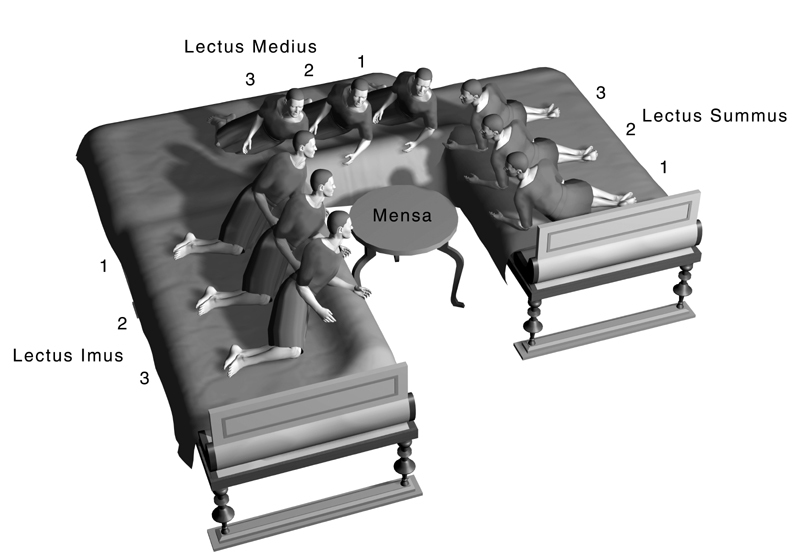
(ה) כיצד סדר ההסיבה בזמן שהן שתי מטות גדול מיסב בראש [של ראשונה] ושני לו למטה הימנו ובזמן שהן שלש מטות גדול מיסב [בראש של אמצעית] שני לו למעלה הימנו שלישי לו למטה הימנו כך היו מסודרין והולכין.
(5) What is the order of [the beds in the room used for] reclining [during eating]? At the time when there are [only] two beds, the [most] senior [person]4 reclines on top of the first [bed] and the second one to him [in seniority reclines] below him (i.e. his head is at the first person’s feet). And at the time when there are three beds, the [most] senior [person] reclines on top of the middle [bed], the second one to him [in seniority reclines] above him, [and] the third one to him [in seniority] reclines below him. [If there are more than three people, then] they get ordered in this way (i.e. in groups of three) and on.
ואפילו עני שבישראל לא יאכל עד שיסב.
איתמר: מצה - צריך הסיבה, מרור - אין צריך הסיבה.
יין, איתמר משמיה דרב נחמן: צריך הסיבה, - ואיתמר משמיה דרב נחמן: אין צריך הסיבה.
ולא פליגי, הא - בתרתי כסי קמאי, הא - בתרתי כסי בתראי.
אמרי לה להאי גיסא, ואמרי לה להאי גיסא.
אמרי לה להאי גיסא: תרי כסי קמאי - בעו הסיבה, דהשתא הוא דקא מתחלא לה חירות.
תרי כסי בתראי לא בעו הסיבה - מאי דהוה הוה.
ואמרי לה להאי גיסא: אדרבה, תרי כסי בתראי בעו הסיבה - ההיא שעתא דקא הויא חירות, תרי כסי קמאי לא בעו הסיבה - דאכתי עבדים היינו קאמר.
השתא דאיתמר הכי ואיתמר הכי - אידי ואידי בעו הסיבה.
פרקדן - לא שמיה הסיבה, הסיבת ימין - לא שמה הסיבה, ולא עוד אלא שמא יקדים קנה לוושט ויבא לידי סכנה.
EVEN THE POOREST MAN IN ISRAEL MUST NOT EAT UNTIL HE RECLINES.
It was stated: [For the eating of] the unleavened bread reclining is necessary; for the bitter herbs reclining is not necessary.
[As for the drinking of] the wine, - It was stated in R`Nahman's name [that] reclining is necessary, and it was stated in R`Nahman's name that reclining is not necessary.
Yet they do not disagree: one [ruling] refers to the first two cups, and the other ruling refers to the last two cups.
Some explain it in one direction, others explain it in the other direction.
[Thus:] some explain it in one direction: for the first two cups reclining is necessary, because it is at this point that freedom commences; for the last two cups reclining is necessary, [because] what has been has been.
Others explain it in the contrary direction: on the contrary, the last two cups necessitate reclining, [because] it is precisely then that there is freedom; the first two cups do not necessitate reclining, [because] he is still reciting 'we were slaves.' Now that it was stated thus and it was stated thus, both [the first and the last ones] necessitate reclining.
Lying on the back is not reclining; reclining on the right side is not reclining.
Moreover he may put [his food] into the windpipe before the gullet,(13) and thus endanger himself.
- Here is an explanation of how the Tannaim would reclining during a formal meal (not just on Pesach), followed by a picture showing the Greco-Roman triclinia that these texts refer to.
- How do these sources inform our understanding of leaning during the Pesach Seder?
- Does knowing that this is what was meant by הסיבה change the way you feel about reclining/leaning during your seder?
ספר מהרי"ל )מנהגים( סדר ההגדה
פעם אחת כתב מהר"ש שמצא כתוב בגליון אלפסי שהניח לו אביו מה"ר זעקיל ז"ל, ששמע מפי רבו הר"ר יודא ז"ל דדוקא בימיהם שהיו רגילין בהסיבה בשאר ימות השנה, אז מחוייבין בה בפסח, אבל לדידן שבשאר ימות השנה לא נהגינן בהסיבה, אין לנו לעשותה בלילי פסח, דמה חירות שייך בזה ...?
Sefer Maharil, Minhagim, Seder HaHagaddah
[The obligation to recline applied] specifically in their days, when they were accustomed to recline throughout the year. In that context it was obligatory to do so on Pesach. But in our context, where we never recline the rest of the year, we should not do it on Pesach. What does this have to do with freedom?
R' Ethan Tucker, Category Shifts in Jewish Law and Practice, p. 13, commenting on Sefer Maharil above.