


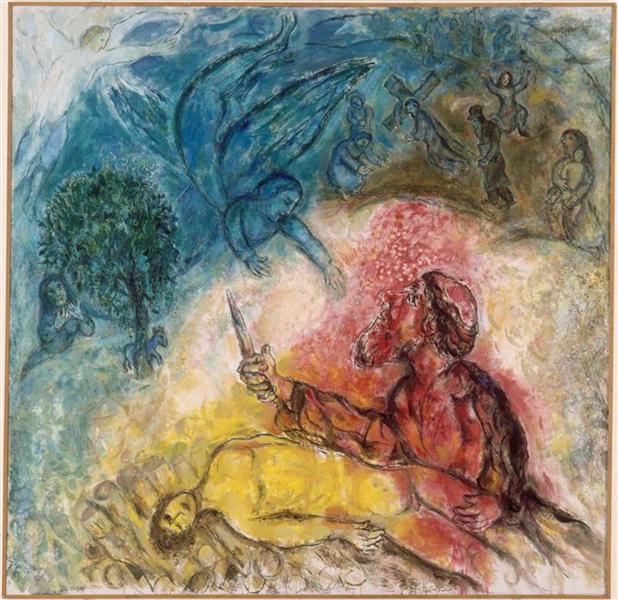
עקדת יצחק
The Binding of Isaac
(א) וַיְהִ֗י אַחַר֙ הַדְּבָרִ֣ים הָאֵ֔לֶּה וְהָ֣אֱלֹהִ֔ים נִסָּ֖ה אֶת־אַבְרָהָ֑ם וַיֹּ֣אמֶר אֵלָ֔יו אַבְרָהָ֖ם וַיֹּ֥אמֶר הִנֵּֽנִי׃ (ב) וַיֹּ֡אמֶר קַח־נָ֠א אֶת־בִּנְךָ֨ אֶת־יְחִֽידְךָ֤ אֲשֶׁר־אָהַ֙בְתָּ֙ אֶת־יִצְחָ֔ק וְלֶךְ־לְךָ֔ אֶל־אֶ֖רֶץ הַמֹּרִיָּ֑ה וְהַעֲלֵ֤הוּ שָׁם֙ לְעֹלָ֔ה עַ֚ל אַחַ֣ד הֶֽהָרִ֔ים אֲשֶׁ֖ר אֹמַ֥ר אֵלֶֽיךָ׃ (ג) וַיַּשְׁכֵּ֨ם אַבְרָהָ֜ם בַּבֹּ֗קֶר וַֽיַּחֲבֹשׁ֙ אֶת־חֲמֹר֔וֹ וַיִּקַּ֞ח אֶת־שְׁנֵ֤י נְעָרָיו֙ אִתּ֔וֹ וְאֵ֖ת יִצְחָ֣ק בְּנ֑וֹ וַיְבַקַּע֙ עֲצֵ֣י עֹלָ֔ה וַיָּ֣קָם וַיֵּ֔לֶךְ אֶל־הַמָּק֖וֹם אֲשֶׁר־אָֽמַר־ל֥וֹ הָאֱלֹהִֽים׃ (ד) בַּיּ֣וֹם הַשְּׁלִישִׁ֗י וַיִּשָּׂ֨א אַבְרָהָ֧ם אֶת־עֵינָ֛יו וַיַּ֥רְא אֶת־הַמָּק֖וֹם מֵרָחֹֽק׃ (ה) וַיֹּ֨אמֶר אַבְרָהָ֜ם אֶל־נְעָרָ֗יו שְׁבוּ־לָכֶ֥ם פֹּה֙ עִֽם־הַחֲמ֔וֹר וַאֲנִ֣י וְהַנַּ֔עַר נֵלְכָ֖ה עַד־כֹּ֑ה וְנִֽשְׁתַּחֲוֶ֖ה וְנָשׁ֥וּבָה אֲלֵיכֶֽם׃ (ו) וַיִּקַּ֨ח אַבְרָהָ֜ם אֶת־עֲצֵ֣י הָעֹלָ֗ה וַיָּ֙שֶׂם֙ עַל־יִצְחָ֣ק בְּנ֔וֹ וַיִּקַּ֣ח בְּיָד֔וֹ אֶת־הָאֵ֖שׁ וְאֶת־הַֽמַּאֲכֶ֑לֶת וַיֵּלְכ֥וּ שְׁנֵיהֶ֖ם יַחְדָּֽו׃ (ז) וַיֹּ֨אמֶר יִצְחָ֜ק אֶל־אַבְרָהָ֤ם אָבִיו֙ וַיֹּ֣אמֶר אָבִ֔י וַיֹּ֖אמֶר הִנֶּ֣נִּֽי בְנִ֑י וַיֹּ֗אמֶר הִנֵּ֤ה הָאֵשׁ֙ וְהָ֣עֵצִ֔ים וְאַיֵּ֥ה הַשֶּׂ֖ה לְעֹלָֽה׃ (ח) וַיֹּ֙אמֶר֙ אַבְרָהָ֔ם אֱלֹהִ֞ים יִרְאֶה־לּ֥וֹ הַשֶּׂ֛ה לְעֹלָ֖ה בְּנִ֑י וַיֵּלְכ֥וּ שְׁנֵיהֶ֖ם יַחְדָּֽו׃ (ט) וַיָּבֹ֗אוּ אֶֽל־הַמָּקוֹם֮ אֲשֶׁ֣ר אָֽמַר־ל֣וֹ הָאֱלֹהִים֒ וַיִּ֨בֶן שָׁ֤ם אַבְרָהָם֙ אֶת־הַמִּזְבֵּ֔חַ וַֽיַּעֲרֹ֖ךְ אֶת־הָעֵצִ֑ים וַֽיַּעֲקֹד֙ אֶת־יִצְחָ֣ק בְּנ֔וֹ וַיָּ֤שֶׂם אֹתוֹ֙ עַל־הַמִּזְבֵּ֔חַ מִמַּ֖עַל לָעֵצִֽים׃ (י) וַיִּשְׁלַ֤ח אַבְרָהָם֙ אֶת־יָד֔וֹ וַיִּקַּ֖ח אֶת־הַֽמַּאֲכֶ֑לֶת לִשְׁחֹ֖ט אֶת־בְּנֽוֹ׃ (יא) וַיִּקְרָ֨א אֵלָ֜יו מַלְאַ֤ךְ יְהוָה֙ מִן־הַשָּׁמַ֔יִם וַיֹּ֖אמֶר אַבְרָהָ֣ם ׀ אַבְרָהָ֑ם וַיֹּ֖אמֶר הִנֵּֽנִי׃ (יב) וַיֹּ֗אמֶר אַל־תִּשְׁלַ֤ח יָֽדְךָ֙ אֶל־הַנַּ֔עַר וְאַל־תַּ֥עַשׂ ל֖וֹ מְא֑וּמָּה כִּ֣י ׀ עַתָּ֣ה יָדַ֗עְתִּי כִּֽי־יְרֵ֤א אֱלֹהִים֙ אַ֔תָּה וְלֹ֥א חָשַׂ֛כְתָּ אֶת־בִּנְךָ֥ אֶת־יְחִידְךָ֖ מִמֶּֽנִּי׃ (יג) וַיִּשָּׂ֨א אַבְרָהָ֜ם אֶת־עֵינָ֗יו וַיַּרְא֙ וְהִנֵּה־אַ֔יִל אַחַ֕ר נֶאֱחַ֥ז בַּסְּבַ֖ךְ בְּקַרְנָ֑יו וַיֵּ֤לֶךְ אַבְרָהָם֙ וַיִּקַּ֣ח אֶת־הָאַ֔יִל וַיַּעֲלֵ֥הוּ לְעֹלָ֖ה תַּ֥חַת בְּנֽוֹ׃ (יד) וַיִּקְרָ֧א אַבְרָהָ֛ם שֵֽׁם־הַמָּק֥וֹם הַה֖וּא יְהוָ֣ה ׀ יִרְאֶ֑ה אֲשֶׁר֙ יֵאָמֵ֣ר הַיּ֔וֹם בְּהַ֥ר יְהוָ֖ה יֵרָאֶֽה׃ (טו) וַיִּקְרָ֛א מַלְאַ֥ךְ יְהוָ֖ה אֶל־אַבְרָהָ֑ם שֵׁנִ֖ית מִן־הַשָּׁמָֽיִם׃ (טז) וַיֹּ֕אמֶר בִּ֥י נִשְׁבַּ֖עְתִּי נְאֻם־יְהוָ֑ה כִּ֗י יַ֚עַן אֲשֶׁ֤ר עָשִׂ֙יתָ֙ אֶת־הַדָּבָ֣ר הַזֶּ֔ה וְלֹ֥א חָשַׂ֖כְתָּ אֶת־בִּנְךָ֥ אֶת־יְחִידֶֽךָ׃ (יז) כִּֽי־בָרֵ֣ךְ אֲבָרֶכְךָ֗ וְהַרְבָּ֨ה אַרְבֶּ֤ה אֶֽת־זַרְעֲךָ֙ כְּכוֹכְבֵ֣י הַשָּׁמַ֔יִם וְכַח֕וֹל אֲשֶׁ֖ר עַל־שְׂפַ֣ת הַיָּ֑ם וְיִרַ֣שׁ זַרְעֲךָ֔ אֵ֖ת שַׁ֥עַר אֹיְבָֽיו׃ (יח) וְהִתְבָּרֲכ֣וּ בְזַרְעֲךָ֔ כֹּ֖ל גּוֹיֵ֣י הָאָ֑רֶץ עֵ֕קֶב אֲשֶׁ֥ר שָׁמַ֖עְתָּ בְּקֹלִֽי׃ (יט) וַיָּ֤שָׁב אַבְרָהָם֙ אֶל־נְעָרָ֔יו וַיָּקֻ֛מוּ וַיֵּלְכ֥וּ יַחְדָּ֖ו אֶל־בְּאֵ֣ר שָׁ֑בַע וַיֵּ֥שֶׁב אַבְרָהָ֖ם בִּבְאֵ֥ר שָֽׁבַע׃ (פ) (כ) וַיְהִ֗י אַחֲרֵי֙ הַדְּבָרִ֣ים הָאֵ֔לֶּה וַיֻּגַּ֥ד לְאַבְרָהָ֖ם לֵאמֹ֑ר הִ֠נֵּה יָלְדָ֨ה מִלְכָּ֥ה גַם־הִ֛וא בָּנִ֖ים לְנָח֥וֹר אָחִֽיךָ׃ (כא) אֶת־ע֥וּץ בְּכֹר֖וֹ וְאֶת־בּ֣וּז אָחִ֑יו וְאֶת־קְמוּאֵ֖ל אֲבִ֥י אֲרָֽם׃ (כב) וְאֶת־כֶּ֣שֶׂד וְאֶת־חֲז֔וֹ וְאֶת־פִּלְדָּ֖שׁ וְאֶת־יִדְלָ֑ף וְאֵ֖ת בְּתוּאֵֽל׃ (כג) וּבְתוּאֵ֖ל יָלַ֣ד אֶת־רִבְקָ֑ה שְׁמֹנָ֥ה אֵ֙לֶּה֙ יָלְדָ֣ה מִלְכָּ֔ה לְנָח֖וֹר אֲחִ֥י אַבְרָהָֽם׃ (כד) וּפִֽילַגְשׁ֖וֹ וּשְׁמָ֣הּ רְאוּמָ֑ה וַתֵּ֤לֶד גַּם־הִוא֙ אֶת־טֶ֣בַח וְאֶת־גַּ֔חַם וְאֶת־תַּ֖חַשׁ וְאֶֽת־מַעֲכָֽה׃ (ס)
(1) Some time afterward, God put Abraham to the test. He said to him, “Abraham,” and he answered, “Here I am.” (2) And He said, “Take your son, your favored one, Isaac, whom you love, and go to the land of Moriah, and offer him there as a burnt offering on one of the heights that I will point out to you.” (3) So early next morning, Abraham saddled his ass and took with him two of his servants and his son Isaac. He split the wood for the burnt offering, and he set out for the place of which God had told him. (4) On the third day Abraham looked up and saw the place from afar. (5) Then Abraham said to his servants, “You stay here with the ass. The boy and I will go up there; we will worship and we will return to you.” (6) Abraham took the wood for the burnt offering and put it on his son Isaac. He himself took the firestone and the knife; and the two walked off together. (7) Then Isaac said to his father Abraham, “Father!” And he answered, “Yes, my son.” And he said, “Here are the firestone and the wood; but where is the sheep for the burnt offering?” (8) And Abraham said, “God will see to the sheep for His burnt offering, my son.” And the two of them walked on together. (9) They arrived at the place of which God had told him. Abraham built an altar there; he laid out the wood; he bound his son Isaac; he laid him on the altar, on top of the wood. (10) And Abraham picked up the knife to slay his son. (11) Then an angel of the LORD called to him from heaven: “Abraham! Abraham!” And he answered, “Here I am.” (12) And he said, “Do not raise your hand against the boy, or do anything to him. For now I know that you fear God, since you have not withheld your son, your favored one, from Me.” (13) When Abraham looked up, his eye fell upon a ram, caught in the thicket by its horns. So Abraham went and took the ram and offered it up as a burnt offering in place of his son. (14) And Abraham named that site Adonai-yireh, whence the present saying, “On the mount of the LORD there is vision.” (15) The angel of the LORD called to Abraham a second time from heaven, (16) and said, “By Myself I swear, the LORD declares: Because you have done this and have not withheld your son, your favored one, (17) I will bestow My blessing upon you and make your descendants as numerous as the stars of heaven and the sands on the seashore; and your descendants shall seize the gates of their foes. (18) All the nations of the earth shall bless themselves by your descendants, because you have obeyed My command.” (19) Abraham then returned to his servants, and they departed together for Beer-sheba; and Abraham stayed in Beer-sheba. (20) Some time later, Abraham was told, “Milcah too has borne children to your brother Nahor: (21) Uz the first-born, and Buz his brother, and Kemuel the father of Aram; (22) and Chesed, Hazo, Pildash, Jidlaph, and Bethuel”— (23) Bethuel being the father of Rebekah. These eight Milcah bore to Nahor, Abraham’s brother. (24) And his concubine, whose name was Reumah, also bore children: Tebah, Gaham, Tahash, and Maacah.
איסור על קורבן אדם
Prohibition of Child/Human Sacrifice
(כא) וּמִֽזַּרְעֲךָ֥ לֹא־תִתֵּ֖ן לְהַעֲבִ֣יר לַמֹּ֑לֶךְ וְלֹ֧א תְחַלֵּ֛ל אֶת־שֵׁ֥ם אֱלֹהֶ֖יךָ אֲנִ֥י יְהוָֽה׃
(21) Do not allow any of your offspring to be offered up to Molech, and do not profane the name of your God: I am the LORD.
קידוש השם / ייהרג ואל יעבור?
Kidush Hashem / Martyrdom?
א"ר יוחנן משום ר"ש בן יהוצדק נימנו וגמרו בעליית בית נתזה בלוד כל עבירות שבתורה אם אומרין לאדם עבור ואל תהרג יעבור ואל יהרג חוץ מעבודת כוכבים וגילוי עריות ושפיכות דמים
Rabbi Yoḥanan says in the name of Rabbi Shimon ben Yehotzadak: They counted and concluded in the upper story of the house of Nitza in Lod: [With regard to] all transgressions in the Torah, if a person is told: Transgress [this prohibition] and you will not be killed, he may transgress and not be killed, except for idol worship, forbidden sexual relations, and bloodshed.
פיקוח נפש
Pikuah Nefesh
וכבר היה ר' ישמעאל ורבי עקיבא ורבי אלעזר בן עזריה מהלכין בדרך ולוי הסדר ורבי ישמעאל בנו של רבי אלעזר בן עזריה מהלכין אחריהן נשאלה שאלה זו בפניהם מניין לפקוח נפש שדוחה את השבת נענה ר' ישמעאל ואמר (שמות כב, א) אם במחתרת ימצא הגנב ומה זה שספק על ממון בא ספק על נפשות בא ושפיכות דמים מטמא את הארץ וגורם לשכינה שתסתלק מישראל ניתן להצילו בנפשו ק"ו לפקוח נפש שדוחה את השבת נענה ר"ע ואמר (שמות כא, יד) וכי יזיד איש על רעהו וגו' מעם מזבחי תקחנו למות מעם מזבחי ולא מעל מזבחי ואמר רבה בר בר חנה אמר רבי יוחנן לא שנו אלא להמית
§ The Gemara relates: It once happened that Rabbi Yishmael, and Rabbi Akiva, and Rabbi Elazar ben Azarya were walking on the road, and Levi HaSadar and Rabbi Yishmael, son of Rabbi Elazar ben Azarya, were walking respectfully behind them, since they were younger and did not walk alongside their teachers. This question was asked before them: From where is it derived that saving a life overrides Shabbat? Rabbi Yishmael answered and said that it is stated: “If a thief be found breaking in and be struck so that he dies, there shall be no blood-guiltiness for him” (Exodus 22:1). Now, if this is true for the thief, where there is uncertainty whether he comes to take money or to take lives, and it is known that bloodshed renders the land impure, since it is stated about a murderer: “And you shall not defile the land” (Numbers 35:34), and it causes the Divine Presence to depart from the Jewish people, as the verse continues: “In the midst of which I dwell, for I the Lord dwell in the midst of the children of Israel” (Numbers 35:34), and even so the home owner is permitted to save himself at the cost of the thief’s life, then a fortiori saving a life overrides Shabbat. Rabbi Akiva answered and said that it is stated: “And if a man comes purposefully upon his neighbor to slay him with guile, you shall take him from My altar, that he may die” (Exodus 21:14). The phrase “take him from My altar” implies that if the murderer is a priest and comes to perform the service, one does not wait for him to do so but takes him to his execution immediately. But one should not take him from on top of My altar. If he already began the service and is in the midst of it, one does not take him down from the altar immediately but instead allows him to finish his service. And Rabba bar bar Ḥana said that Rabbi Yoḥanan said: They taught only that a priest is not removed from the altar in order to execute him for murder,
אבל להחיות אפילו מעל מזבחי ומה זה שספק יש ממש בדבריו ספק אין ממש בדבריו ועבודה דוחה שבת קל וחומר לפקוח נפש שדוחה את השבת נענה רבי אלעזר ואמר ומה מילה שהיא אחד ממאתים וארבעים ושמונה איברים שבאדם דוחה את השבת קל וחומר לכל גופו שדוחה את השבת רבי יוסי בר' יהודה אומר (שמות לא, יג) את שבתותי תשמורו יכול לכל ת"ל אך חלק רבי יונתן בן יוסף אומר (שמות לא, יד) כי קודש היא לכם היא מסורה בידכם ולא אתם מסורים בידה ר' שמעון בן מנסיא אומר (שמות לא, טז) ושמרו בני ישראל את השבת אמרה תורה חלל עליו שבת אחת כדי שישמור שבתות הרבה א"ר יהודה אמר שמואל אי הואי התם הוה אמינא דידי עדיפא מדידהו (ויקרא יח, ה) וחי בהם ולא שימות בהם אמר רבא לכולהו אית להו פירכא בר מדשמואל דלית ליה פירכא
but to preserve a life, e.g., if the priest can testify to the innocence of one who is sentenced to death, one removes him even from on top of My altar, even while he is sacrificing an offering. Just as this priest, about whom there is uncertainty whether there is substance to his words of testimony or whether there is no substance to his words, is taken from the Temple service in order to save a life, and Temple service overrides Shabbat, so too, a fortiori, saving a life overrides Shabbat. Rabbi Elazar ben Azarya answered and said: Just as the mitzva of circumcision, which rectifies only one of the 248 limbs of the body, overrides Shabbat, so too, a fortiori, saving one’s whole body, which is entirely involved in mitzvot, overrides Shabbat. Other tanna’im debated this same issue. Rabbi Yosei, son of Rabbi Yehuda, says that it is stated: “But keep my Shabbatot” (Exodus 31:13). One might have thought that this applies to everyone in all circumstances; therefore, the verse states “but,” a term that restricts and qualifies. It implies that there are circumstances where one must keep Shabbat and circumstances where one must desecrate it, i.e., to save a life. Rabbi Yonatan ben Yosef says that it is stated: “For it is sacred to you” (Exodus 31:14). This implies that Shabbat is given into your hands, and you are not given to it to die on account of Shabbat. Rabbi Shimon ben Menasya said: It is stated: “And the children of Israel shall keep Shabbat, to observe Shabbat” (Exodus 31:16).The Torah said: Desecrate one Shabbat on his behalf so he will observe many Shabbatot. Rav Yehuda said that Shmuel said: If I would have been there among those Sages who debated this question, I would have said that my proof is preferable to theirs, as it states: “You shall keep My statutes and My ordinances, which a person shall do and live by them” (Leviticus 18:5), and not that he should die by them. In all circumstances, one must take care not to die as a result of fulfilling the mitzvot. Rava commented on this: All of these arguments have refutations except for that of Shmuel, which has no refutation.
וחי בהם
Live by them
(א) וַיְדַבֵּ֥ר יְהוָ֖ה אֶל־מֹשֶׁ֥ה לֵּאמֹֽר׃ (ב) דַּבֵּר֙ אֶל־בְּנֵ֣י יִשְׂרָאֵ֔ל וְאָמַרְתָּ֖ אֲלֵהֶ֑ם אֲנִ֖י יְהוָ֥ה אֱלֹהֵיכֶֽם׃ (ג) כְּמַעֲשֵׂ֧ה אֶֽרֶץ־מִצְרַ֛יִם אֲשֶׁ֥ר יְשַׁבְתֶּם־בָּ֖הּ לֹ֣א תַעֲשׂ֑וּ וּכְמַעֲשֵׂ֣ה אֶֽרֶץ־כְּנַ֡עַן אֲשֶׁ֣ר אֲנִי֩ מֵבִ֨יא אֶתְכֶ֥ם שָׁ֙מָּה֙ לֹ֣א תַעֲשׂ֔וּ וּבְחֻקֹּתֵיהֶ֖ם לֹ֥א תֵלֵֽכוּ׃ (ד) אֶת־מִשְׁפָּטַ֧י תַּעֲשׂ֛וּ וְאֶת־חֻקֹּתַ֥י תִּשְׁמְר֖וּ לָלֶ֣כֶת בָּהֶ֑ם אֲנִ֖י יְהוָ֥ה אֱלֹהֵיכֶֽם׃ (ה) וּשְׁמַרְתֶּ֤ם אֶת־חֻקֹּתַי֙ וְאֶת־מִשְׁפָּטַ֔י אֲשֶׁ֨ר יַעֲשֶׂ֥ה אֹתָ֛ם הָאָדָ֖ם וָחַ֣י בָּהֶ֑ם אֲנִ֖י יְהוָֽה׃ (ס)
...
(כא) וּמִֽזַּרְעֲךָ֥ לֹא־תִתֵּ֖ן לְהַעֲבִ֣יר לַמֹּ֑לֶךְ וְלֹ֧א תְחַלֵּ֛ל אֶת־שֵׁ֥ם אֱלֹהֶ֖יךָ אֲנִ֥י יְהוָֽה׃ (כב)
...
(1) The LORD spoke to Moses, saying: (2) Speak to the Israelite people and say to them: I the LORD am your God. (3) You shall not copy the practices of the land of Egypt where you dwelt, or of the land of Canaan to which I am taking you; nor shall you follow their laws. (4) My rules alone shall you observe, and faithfully follow My laws: I the LORD am your God. (5) You shall keep My laws and My rules, by the pursuit of which man shall live: I am the LORD.
...
(21) Do not allow any of your offspring to be offered up to Molech, and do not profane the name of your God: I am the LORD
...
(א) וַיְדַבֵּ֥ר יְהוָ֖ה אֶל־מֹשֶׁ֥ה לֵּאמֹֽר (ב) דַּבֵּ֞ר אֶל־כָּל־עֲדַ֧ת בְּנֵי־יִשְׂרָאֵ֛ל וְאָמַרְתָּ֥ אֲלֵהֶ֖ם קְדֹשִׁ֣ים תִּהְי֑וּ כִּ֣י קָד֔וֹשׁ אֲנִ֖י יְהוָ֥ה אֱלֹהֵיכֶֽם׃
(1) The LORD spoke to Moses, saying: (2) Speak to the whole Israelite community and say to them: You shall be holy, for I, the LORD your God, am holy.
(יט) הַעִידֹ֨תִי בָכֶ֣ם הַיּוֹם֮ אֶת־הַשָּׁמַ֣יִם וְאֶת־הָאָרֶץ֒ הַחַיִּ֤ים וְהַמָּ֙וֶת֙ נָתַ֣תִּי לְפָנֶ֔יךָ הַבְּרָכָ֖ה וְהַקְּלָלָ֑ה וּבָֽחַרְתָּ֙ בַּֽחַיִּ֔ים לְמַ֥עַן תִּחְיֶ֖ה אַתָּ֥ה וְזַרְעֶֽךָ׃
(19) I call heaven and earth to witness against you this day: I have put before you life and death, blessing and curse. Choose life—if you and your offspring would live—
יהודה עמיחי
Yehuda Amichai
רועה ערבי מחפש גדי
רועה ערבי מחפש גדי בהר ציון,
ובהר ממול אני מחפש את בני הקטן.
רועה ערבי ואב יהודי
בכשלונם הזמני.
קולות שנינו נפגשים מעל
לבריכת השולטן בעמק באמצע.
שנינו רוצים שלא יכנסו
הבן והגדי לתוך תהליך
המכונה הנוראה של חד גדיא.
אחר כך מצאנו אותם בין השיחים,
וקולותינו חזרו אלינו ובכו וצחקו בפנים.
החיפושים אחר גדי או אחר בן
היו תמיד
התחלת דת חדשה בהרים האלה.
An Arab shepherd is searching for his goat on Mount Zion
An Arab shepherd is searching for his goat
And on the opposite hill I am searching for my little boy.
An Arab shepherd and a Jewish father
Both in their temporary failure.
Our two voices met above
The Sultan's Pool in the valley between us.
Neither of us wants the boy or the goat
To get caught in the wheels
Of the "Had Gadya" machine.
Afterward we found them among the bushes,
And our voices came back inside us
Laughing and crying.
Searching for a goat or for a child has always been
The beginning of a new religion in these mountains.
המקום שבו אנו צודקים
מִן הַמָקוֹם שֶׁבּוֹ אֲנוּ צוֹדְקִים
לֹא יִצְמֵחוּ לְעוֹלָם
פְּרָחִים בָּאַבִיב.
הַמָקוֹם שֶׁבּוֹ אֲנוּ צוֹדְקִים
הוּא רַמוּס וְקָשֶׁה
כְּמוֹ חֲצֵר.
אַבָל סְפֵקוֹת וְאֲהָבוֹת עוֹשִׂים
אֵת הַעוֹלָם לְתַחוּחַ
כְּמוֹ חַפָרְפֶרֶת, כְּמוֹ חַרִישׁ.
וּלְחִישָׁה תִּשָׁמַע בַּמָקוֹם
שֶׁבּוֹ הָיָה הַבָּיִת
אֲשֶׁר נֵּחֵרַב.
The Place Where We Are Right
From the place where we are right
Flowers will never grow
In the spring.
The place where we are right
Is hard and trampled
Like a yard.
But doubts and loves
Dig up the world
Like a mole, a plow.
And a whisper will be heard in the place
Where the ruined
House once stood.