


The Banquet of Ahaseurus
By Jacopo del Sellaio
(Florence, 1442 – 1493 Uffizi Gallery)
(א) וַיְהִ֖י בִּימֵ֣י אֲחַשְׁוֵר֑וֹשׁ ה֣וּא אֲחַשְׁוֵר֗וֹשׁ הַמֹּלֵךְ֙ מֵהֹ֣דּוּ וְעַד־כּ֔וּשׁ שֶׁ֛בַע וְעֶשְׂרִ֥ים וּמֵאָ֖ה מְדִינָֽה׃ (ב) בַּיָּמִ֖ים הָהֵ֑ם כְּשֶׁ֣בֶת ׀ הַמֶּ֣לֶךְ אֲחַשְׁוֵר֗וֹשׁ עַ֚ל כִּסֵּ֣א מַלְכוּת֔וֹ אֲשֶׁ֖ר בְּשׁוּשַׁ֥ן הַבִּירָֽה׃ (ג) בִּשְׁנַ֤ת שָׁלוֹשׁ֙ לְמָלְכ֔וֹ עָשָׂ֣ה מִשְׁתֶּ֔ה לְכָל־שָׂרָ֖יו וַעֲבָדָ֑יו חֵ֣יל ׀ פָּרַ֣ס וּמָדַ֗י הַֽפַּרְתְּמִ֛ים וְשָׂרֵ֥י הַמְּדִינ֖וֹת לְפָנָֽיו׃ (ד) בְּהַרְאֹת֗וֹ אֶת־עֹ֙שֶׁר֙ כְּב֣וֹד מַלְכוּת֔וֹ וְאֶ֨ת־יְקָ֔ר תִּפְאֶ֖רֶת גְּדוּלָּת֑וֹ יָמִ֣ים רַבִּ֔ים שְׁמוֹנִ֥ים וּמְאַ֖ת יֽוֹם׃ (ה) וּבִמְל֣וֹאת ׀ הַיָּמִ֣ים הָאֵ֗לֶּה עָשָׂ֣ה הַמֶּ֡לֶךְ לְכָל־הָעָ֣ם הַנִּמְצְאִים֩ בְּשׁוּשַׁ֨ן הַבִּירָ֜ה לְמִגָּ֧דוֹל וְעַד־קָטָ֛ן מִשְׁתֶּ֖ה שִׁבְעַ֣ת יָמִ֑ים בַּחֲצַ֕ר גִּנַּ֥ת בִּיתַ֖ן הַמֶּֽלֶךְ׃ (ו) ח֣וּר ׀ כַּרְפַּ֣ס וּתְכֵ֗לֶת אָחוּז֙ בְּחַבְלֵי־ב֣וּץ וְאַרְגָּמָ֔ן עַל־גְּלִ֥ילֵי כֶ֖סֶף וְעַמּ֣וּדֵי שֵׁ֑שׁ מִטּ֣וֹת ׀ זָהָ֣ב וָכֶ֗סֶף עַ֛ל רִֽצְפַ֥ת בַּהַט־וָשֵׁ֖שׁ וְדַ֥ר וְסֹחָֽרֶת׃ (ז) וְהַשְׁקוֹת֙ בִּכְלֵ֣י זָהָ֔ב וְכֵלִ֖ים מִכֵּלִ֣ים שׁוֹנִ֑ים וְיֵ֥ין מַלְכ֛וּת רָ֖ב כְּיַ֥ד הַמֶּֽלֶךְ׃ (ח) וְהַשְּׁתִיָּ֥ה כַדָּ֖ת אֵ֣ין אֹנֵ֑ס כִּי־כֵ֣ן ׀ יִסַּ֣ד הַמֶּ֗לֶךְ עַ֚ל כָּל־רַ֣ב בֵּית֔וֹ לַעֲשׂ֖וֹת כִּרְצ֥וֹן אִישׁ־וָאִֽישׁ׃ (ט) גַּ֚ם וַשְׁתִּ֣י הַמַּלְכָּ֔ה עָשְׂתָ֖ה מִשְׁתֵּ֣ה נָשִׁ֑ים בֵּ֚ית הַמַּלְכ֔וּת אֲשֶׁ֖ר לַמֶּ֥לֶךְ אֲחַשְׁוֵרֽוֹשׁ׃ (ס) (י) בַּיּוֹם֙ הַשְּׁבִיעִ֔י כְּט֥וֹב לֵב־הַמֶּ֖לֶךְ בַּיָּ֑יִן אָמַ֡ר לִ֠מְהוּמָן בִּזְּתָ֨א חַרְבוֹנָ֜א בִּגְתָ֤א וַאֲבַגְתָא֙ זֵתַ֣ר וְכַרְכַּ֔ס שִׁבְעַת֙ הַסָּ֣רִיסִ֔ים הַמְשָׁ֣רְתִ֔ים אֶת־פְּנֵ֖י הַמֶּ֥לֶךְ אֲחַשְׁוֵרֽוֹשׁ׃ (יא) לְ֠הָבִיא אֶת־וַשְׁתִּ֧י הַמַּלְכָּ֛ה לִפְנֵ֥י הַמֶּ֖לֶךְ בְּכֶ֣תֶר מַלְכ֑וּת לְהַרְא֨וֹת הָֽעַמִּ֤ים וְהַשָּׂרִים֙ אֶת־יָפְיָ֔הּ כִּֽי־טוֹבַ֥ת מַרְאֶ֖ה הִֽיא׃ (יב) וַתְּמָאֵ֞ן הַמַּלְכָּ֣ה וַשְׁתִּ֗י לָבוֹא֙ בִּדְבַ֣ר הַמֶּ֔לֶךְ אֲשֶׁ֖ר בְּיַ֣ד הַסָּרִיסִ֑ים וַיִּקְצֹ֤ף הַמֶּ֙לֶךְ֙ מְאֹ֔ד וַחֲמָת֖וֹ בָּעֲרָ֥ה בֽוֹ׃ (יג) וַיֹּ֣אמֶר הַמֶּ֔לֶךְ לַחֲכָמִ֖ים יֹדְעֵ֣י הָֽעִתִּ֑ים כִּי־כֵן֙ דְּבַ֣ר הַמֶּ֔לֶךְ לִפְנֵ֕י כָּל־יֹדְעֵ֖י דָּ֥ת וָדִֽין׃ (יד) וְהַקָּרֹ֣ב אֵלָ֗יו כַּרְשְׁנָ֤א שֵׁתָר֙ אַדְמָ֣תָא תַרְשִׁ֔ישׁ מֶ֥רֶס מַרְסְנָ֖א מְמוּכָ֑ן שִׁבְעַ֞ת שָׂרֵ֣י ׀ פָּרַ֣ס וּמָדַ֗י רֹאֵי֙ פְּנֵ֣י הַמֶּ֔לֶךְ הַיֹּשְׁבִ֥ים רִאשֹׁנָ֖ה בַּמַּלְכֽוּת׃ (טו) כְּדָת֙ מַֽה־לַּעֲשׂ֔וֹת בַּמַּלְכָּ֖ה וַשְׁתִּ֑י עַ֣ל ׀ אֲשֶׁ֣ר לֹֽא־עָשְׂתָ֗ה אֶֽת־מַאֲמַר֙ הַמֶּ֣לֶךְ אֲחַשְׁוֵר֔וֹשׁ בְּיַ֖ד הַסָּרִיסִֽים׃ (ס) (טז) וַיֹּ֣אמֶר מומכן [מְמוּכָ֗ן] לִפְנֵ֤י הַמֶּ֙לֶךְ֙ וְהַשָּׂרִ֔ים לֹ֤א עַל־הַמֶּ֙לֶךְ֙ לְבַדּ֔וֹ עָוְתָ֖ה וַשְׁתִּ֣י הַמַּלְכָּ֑ה כִּ֤י עַל־כָּל־הַשָּׂרִים֙ וְעַל־כָּל־הָ֣עַמִּ֔ים אֲשֶׁ֕ר בְּכָל־מְדִינ֖וֹת הַמֶּ֥לֶךְ אֲחַשְׁוֵרֽוֹשׁ׃ (יז) כִּֽי־יֵצֵ֤א דְבַר־הַמַּלְכָּה֙ עַל־כָּל־הַנָּשִׁ֔ים לְהַבְז֥וֹת בַּעְלֵיהֶ֖ן בְּעֵינֵיהֶ֑ן בְּאָמְרָ֗ם הַמֶּ֣לֶךְ אֲחַשְׁוֵר֡וֹשׁ אָמַ֞ר לְהָבִ֨יא אֶת־וַשְׁתִּ֧י הַמַּלְכָּ֛ה לְפָנָ֖יו וְלֹא־בָֽאָה׃ (יח) וְֽהַיּ֨וֹם הַזֶּ֜ה תֹּאמַ֣רְנָה ׀ שָׂר֣וֹת פָּֽרַס־וּמָדַ֗י אֲשֶׁ֤ר שָֽׁמְעוּ֙ אֶת־דְּבַ֣ר הַמַּלְכָּ֔ה לְכֹ֖ל שָׂרֵ֣י הַמֶּ֑לֶךְ וּכְדַ֖י בִּזָּי֥וֹן וָקָֽצֶף׃ (יט) אִם־עַל־הַמֶּ֣לֶךְ ט֗וֹב יֵצֵ֤א דְבַר־מַלְכוּת֙ מִלְּפָנָ֔יו וְיִכָּתֵ֛ב בְּדָתֵ֥י פָֽרַס־וּמָדַ֖י וְלֹ֣א יַעֲב֑וֹר אֲשֶׁ֨ר לֹֽא־תָב֜וֹא וַשְׁתִּ֗י לִפְנֵי֙ הַמֶּ֣לֶךְ אֲחַשְׁוֵר֔וֹשׁ וּמַלְכוּתָהּ֙ יִתֵּ֣ן הַמֶּ֔לֶךְ לִרְעוּתָ֖הּ הַטּוֹבָ֥ה מִמֶּֽנָּה׃ (כ) וְנִשְׁמַע֩ פִּתְגָ֨ם הַמֶּ֤לֶךְ אֲשֶֽׁר־יַעֲשֶׂה֙ בְּכָל־מַלְכוּת֔וֹ כִּ֥י רַבָּ֖ה הִ֑יא וְכָל־הַנָּשִׁ֗ים יִתְּנ֤וּ יְקָר֙ לְבַעְלֵיהֶ֔ן לְמִגָּד֖וֹל וְעַד־קָטָֽן׃ (כא) וַיִּיטַב֙ הַדָּבָ֔ר בְּעֵינֵ֥י הַמֶּ֖לֶךְ וְהַשָּׂרִ֑ים וַיַּ֥עַשׂ הַמֶּ֖לֶךְ כִּדְבַ֥ר מְמוּכָֽן׃ (כב) וַיִּשְׁלַ֤ח סְפָרִים֙ אֶל־כָּל־מְדִינ֣וֹת הַמֶּ֔לֶךְ אֶל־מְדִינָ֤ה וּמְדִינָה֙ כִּכְתָבָ֔הּ וְאֶל־עַ֥ם וָעָ֖ם כִּלְשׁוֹנ֑וֹ לִהְי֤וֹת כָּל־אִישׁ֙ שֹׂרֵ֣ר בְּבֵית֔וֹ וּמְדַבֵּ֖ר כִּלְשׁ֥וֹן עַמּֽוֹ׃ (פ)
(1) It happened in the days of Ahasuerus—that Ahasuerus who reigned over a hundred and twenty-seven provinces from India to Ethiopia. (2) In those days, when King Ahasuerus occupied the royal throne in the fortress Shushan, (3) in the third year of his reign, he gave a banquet for all the officials and courtiers—the administration of Persia and Media, the nobles and the governors of the provinces in his service. (4) For no fewer than a hundred and eighty days he displayed the vast riches of his kingdom and the splendid glory of his majesty. (5) At the end of this period, the king gave a banquet for seven days in the court of the king’s palace garden for all the people who lived in the fortress Shushan, high and low alike. (6) [There were hangings of] white cotton and blue wool, caught up by cords of fine linen and purple wool to silver rods and alabaster columns; and there were couches of gold and silver on a pavement of marble, alabaster, mother-of-pearl, and mosaics. (7) Royal wine was served in abundance, as befits a king, in golden beakers, beakers of varied design. (8) And the rule for the drinking was, “No restrictions!” For the king had given orders to every palace steward to comply with each man’s wishes. (9) In addition, Queen Vashti gave a banquet for women, in the royal palace of King Ahasuerus. (10) On the seventh day, when the king was merry with wine, he ordered Mehuman, Bizzetha, Harbona, Bigtha, Abagtha, Zethar, and Carcas, the seven eunuchs in attendance on King Ahasuerus, (11) to bring Queen Vashti before the king wearing a royal diadem, to display her beauty to the peoples and the officials; for she was a beautiful woman. (12) But Queen Vashti refused to come at the king’s command conveyed by the eunuchs. The king was greatly incensed, and his fury burned within him. (13) Then the king consulted the sages learned in procedure. (For it was the royal practice [to turn] to all who were versed in law and precedent. (14) His closest advisers were Carshena, Shethar, Admatha, Tarshish, Meres, Marsena, and Memucan, the seven ministers of Persia and Media who had access to the royal presence and occupied the first place in the kingdom.) (15) “What,” [he asked,] “shall be done, according to law, to Queen Vashti for failing to obey the command of King Ahasuerus conveyed by the eunuchs?” (16) Thereupon Memucan declared in the presence of the king and the ministers: “Queen Vashti has committed an offense not only against Your Majesty but also against all the officials and against all the peoples in all the provinces of King Ahasuerus. (17) For the queen’s behavior will make all wives despise their husbands, as they reflect that King Ahasuerus himself ordered Queen Vashti to be brought before him, but she would not come. (18) This very day the ladies of Persia and Media, who have heard of the queen’s behavior, will cite it to all Your Majesty’s officials, and there will be no end of scorn and provocation! (19) “If it please Your Majesty, let a royal edict be issued by you, and let it be written into the laws of Persia and Media, so that it cannot be abrogated, that Vashti shall never enter the presence of King Ahasuerus. And let Your Majesty bestow her royal state upon another who is more worthy than she. (20) Then will the judgment executed by Your Majesty resound throughout your realm, vast though it is; and all wives will treat their husbands with respect, high and low alike.” (21) The proposal was approved by the king and the ministers, and the king did as Memucan proposed. (22) Dispatches were sent to all the provinces of the king, to every province in its own script and to every nation in its own language, that every man should wield authority in his home and speak the language of his own people.
Commentaries of Rashi, Alshich and Ibn Ezra
What are their various understandings of her refusal of a royal command?
(א) בַּיּוֹם הַשְּׁבִיעִי. רַבּוֹתֵינוּ אָמְרוּ: שַׁבָּת הָיָה:
(1) On the seventh day. Our Rabbis said22Maseches Megillah 12b. that it was on Shabbos.23Corresponding to “the seventh day” of the week.
(א) וַתְּמָאֵן הַמַּלְכָּה וַשְׁתִּי. רַבּוֹתֵינוּ אָמְרוּ: לְפִי שֶׁפָּרְחָה בָהּ צָרַעַת כְּדֵי שֶׁתְּמָאֵן וְתֵהָרֵג. לְפִי שֶׁהָיְתָה מַפְשֶׁטֶת בְּנוֹת יִשְׂרָאֵל עֲרֻמּוֹת וְעוֹשָׂה בָהֶן מְלָאכָה בַּשַּׁבָּת, נִגְזַר עָלֶיהָ שֶׁתִּפָּשֵׁט עֲרֻמָּה בַּשַּׁבָּת: (ב) וַיִּקְצֹף. שֶׁשָּׁלְחָה לוֹ דִבְרֵי גְנַאי:
(1) Queen Vashti refused. Our Rabbis said because leprosy broke out on her,24 so that she should refuse and be executed. Because she would force Jewish girls to disrobe and make them do work on Shabbat, it was decreed upon her to be stripped naked on Shabbos.25
In this midrash, Hazal creatively connected three elements: a human cause for Vashti's refusal, the day of the occurrence of this event (Shabbat), and the biblical concept of justice. Explain?
חרבונא. רבים פי' שהיה חרבו של המן במהרה כי נא כמו עתה. גם יש במדרש שהיה אליהו... , והאמת כי אלה השמות הנזכרים במגלה הם פרסיים כן ממוכן ואסתר מתורגם הדסה ואלו היו השמות עברי' לא נוכל לדעת טעמם כי אין השימו' נמצאים על מתכונת אחת.... והמלך צוה להראות יופי המלכה ג"כ מנהג ארץ אדום, ויתכן היות ושתי ממלכות שמנהג הנשים להסתתר או חשבה שהוא שכור.
R. Moshe Alshich (d.1593, Safed; pupil of R.Yosef Karo) - no source in this Sheet. I will present his interpretation in the shiur.
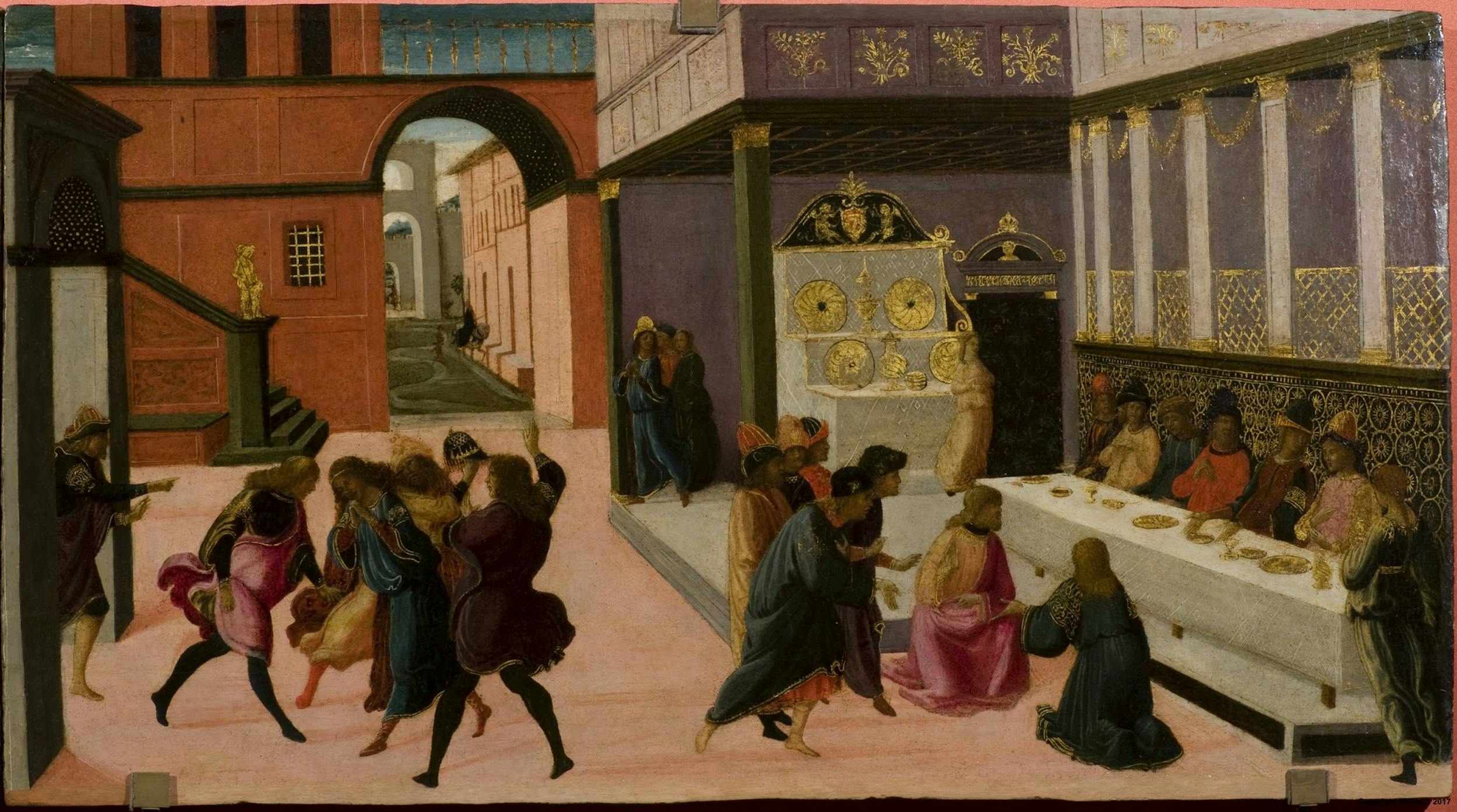
The Refusal of Vashti
By Jacopo del Sellaio
Does his depiction - one of three-panels on Esther painted on a "cassoni," a wedding chest - accord with the Book of Esther?
A second minor female character - Zeresh, wife of Haman.
She appears in two chapters. What do her remarks suggest about her personality? In what regard does she resemble Vashti?
On whose behalf does she speak in the book?
(א) וַיְהִ֣י ׀ בַּיּ֣וֹם הַשְּׁלִישִׁ֗י וַתִּלְבַּ֤שׁ אֶסְתֵּר֙ מַלְכ֔וּת וַֽתַּעֲמֹ֞ד בַּחֲצַ֤ר בֵּית־הַמֶּ֙לֶךְ֙ הַפְּנִימִ֔ית נֹ֖כַח בֵּ֣ית הַמֶּ֑לֶךְ וְ֠הַמֶּלֶךְ יוֹשֵׁ֞ב עַל־כִּסֵּ֤א מַלְכוּתוֹ֙ בְּבֵ֣ית הַמַּלְכ֔וּת נֹ֖כַח פֶּ֥תַח הַבָּֽיִת׃ (ב) וַיְהִי֩ כִרְא֨וֹת הַמֶּ֜לֶךְ אֶת־אֶסְתֵּ֣ר הַמַּלְכָּ֗ה עֹמֶ֙דֶת֙ בֶּֽחָצֵ֔ר נָשְׂאָ֥ה חֵ֖ן בְּעֵינָ֑יו וַיּ֨וֹשֶׁט הַמֶּ֜לֶךְ לְאֶסְתֵּ֗ר אֶת־שַׁרְבִ֤יט הַזָּהָב֙ אֲשֶׁ֣ר בְּיָד֔וֹ וַתִּקְרַ֣ב אֶסְתֵּ֔ר וַתִּגַּ֖ע בְּרֹ֥אשׁ הַשַּׁרְבִֽיט׃
(ח) אִם־מָצָ֨אתִי חֵ֜ן בְּעֵינֵ֣י הַמֶּ֗לֶךְ וְאִם־עַל־הַמֶּ֙לֶךְ֙ ט֔וֹב לָתֵת֙ אֶת־שְׁאֵ֣לָתִ֔י וְלַעֲשׂ֖וֹת אֶת־בַּקָּשָׁתִ֑י יָב֧וֹא הַמֶּ֣לֶךְ וְהָמָ֗ן אֶל־הַמִּשְׁתֶּה֙ אֲשֶׁ֣ר אֶֽעֱשֶׂ֣ה לָהֶ֔ם וּמָחָ֥ר אֶֽעֱשֶׂ֖ה כִּדְבַ֥ר הַמֶּֽלֶךְ׃ (ט) וַיֵּצֵ֤א הָמָן֙ בַּיּ֣וֹם הַה֔וּא שָׂמֵ֖חַ וְט֣וֹב לֵ֑ב וְכִרְאוֹת֩ הָמָ֨ן אֶֽת־מָרְדֳּכַ֜י בְּשַׁ֣עַר הַמֶּ֗לֶךְ וְלֹא־קָם֙ וְלֹא־זָ֣ע מִמֶּ֔נּוּ וַיִּמָּלֵ֥א הָמָ֛ן עַֽל־מָרְדֳּכַ֖י חֵמָֽה׃ (י) וַיִּתְאַפַּ֣ק הָמָ֔ן וַיָּב֖וֹא אֶל־בֵּית֑וֹ וַיִּשְׁלַ֛ח וַיָּבֵ֥א אֶת־אֹהֲבָ֖יו וְאֶת־זֶ֥רֶשׁ אִשְׁתּֽוֹ׃ (יא) וַיְסַפֵּ֨ר לָהֶ֥ם הָמָ֛ן אֶת־כְּב֥וֹד עָשְׁר֖וֹ וְרֹ֣ב בָּנָ֑יו וְאֵת֩ כָּל־אֲשֶׁ֨ר גִּדְּל֤וֹ הַמֶּ֙לֶךְ֙ וְאֵ֣ת אֲשֶׁ֣ר נִשְּׂא֔וֹ עַל־הַשָּׂרִ֖ים וְעַבְדֵ֥י הַמֶּֽלֶךְ׃ (יב) וַיֹּאמֶר֮ הָמָן֒ אַ֣ף לֹא־הֵבִיאָה֩ אֶסְתֵּ֨ר הַמַּלְכָּ֧ה עִם־הַמֶּ֛לֶךְ אֶל־הַמִּשְׁתֶּ֥ה אֲשֶׁר־עָשָׂ֖תָה כִּ֣י אִם־אוֹתִ֑י וְגַם־לְמָחָ֛ר אֲנִ֥י קָֽרוּא־לָ֖הּ עִם־הַמֶּֽלֶךְ׃ (יג) וְכָל־זֶ֕ה אֵינֶ֥נּוּ שֹׁוֶ֖ה לִ֑י בְּכָל־עֵ֗ת אֲשֶׁ֨ר אֲנִ֤י רֹאֶה֙ אֶת־מָרְדֳּכַ֣י הַיְּהוּדִ֔י יוֹשֵׁ֖ב בְּשַׁ֥עַר הַמֶּֽלֶךְ׃ (יד) וַתֹּ֣אמֶר לוֹ֩ זֶ֨רֶשׁ אִשְׁתּ֜וֹ וְכָל־אֹֽהֲבָ֗יו יַֽעֲשׂוּ־עֵץ֮ גָּבֹ֣הַּ חֲמִשִּׁ֣ים אַמָּה֒ וּבַבֹּ֣קֶר ׀ אֱמֹ֣ר לַמֶּ֗לֶךְ וְיִתְל֤וּ אֶֽת־מָרְדֳּכַי֙ עָלָ֔יו וּבֹֽא־עִם־הַמֶּ֥לֶךְ אֶל הַמִּשְׁתֶּ֖ה שָׂמֵ֑חַ וַיִּיטַ֧ב הַדָּבָ֛ר לִפְנֵ֥י הָמָ֖ן וַיַּ֥עַשׂ הָעֵֽץ׃ (פ)
(1) On the third day, Esther put on royal apparel and stood in the inner court of the king’s palace, facing the king’s palace, while the king was sitting on his royal throne in the throne room facing the entrance of the palace. (2) As soon as the king saw Queen Esther standing in the court, she won his favor. The king extended to Esther the golden scepter which he had in his hand, and Esther approached and touched the tip of the scepter.
(8) if Your Majesty will do me the favor, if it please Your Majesty to grant my wish and accede to my request—let Your Majesty and Haman come to the feast which I will prepare for them; and tomorrow I will do Your Majesty’s bidding.” (9) That day Haman went out happy and lighthearted. But when Haman saw Mordecai in the palace gate, and Mordecai did not rise or even stir on his account, Haman was filled with rage at him. (10) Nevertheless, Haman controlled himself and went home. He sent for his friends and his wife Zeresh, (11) and Haman told them about his great wealth and his many sons, and all about how the king had promoted him and advanced him above the officials and the king’s courtiers. (12) “What is more,” said Haman, “Queen Esther gave a feast, and besides the king she did not have anyone but me. And tomorrow too I am invited by her along with the king. (13) Yet all this means nothing to me every time I see that Jew Mordecai sitting in the palace gate.” (14) Then his wife Zeresh and all his friends said to him, “Let a stake be put up, fifty cubits high, and in the morning ask the king to have Mordecai impaled on it. Then you can go gaily with the king to the feast.” The proposal pleased Haman, and he had the stake put up.
(א) בַּלַּ֣יְלָה הַה֔וּא נָדְדָ֖ה שְׁנַ֣ת הַמֶּ֑לֶךְ וַיֹּ֗אמֶר לְהָבִ֞יא אֶת־סֵ֤פֶר הַזִּכְרֹנוֹת֙ דִּבְרֵ֣י הַיָּמִ֔ים וַיִּהְי֥וּ נִקְרָאִ֖ים לִפְנֵ֥י הַמֶּֽלֶךְ׃ (ב) וַיִּמָּצֵ֣א כָת֗וּב אֲשֶׁר֩ הִגִּ֨יד מָרְדֳּכַ֜י עַל־בִּגְתָ֣נָא וָתֶ֗רֶשׁ....
(ד) וַיֹּ֥אמֶר הַמֶּ֖לֶךְ מִ֣י בֶחָצֵ֑ר וְהָמָ֣ן בָּ֗א לַחֲצַ֤ר בֵּית־הַמֶּ֙לֶךְ֙ הַחִ֣יצוֹנָ֔ה לֵאמֹ֣ר לַמֶּ֔לֶךְ לִתְלוֹת֙ אֶֽת־מָרְדֳּכַ֔י עַל־הָעֵ֖ץ אֲשֶׁר־הֵכִ֥ין לֽוֹ׃ (ה) וַיֹּ֨אמְר֜וּ נַעֲרֵ֤י הַמֶּ֙לֶךְ֙ אֵלָ֔יו הִנֵּ֥ה הָמָ֖ן עֹמֵ֣ד בֶּחָצֵ֑ר וַיֹּ֥אמֶר הַמֶּ֖לֶךְ יָבֽוֹא׃ (ו) וַיָּבוֹא֮ הָמָן֒ וַיֹּ֤אמֶר לוֹ֙ הַמֶּ֔לֶךְ מַה־לַעֲשׂ֕וֹת בָּאִ֕ישׁ אֲשֶׁ֥ר הַמֶּ֖לֶךְ חָפֵ֣ץ בִּיקָר֑וֹ וַיֹּ֤אמֶר הָמָן֙ בְּלִבּ֔וֹ לְמִ֞י יַחְפֹּ֥ץ הַמֶּ֛לֶךְ לַעֲשׂ֥וֹת יְקָ֖ר יוֹתֵ֥ר מִמֶּֽנִּי׃
(יא) וַיִּקַּ֤ח הָמָן֙ אֶת־הַלְּב֣וּשׁ וְאֶת־הַסּ֔וּס וַיַּלְבֵּ֖שׁ אֶֽת־מָרְדֳּכָ֑י וַיַּרְכִּיבֵ֙הוּ֙ בִּרְח֣וֹב הָעִ֔יר וַיִּקְרָ֣א לְפָנָ֔יו כָּ֚כָה יֵעָשֶׂ֣ה לָאִ֔ישׁ אֲשֶׁ֥ר הַמֶּ֖לֶךְ חָפֵ֥ץ בִּיקָרֽוֹ׃ (יב) וַיָּ֥שָׁב מָרְדֳּכַ֖י אֶל־שַׁ֣עַר הַמֶּ֑לֶךְ וְהָמָן֙ נִדְחַ֣ף אֶל־בֵּית֔וֹ אָבֵ֖ל וַחֲפ֥וּי רֹֽאשׁ׃
(יג) וַיְסַפֵּ֨ר הָמָ֜ן לְזֶ֤רֶשׁ אִשְׁתּוֹ֙ וּלְכָל־אֹ֣הֲבָ֔יו אֵ֖ת כָּל־אֲשֶׁ֣ר קָרָ֑הוּ וַיֹּ֩אמְרוּ֩ ל֨וֹ חֲכָמָ֜יו וְזֶ֣רֶשׁ אִשְׁתּ֗וֹ אִ֣ם מִזֶּ֣רַע הַיְּהוּדִ֡ים מָרְדֳּכַ֞י אֲשֶׁר֩ הַחִלּ֨וֹתָ לִנְפֹּ֤ל לְפָנָיו֙ לֹא־תוּכַ֣ל ל֔וֹ כִּֽי־נָפ֥וֹל תִּפּ֖וֹל לְפָנָֽיו׃ (יד) עוֹדָם֙ מְדַבְּרִ֣ים עִמּ֔וֹ וְסָרִיסֵ֥י הַמֶּ֖לֶךְ הִגִּ֑יעוּ וַיַּבְהִ֙לוּ֙ לְהָבִ֣יא אֶת־הָמָ֔ן אֶל־הַמִּשְׁתֶּ֖ה אֲשֶׁר־עָשְׂתָ֥ה אֶסְתֵּֽר׃
(1) That night, sleep deserted the king, and he ordered the book of records, the annals, to be brought; and it was read to the king. (2) There it was found written that Mordecai had denounced Bigthana and Teresh....
(4) “Who is in the court?” the king asked. For Haman had just entered the outer court of the royal palace, to speak to the king about having Mordecai impaled on the stake he had prepared for him. (5) “It is Haman standing in the court,” the king’s servants answered him. “Let him enter,” said the king. (6) Haman entered, and the king asked him, “What should be done for a man whom the king desires to honor?” Haman said to himself, “Whom would the king desire to honor more than me?”
(11) So Haman took the garb and the horse and arrayed Mordecai and paraded him through the city square; and he proclaimed before him: This is what is done for the man whom the king desires to honor! (12) Then Mordecai returned to the king’s gate, while Haman hurried home, his head covered in mourning.
(13) There Haman told his wife Zeresh and all his friends everything that had befallen him. His advisers and his wife Zeresh said to him, “If Mordecai, before whom you have begun to fall, is of Jewish stock, you will not overcome him; you will fall before him to your ruin.” (14) While they were still speaking with him, the king’s eunuchs arrived and hurriedly brought Haman to the banquet which Esther had prepared.
R. Moshe Alshich comments (to 6:13) [From Kitzur Alshich]:
Haman consoled his wife and the members of his household that this was just an accidental occurrence. When the king was unable to sleep and they read to him from his annals and he heard that he had not rewarded Mordechai...the king wanted to do this act of appreciation. This, and nothing more. It (honoring Haman) could have been accomplished by another person. Only "because I happened to come, it turned out to be done by my hand. And regarding the matter of the hanging, I did not have a chance to speak with the king."
However, his "hakhamim and counselors" advised him that it would be for his own good that he not incite Mordechai further, because he would not succeed. "And what you think is merely an accident, you should know that it is not merely so. If Mordechai is from Jewish stock, the one before whom you have begun to falter - you fell before he fell before you - you will not withstand him.
Our advice is that you should make peace with him. You should "fall before him" to appease him to forgive you. And if he will acquiesce to you, you will be able to persevere. But if he will not forgive you, you will fall again before him, because this "fall" is merely the beginning of your fall [before him].
(א) אֲשֶׁר הַחִלּוֹתָ לִנְפֹּל וגו'. אָמְרָה: אֻמָּה זוּ נִמְשְׁלוּ לְכוֹכָבִים וּלְעָפָר. כְּשֶׁהֵם יוֹרְדִים יוֹרְדִים עַד לֶעָפָר, וּכְשֶׁהֵם עוֹלִים עוֹלִים עַד לָרָקִיעַ וְעַד הַכּוֹכָבִים:
Rashi presents this interpretation anonymously. However, his interpretation is surely taken from Megilla 16a where it appears in a discussion between R. Yehuda bar Ilai (Tanna, mid-2nd century) and other scholars. These two metaphors to depict the Jewish people - dust and stars - were also used in Humash regarding Abraham's descendents, but in different ways; see below.
(יד) וַֽיהוָ֞ה אָמַ֣ר אֶל־אַבְרָ֗ם אַחֲרֵי֙ הִפָּֽרֶד־ל֣וֹט מֵֽעִמּ֔וֹ שָׂ֣א נָ֤א עֵינֶ֙יךָ֙ וּרְאֵ֔ה מִן־הַמָּק֖וֹם אֲשֶׁר־אַתָּ֣ה שָׁ֑ם צָפֹ֥נָה וָנֶ֖גְבָּה וָקֵ֥דְמָה וָיָֽמָּה׃ (טו) כִּ֧י אֶת־כָּל־הָאָ֛רֶץ אֲשֶׁר־אַתָּ֥ה רֹאֶ֖ה לְךָ֣ אֶתְּנֶ֑נָּה וּֽלְזַרְעֲךָ֖ עַד־עוֹלָֽם׃ (טז) וְשַׂמְתִּ֥י אֶֽת־זַרְעֲךָ֖ כַּעֲפַ֣ר הָאָ֑רֶץ אֲשֶׁ֣ר ׀ אִם־יוּכַ֣ל אִ֗ישׁ לִמְנוֹת֙ אֶת־עֲפַ֣ר הָאָ֔רֶץ גַּֽם־זַרְעֲךָ֖ יִמָּנֶֽה׃
(14) And the LORD said to Abram, after Lot had parted from him, “Raise your eyes and look out from where you are, to the north and south, to the east and west, (15) for I give all the land that you see to you and your offspring forever. (16) I will make your offspring as the dust of the earth, so that if one can count the dust of the earth, then your offspring too can be counted.
(א) אַחַ֣ר ׀ הַדְּבָרִ֣ים הָאֵ֗לֶּה הָיָ֤ה דְבַר־יְהוָה֙ אֶל־אַבְרָ֔ם בַּֽמַּחֲזֶ֖ה לֵאמֹ֑ר אַל־תִּירָ֣א אַבְרָ֗ם אָנֹכִי֙ מָגֵ֣ן לָ֔ךְ שְׂכָרְךָ֖ הַרְבֵּ֥ה מְאֹֽד׃ (ב) וַיֹּ֣אמֶר אַבְרָ֗ם אֲדֹנָ֤י יֱהוִה֙ מַה־תִּתֶּן־לִ֔י וְאָנֹכִ֖י הוֹלֵ֣ךְ עֲרִירִ֑י וּבֶן־מֶ֣שֶׁק בֵּיתִ֔י ה֖וּא דַּמֶּ֥שֶׂק אֱלִיעֶֽזֶר׃ (ג) וַיֹּ֣אמֶר אַבְרָ֔ם הֵ֣ן לִ֔י לֹ֥א נָתַ֖תָּה זָ֑רַע וְהִנֵּ֥ה בֶן־בֵּיתִ֖י יוֹרֵ֥שׁ אֹתִֽי׃ (ד) וְהִנֵּ֨ה דְבַר־יְהוָ֤ה אֵלָיו֙ לֵאמֹ֔ר לֹ֥א יִֽירָשְׁךָ֖ זֶ֑ה כִּי־אִם֙ אֲשֶׁ֣ר יֵצֵ֣א מִמֵּעֶ֔יךָ ה֖וּא יִֽירָשֶֽׁךָ׃ (ה) וַיּוֹצֵ֨א אֹת֜וֹ הַח֗וּצָה וַיֹּ֙אמֶר֙ הַבֶּט־נָ֣א הַשָּׁמַ֗יְמָה וּסְפֹר֙ הַכּ֣וֹכָבִ֔ים אִם־תּוּכַ֖ל לִסְפֹּ֣ר אֹתָ֑ם וַיֹּ֣אמֶר ל֔וֹ כֹּ֥ה יִהְיֶ֖ה זַרְעֶֽךָ׃
(1) Some time later, the word of the LORD came to Abram in a vision. He said, “Fear not, Abram, I am a shield to you; Your reward shall be very great.” (2) But Abram said, “O Lord GOD, what can You give me, seeing that I shall die childless, and the one in charge of my household is Dammesek Eliezer!” (3) Abram said further, “Since You have granted me no offspring, my steward will be my heir.” (4) The word of the LORD came to him in reply, “That one shall not be your heir; none but your very own issue shall be your heir.” (5) He took him outside and said, “Look toward heaven and count the stars, if you are able to count them.” And He added, “So shall your offspring be.”
Zeresh (and the others with her) served as the mouthpiece for the narrator of the Book. Her role within the story is replicated in other biblical books, as illustrated below.
(ט) וַתֹּ֙אמֶר֙ אֶל־הָ֣אֲנָשִׁ֔ים יָדַ֕עְתִּי כִּֽי־נָתַ֧ן יְהוָ֛ה לָכֶ֖ם אֶת־הָאָ֑רֶץ וְכִֽי־נָפְלָ֤ה אֵֽימַתְכֶם֙ עָלֵ֔ינוּ וְכִ֥י נָמֹ֛גוּ כָּל־יֹשְׁבֵ֥י הָאָ֖רֶץ מִפְּנֵיכֶֽם׃ (י) כִּ֣י שָׁמַ֗עְנוּ אֵ֠ת אֲשֶׁר־הוֹבִ֨ישׁ יְהוָ֜ה אֶת־מֵ֤י יַם־סוּף֙ מִפְּנֵיכֶ֔ם בְּצֵאתְכֶ֖ם מִמִּצְרָ֑יִם וַאֲשֶׁ֣ר עֲשִׂיתֶ֡ם לִשְׁנֵי֩ מַלְכֵ֨י הָאֱמֹרִ֜י אֲשֶׁ֨ר בְּעֵ֤בֶר הַיַּרְדֵּן֙ לְסִיחֹ֣ן וּלְע֔וֹג אֲשֶׁ֥ר הֶחֱרַמְתֶּ֖ם אוֹתָֽם׃ (יא) וַנִּשְׁמַע֙ וַיִּמַּ֣ס לְבָבֵ֔נוּ וְלֹא־קָ֨מָה ע֥וֹד ר֛וּחַ בְּאִ֖ישׁ מִפְּנֵיכֶ֑ם כִּ֚י יְהוָ֣ה אֱלֹֽהֵיכֶ֔ם ה֤וּא אֱלֹהִים֙ בַּשָּׁמַ֣יִם מִמַּ֔עַל וְעַל־הָאָ֖רֶץ מִתָּֽחַת׃
(9) She said to the men, “I know that the LORD has given the country to you, because dread of you has fallen upon us, and all the inhabitants of the land are quaking before you. (10) For we have heard how the LORD dried up the waters of the Sea of Reeds for you when you left Egypt, and what you did to Sihon and Og, the two Amorite kings across the Jordan, whom you doomed. (11) When we heard about it, we lost heart, and no man had any more spirit left because of you; for the LORD your God is the only God in heaven above and on earth below.
((ב) וַיַּ֥רְא בָּלָ֖ק בֶּן־צִפּ֑וֹר אֵ֛ת כָּל־אֲשֶׁר־עָשָׂ֥ה יִשְׂרָאֵ֖ל לָֽאֱמֹרִֽי׃
(ד) וַיֹּ֨אמֶר מוֹאָ֜ב אֶל־זִקְנֵ֣י מִדְיָ֗ן עַתָּ֞ה יְלַחֲכ֤וּ הַקָּהָל֙ אֶת־כָּל־סְבִ֣יבֹתֵ֔ינוּ כִּלְחֹ֣ךְ הַשּׁ֔וֹר אֵ֖ת יֶ֣רֶק הַשָּׂדֶ֑ה וּבָלָ֧ק בֶּן־צִפּ֛וֹר מֶ֥לֶךְ לְמוֹאָ֖ב בָּעֵ֥ת הַהִֽוא׃ (ה) וַיִּשְׁלַ֨ח מַלְאָכִ֜ים אֶל־בִּלְעָ֣ם בֶּן־בְּע֗וֹר פְּ֠תוֹרָה אֲשֶׁ֧ר עַל־הַנָּהָ֛ר אֶ֥רֶץ בְּנֵי־עַמּ֖וֹ לִקְרֹא־ל֑וֹ לֵאמֹ֗ר הִ֠נֵּה עַ֣ם יָצָ֤א מִמִּצְרַ֙יִם֙ הִנֵּ֤ה כִסָּה֙ אֶת־עֵ֣ין הָאָ֔רֶץ וְה֥וּא יֹשֵׁ֖ב מִמֻּלִֽי׃ (ו) וְעַתָּה֩ לְכָה־נָּ֨א אָֽרָה־לִּ֜י אֶת־הָעָ֣ם הַזֶּ֗ה כִּֽי־עָצ֥וּם הוּא֙ מִמֶּ֔נִּי אוּלַ֤י אוּכַל֙ נַכֶּה־בּ֔וֹ וַאֲגָרְשֶׁ֖נּוּ מִן־הָאָ֑רֶץ כִּ֣י יָדַ֗עְתִּי אֵ֤ת אֲשֶׁר־תְּבָרֵךְ֙ מְבֹרָ֔ךְ וַאֲשֶׁ֥ר תָּאֹ֖ר יוּאָֽר׃
(ב) וַיִּשָּׂ֨א בִלְעָ֜ם אֶת־עֵינָ֗יו וַיַּרְא֙ אֶת־יִשְׂרָאֵ֔ל שֹׁכֵ֖ן לִשְׁבָטָ֑יו וַתְּהִ֥י עָלָ֖יו ר֥וּחַ אֱלֹהִֽים׃
(ה) מַה־טֹּ֥בוּ אֹהָלֶ֖יךָ יַעֲקֹ֑ב מִשְׁכְּנֹתֶ֖יךָ יִשְׂרָאֵֽל׃
(2) Balak son of Zippor saw all that Israel had done to the Amorites. (3) Moab was alarmed because that people was so numerous. Moab dreaded the Israelites,(4) and Moab said to the elders of Midian, “Now this horde will lick clean all that is about us as an ox licks up the grass of the field.” Balak son of Zippor, who was king of Moab at that time, (5) sent messengers to Balaam son of Beor in Pethor, which is by the Euphrates, in the land of his kinsfolk, to invite him, saying, “There is a people that came out of Egypt; it hides the earth from view, and it is settled next to me. (6) Come then, put a curse upon this people for me, since they are too numerous for me; perhaps I can thus defeat them and drive them out of the land. For I know that he whom you bless is blessed indeed, and he whom you curse is cursed.”
(2) As Balaam looked up and saw Israel encamped tribe by tribe, the spirit of God came upon him.
(5) How fair are your tents, O Jacob, Your dwellings, O Israel!
In Joshua 2, Rahav, a Canaanite woman, projects the defeat of Israelites.
Numbers (Parshat Balak) recounts the frustrated attempt of Balak to have Bilaam curse the Israelites because they were perceived to be invincible.
Tanakh often used an "outsider" - often a pagan gentile - as a kind of "man on the street" - to illustrate how the people of Israel was perceived externally. This was important, especially when the Israelites viewed themselves negatively or as threatened, as their self-reflection (below) illustrates. The Bilaam episode serves as a counterpoint to the people's response to the spies' report.
(ל) וַיַּ֧הַס כָּלֵ֛ב אֶת־הָעָ֖ם אֶל־מֹשֶׁ֑ה וַיֹּ֗אמֶר עָלֹ֤ה נַעֲלֶה֙ וְיָרַ֣שְׁנוּ אֹתָ֔הּ כִּֽי־יָכ֥וֹל נוּכַ֖ל לָֽהּ׃ (לא) וְהָ֨אֲנָשִׁ֜ים אֲשֶׁר־עָל֤וּ עִמּוֹ֙ אָֽמְר֔וּ לֹ֥א נוּכַ֖ל לַעֲל֣וֹת אֶל־הָעָ֑ם כִּֽי־חָזָ֥ק ה֖וּא מִמֶּֽנּוּ׃ (לב) וַיּוֹצִ֜יאוּ דִּבַּ֤ת הָאָ֙רֶץ֙ אֲשֶׁ֣ר תָּר֣וּ אֹתָ֔הּ אֶל־בְּנֵ֥י יִשְׂרָאֵ֖ל לֵאמֹ֑ר הָאָ֡רֶץ אֲשֶׁר֩ עָבַ֨רְנוּ בָ֜הּ לָת֣וּר אֹתָ֗הּ אֶ֣רֶץ אֹכֶ֤לֶת יוֹשְׁבֶ֙יהָ֙ הִ֔וא וְכָל־הָעָ֛ם אֲשֶׁר־רָאִ֥ינוּ בְתוֹכָ֖הּ אַנְשֵׁ֥י מִדּֽוֹת׃ (לג) וְשָׁ֣ם רָאִ֗ינוּ אֶת־הַנְּפִילִ֛ים בְּנֵ֥י עֲנָ֖ק מִן־הַנְּפִלִ֑ים וַנְּהִ֤י בְעֵינֵ֙ינוּ֙ כַּֽחֲגָבִ֔ים וְכֵ֥ן הָיִ֖ינוּ בְּעֵינֵיהֶֽם׃
(30) Caleb hushed the people before Moses and said, “Let us by all means go up, and we shall gain possession of it, for we shall surely overcome it.” (31) But the men who had gone up with him said, “We cannot attack that people, for it is stronger than we.” (32) Thus they spread calumnies among the Israelites about the land they had scouted, saying, “The country that we traversed and scouted is one that devours its settlers. All the people that we saw in it are men of great size; (33) we saw the Nephilim there—the Anakites are part of the Nephilim—and we looked like grasshoppers to ourselves, and so we must have looked to them.”