


The public reading of the Torah is an ancient custom. Ancient Jewish and non-Jewish descriptions of synagogues almost always describe the Torah as being read in the synagogue. The Talmudim variously attribute this custom to Moses, to the prophets or to Ezra. From an early period the Torah was read on Shabbat and holidays at Shacharit as well as at Minhah on Shabbat, and on Monday and Thursday at Shacharit.
They may not sell [something] belonging to a community because this lowers its sanctity, the words of Rabbi Meir. They said to him: if so, it should not be allowed to sell from a larger town to a smaller one. According to Rabbi Meir there is an additional restriction when it comes to selling holy items. The community cannot sell an item that belongs to the community to an individual. So if the members of the synagogue own scrolls and they wish to sell them to buy a Torah, they may not sell the scrolls to an individual. This means that according to Rabbi Meir there seems to be holiness in the community. The item is more holy because it is owned by a community, an entity which has greater holiness than an individual. Alternatively, an item is holier if it is used by more people. The other sages respond that it is problematic to quantify holiness based on the number of people within an entity. If a community is holier than an individual, than a large community is holier than a small community. Since this doesn’t make sense, the sages reject Rabbi Meir’s halakhah altogether.

Rabbi Judah said further: a synagogue that has fallen into ruins, they may not eulogize in it, nor twist ropes, nor to spread nets [to trap animals], nor to lay out produce on its roof [to dry], nor to use it as a short cut, as it says, “And I will desolate your holy places” (Leviticus 26:3 their holiness remains even when they are desolate. One may not use a synagogue that lays in ruins for a profane, every day purpose. One cannot deliver eulogies in it because eulogies are not delivered in synagogues, even when they have been destroyed. [As an aside, the custom to deliver eulogies and conduct funerals inside synagogues is a modern custom, probably borrowed from the Christians. Jews used to deliver eulogies either at the cemetery on the path on the way there.] One can’t use it as a place of work. The mishnah uses the example of “twisting rope” because twisting rope requires space, but it means that no work should be done there. It should not be used to trap animals nor should its roof be used to dry out fruit. One shouldn’t use it as a short cut. In summary, it should only be entered for its intended purpose as a place of worship and Torah study. The mishnah uses a midrash, exegesis of a biblical verse, to prove this point. In a section in which God rebukes Israel, He threatens that He will “desolate your holy places.” The fact that the verse calls these places holy implies that they retain their holiness even when they have been destroyed.
אָמַר רַב אַסִּי בָּתֵּי כְנֵסִיּוֹת שֶׁבְּבָבֶל עַל תְּנַאי הֵן עֲשׂוּיִין וְאַף עַל פִּי כֵן אֵין נוֹהֲגִין בָּהֶן קַלּוּת רֹאשׁ וּמַאי נִיהוּ חֶשְׁבּוֹנוֹת
Rav Asi said: Synagogues in Babylonia are built from the outset with a stipulation that they not have the full sanctity of a synagogue, in order that it be permitted to use them for the community’s general needs. But nevertheless, one should not act inside them with frivolity. The Gemara explains: What is meant by this? One should not make business calculations in a synagogue.
Peninei Halakha
Every community has an obligation to fulfill the mitzvah of building a synagogue which will be their mini-sanctuary (mikdash me’at) and where people can pray in a minyan. As it is written (Ezekiel 11:16), “I have been for them a small sanctuary,” and Rabbi Yitzchak interpreted, “These are synagogues and study halls” (Megillah 29a).
Reish Lakish says whoever has a synagogue in his city and does not pray there is called a bad neighbor. Moreover, he brings exile upon himself and his descendants. Those who arrive early to synagogue to recite Shacharit and are late to leave after praying Ma’ariv merit long life (Berachot 8a; Shulchan Aruch 90:11).
It is a mitzvah to run to synagogue just as it is a mitzvah to run to perform every mitzvah, in order to express one’s passion for matters of sanctity, as it says (Hosea 6:3), “We will race on in order to know Hashem.” Likewise, when one leaves the synagogue, he should walk slowly, so that he not appear happy to leave the synagogue (Shulchan Aruch 90:12).
Every community has an obligation to fulfill the mitzvah of building a synagogue which will be their mini-sanctuary (mikdash me’at) and where people can pray in a minyan. As it is written (Ezekiel 11:16), “I have been for them a small sanctuary,” and Rabbi Yitzchak interpreted, “These are synagogues and study halls” (Megillah 29a).
Reish Lakish says whoever has a synagogue in his city and does not pray there is called a bad neighbor. Moreover, he brings exile upon himself and his descendants. Those who arrive early to synagogue to recite Shacharit and are late to leave after praying Ma’ariv merit long life (Berachot 8a; Shulchan Aruch 90:11).
It is a mitzvah to run to synagogue just as it is a mitzvah to run to perform every mitzvah, in order to express one’s passion for matters of sanctity, as it says (Hosea 6:3), “We will race on in order to know Hashem.” Likewise, when one leaves the synagogue, he should walk slowly, so that he not appear happy to leave the synagogue (Shulchan Aruch 90:12).

מתני׳ ועוד א"ר יהודה בית הכנסת שחרב אין מספידין בתוכו ואין מפשילין בתוכו חבלים ואין פורשין לתוכו מצודות ואין שוטחין על גגו פירות ואין עושין אותו קפנדריא
MISHNA: And Rabbi Yehuda said further: A synagogue that fell into ruin still may not be used for a mundane purpose. Therefore, one may not eulogize in it. And nor may one stretch out and repair ropes in it. The wide expanse of the synagogue would have been particularly suitable for this. And nor may one spread animal traps within it. And nor may one spread out produce upon its roof to dry. And nor may one make it into a shortcut.
גמ׳ ת"ר בתי כנסיות אין נוהגין בהן קלות ראש אין אוכלין בהן ואין שותין בהן
GEMARA: The Sages taught in a baraita: With regard to synagogues: One may not act inside them with frivolity. Therefore, one may not eat in them; nor may one drink in them;
(יחזקאל יא, טז) ואהי להם למקדש מעט אמר רבי יצחק אלו בתי כנסיות ובתי מדרשות שבבבל ור"א אמר זה בית רבינו שבבבל
The verse states: “Yet I have been to them as a little sanctuary in the countries where they have come” (Ezekiel 11:16). Rabbi Yitzḥak said: This is referring to the synagogues and study halls in Babylonia. And Rabbi Elazar said: This is referring to the house of our master, i.e., Rav, in Babylonia, from which Torah issues forth to the entire world.
וְלָא אֲמַרַן אֶלָּא דְּלָא חָזֵי בָּהּ תִּיוְהָא אֲבָל חָזֵי בָּהּ תִּיוְהָא סָתְרִי וּבָנֵי כִּי הָא דְּרַב אָשֵׁי חֲזָא בָּהּ תִּיוְהָא בִּכְנִישְׁתָּא דְּמָתָא מַחְסֵיָא סַתְרֵיהּ וְעַיֵּיל לְפוּרְיֵיהּ לְהָתָם וְלָא אַפְּקֵיהּ עַד דִּמְתַקֵּין לֵיהּ שְׁפִיכֵי
The Gemara comments: And we said that an old synagogue must not be razed before its replacement is built only in a case where cracks are not seen in the old synagogue. But if cracks are seen they may first demolish the old synagogue and then build the new one. This is like the incident involving Rav Ashi, who saw cracks in the synagogue in his town of Mata Meḥasya and immediately demolished it. He then brought his bed in there, to the building site, so that there should be no delays in the construction, as he himself required shelter from the rain, and he did not remove his bed from there until they finished building the synagogue and even affixed drainpipes to the structure.
אמר רב יהודה אמר שמואל משום רבן שמעון בן גמליאל מאי דכתיב (איכה ג, נא) עיני עוללה לנפשי מכל בנות עירי ארבע מאות בתי כנסיות היו בכרך ביתר ובכל אחת ואחת היו בה ארבע מאות מלמדי תינוקות וכל אחד ואחד היו לפניו ארבע מאות תינוקות של בית רבן
Rav Yehuda says that Shmuel says in the name of Rabban Shimon ben Gamliel: What is the meaning of that which is written: “My eye affects my soul because of all the daughters of my city” (Lamentations 3:51)? There were four hundred synagogues in the city of Beitar, and in each and every one of them there were four hundred schoolteachers, and each and every one of these teachers had four hundred schoolchildren.
קיבול שכר מאלמנה דההיא אלמנה דהואי בי כנישתא בשיבבותה כל יומא הות אתיא ומצלה בי מדרשיה דר' יוחנן אמר לה בתי לא בית הכנסת בשיבבותך אמרה ליה רבי ולא שכר פסיעות יש לי
The significance of receiving divine reward can be learned from a widow, as there was a certain widow in whose neighborhood there was a synagogue, and despite this every day she went and prayed in the study hall of Rabbi Yoḥanan. Rabbi Yoḥanan said to her: My daughter, is there not a synagogue in your neighborhood? She said to him: My teacher, don’t I attain a reward for all the steps I take while walking to pray in the distant study hall?
אָמַר רַבִּי יוֹחָנָן: אֲחוֹרֵי אֲרִי וְלֹא אֲחוֹרֵי אִשָּׁה, אֲחוֹרֵי אִשָּׁה וְלֹא אֲחוֹרֵי עֲבוֹדָה זָרָה, אֲחוֹרֵי עֲבוֹדָה זָרָה וְלֹא אֲחוֹרֵי בֵּית הַכְּנֶסֶת בְּשָׁעָה שֶׁהַצִּבּוּר מִתְפַּלְּלִין.
On this topic, Rabbi Yoḥanan said: It is preferable to walk behind a lion and not behind a woman, and preferable to walk behind a woman and not behind idolatry, for then it will appear as if he is accompanying the idolatry. It is preferable to walk behind idolatry and not behind a synagogue when the congregation is praying, as he appears to separate himself from the community in that he does not wish to join them in prayer.
וּמִנַּיִן לַעֲשָׂרָה שֶׁמִּתְפַּלְּלִין שֶׁשְּׁכִינָה עִמָּהֶם — שֶׁנֶּאֱמַר: ״אֱלֹהִים נִצָּב בַּעֲדַת אֵל״.
And from where is it derived that ten people who pray, the Divine Presence is with them? As it is stated: “God stands in the congregation of God,” and the minimum number of people that constitute a congregation is a quorum of ten.
(ב) וַיָּבִ֣יא עֶזְרָ֣א הַ֠כֹּהֵ֠ן אֶֽת־הַתּוֹרָ֞ה לִפְנֵ֤י הַקָּהָל֙ מֵאִ֣ישׁ וְעַד־אִשָּׁ֔ה וְכֹ֖ל מֵבִ֣ין לִשְׁמֹ֑עַ בְּי֥וֹם אֶחָ֖ד לַחֹ֥דֶשׁ הַשְּׁבִיעִֽי׃ (ג) וַיִּקְרָא־בוֹ֩ לִפְנֵ֨י הָרְח֜וֹב אֲשֶׁ֣ר ׀ לִפְנֵ֣י שַֽׁעַר־הַמַּ֗יִם מִן־הָאוֹר֙ עַד־מַחֲצִ֣ית הַיּ֔וֹם נֶ֛גֶד הָאֲנָשִׁ֥ים וְהַנָּשִׁ֖ים וְהַמְּבִינִ֑ים וְאׇזְנֵ֥י כׇל־הָעָ֖ם אֶל־סֵ֥פֶר הַתּוֹרָֽה׃
(2) On the first day of the seventh month, Ezra the priest brought the Teaching before the congregation, men and women and all who could listen with understanding. (3) He read from it, facing the square before the Water Gate, from the first light until midday, to the men and the women and those who could understand; the ears of all the people were given to the scroll of the Teaching.
תָּנוּ רַבָּנַן הַכֹּל עוֹלִין לַמִּנְיָן שִׁבְעָה וַאֲפִילּוּ קָטָן וַאֲפִילּוּ אִשָּׁה אֲבָל אָמְרוּ חֲכָמִים אִשָּׁה לֹא תִּקְרָא בְּתוֹרָה מִפְּנֵי כְּבוֹד צִבּוּר
§ The Sages taught in a Tosefta (Megilla 3:11): All people count toward the quorum of seven readers, even a minor and even a woman. However, the Sages said that a woman should not read the Torah, out of respect for the congregation.
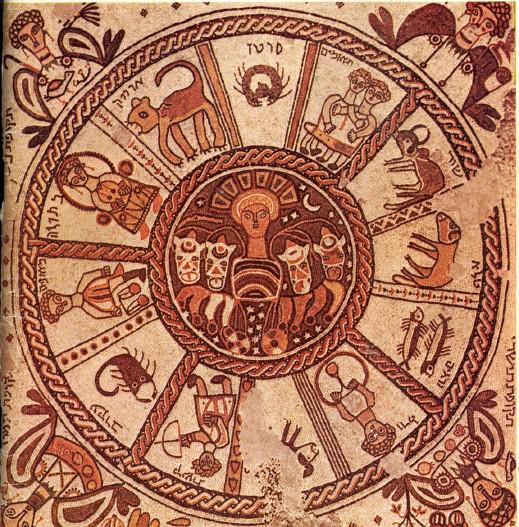
"Zodiac Wheel with Hebrew Labels"
Mosaic pavement of a 6th century synagogue at Beth Alpha, Jezreel Valley, northern Israel. It was discovered in 1928. Signs of the zodiac surround the central chariot of the Sun (a Greek motif), while the corners depict the 4 "turning points" ("tekufot") of the year, solstices and equinoxes, each named for the month in which it occurs--tequfah of Tishrei, (tequfah of Tevet), tequfah of Ni(san), tequfah of Tamuz.

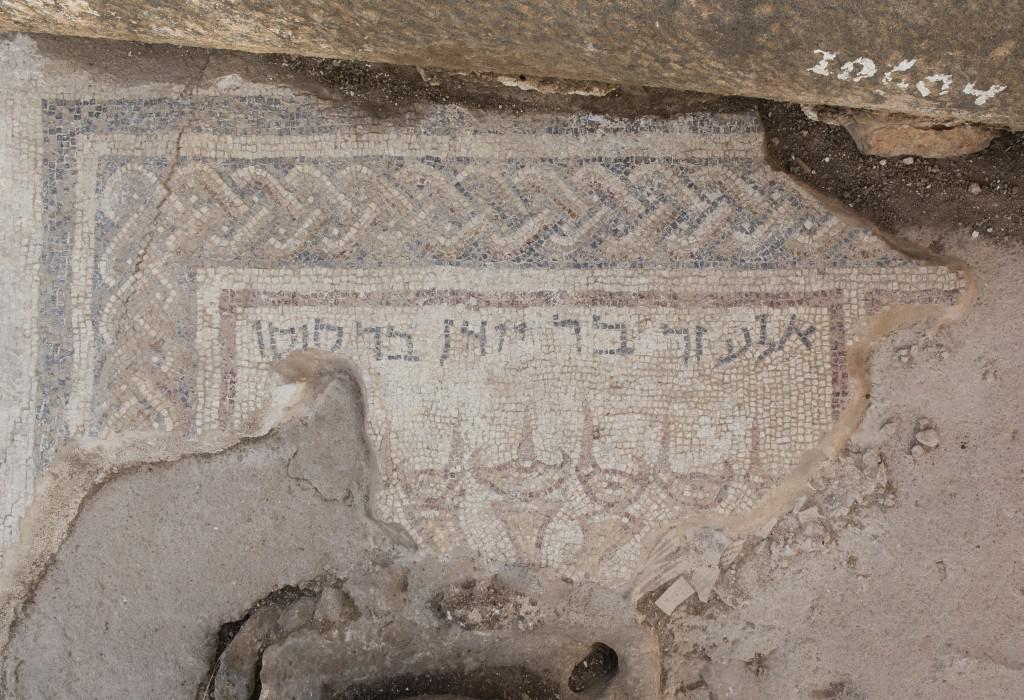
Mosaic with a menorah and an inscription in the Horvat Kur synagogue (photograph: Jaakko Haapanen; copyright: Kinneret Regional Project).
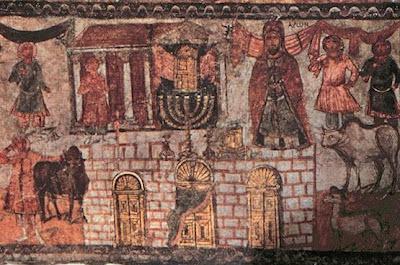
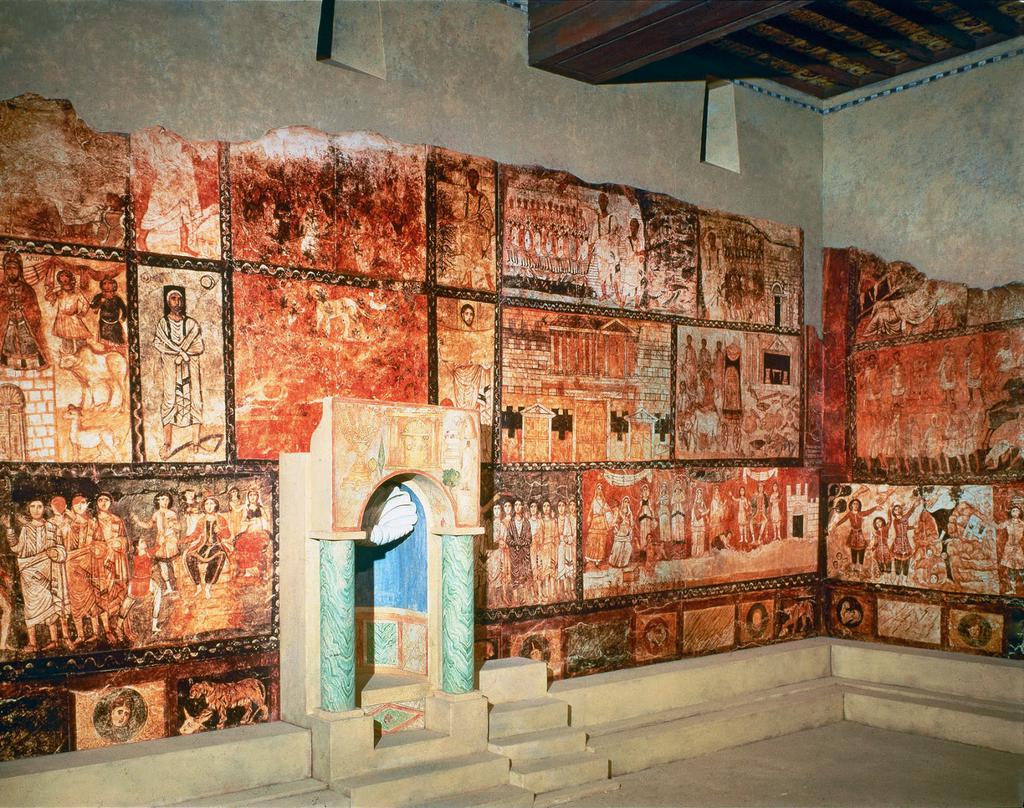
Western wall of the Dura Europos synagogue in Syria
Completed by 244 AD
Note the alcove where the scrolls of the law were held.