Beha’alotcha 2
from Likutei Torah by Rabbi Shneur Zalman of Liadi
Translation and Commentary by Rabbi Gedalia Potash and William Schecter, MD
Friday May 28, 2021
This draft has been neither edited nor approved by Rabbi Potash
r
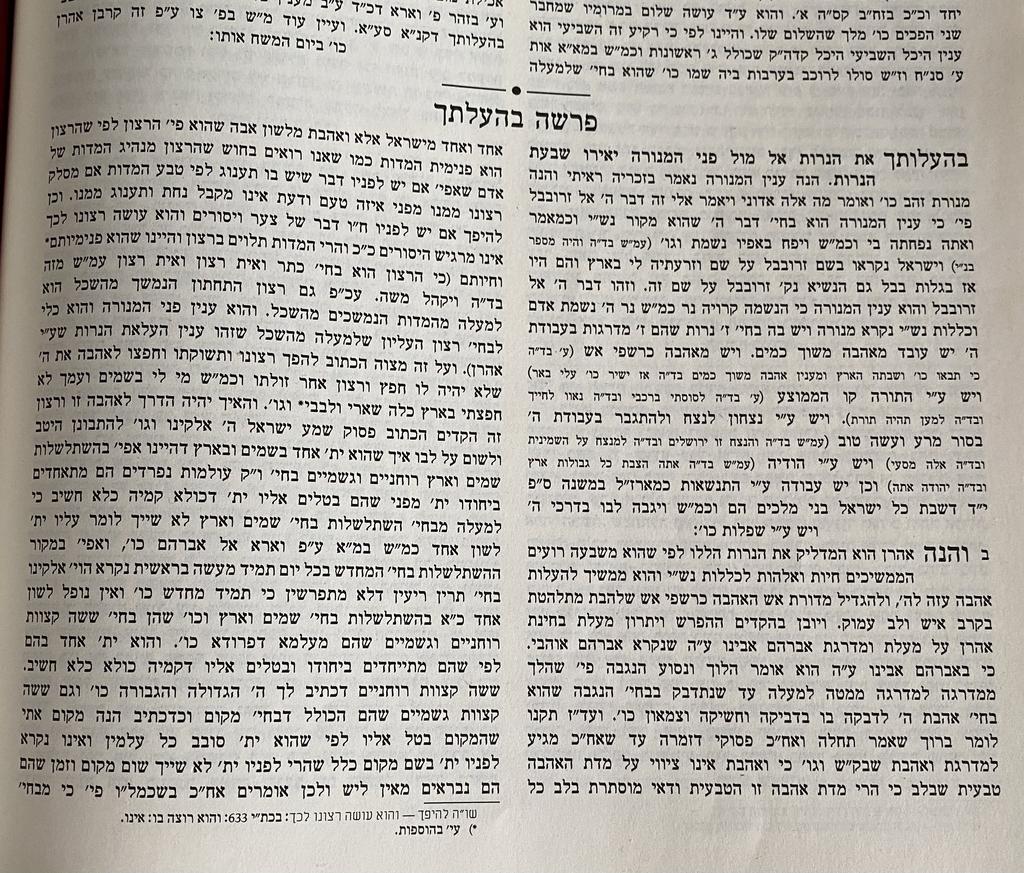
The Elter Rebbe begins his discussion by quoting the first passage of the Parasha (Numbers 8:1-2): “The LORD spoke to Moses, saying: Speak to Aaron and say to him, “When you mount the lamps, let the seven lamps give light at the front of the lampstand.”
דַּבֵּר֙ אֶֽל־אַהֲרֹ֔ן וְאָמַרְתָּ֖ אֵלָ֑יו בְּהַעֲלֹֽתְךָ֙ אֶת־הַנֵּרֹ֔ת אֶל־מוּל֙ פְּנֵ֣י הַמְּנוֹרָ֔ה יָאִ֖ירוּ שִׁבְעַ֥ת הַנֵּרֽוֹת׃
Notice that the Torah uses the word Beha’alotcha (בְּהַעֲלֹֽתְךָ֙) which refers to lighting the candles but actually means raising up, or as translated here as “mounting” the lamps. The implication is that we are raising ourselves spiritually by lighting the candles.
The issue of the Menorah is discussed in Zachariah (Zachariah 4:2) where in a vision Zachariah is awakened by an angel who asks him what he sees. Zachariah replies “I saw a Menorah of solid gold with a bowl above it. The lamps on it are seven in number and the lamps above it have seven pipes”. Zachariah then inquires of the angel (Zachariah 4:4) “What do those things mean, my Lord?” The angel replies: “This is the word of the Lord to Zerubbabel: Not by might nor by power, but by My Spirit—said the Lord of Hosts. (Zachariah 4:5)
Rabbi Potash commented: Zerubbabel was a leader of the Jewish People during the Babylonian Exile. He is generally considered to be the same person as Ezra. After the Babylonians were conquered by the Persian Ruler Cyrus the Great, the Jews were granted permission to return to Jerusalem and were led by Ezra. (circa 530 BCE) The name Zerubbabel (זרובבל) is composed the Hebrew words Zera (זרע—meaning seed) and Bavel (בבל—meaning Babylon)
The Elter Rebbe interprets this quotation to mean that Menorah has the attribute of the Word of G-d which is the Source of all the Souls of Israel. The Elter Rebbe now quotes Genesis “And G-d formed man of dust from the earth and (then) He blew into his nostrils the Soul of Life and man became a living being” (Genesis 2:7). The Elter Rebbe then says that Israel is referred to as Zerubbabel because of the passage: וּזְרַעְתִּ֤יהָ לִּי֙ בָּאָ֔רֶץ וְרִחַמְתִּ֖י אֶת־לֹ֣א רֻחָ֑מָה וְאָמַרְתִּ֤י לְלֹֽא־עַמִּי֙ עַמִּי־אַ֔תָּה וְה֖וּא יֹאמַ֥ר אֱלֹהָֽי׃ {פ}
I will sow her in the land as My own; And take Lo-ruhamah back in favor; And I will say to Lo-ammi, “You are My people,” And he will respond, “[You are] my God.” (Hosea 2:25)
Comment: Who was Lo-ruhamah? She was the daughter of the Prophet Hosea who was instructed by G-d to marry a harlot. Lo-ruhamah, meaning “not accepted” according to one translation or more likely in my view without mercy, was a child of this marriage. G-d instructed Hosea to name the child Lo-ruhamah because He intended to put an end to the Kingdom of Israel (as opposed to the Kingdom of Judea) and Lo-ruhamah represented the Kingdom of Israel. Presumably this passage refers to G-d’s ultimate plan to forgive the Kingdom of Israel for its transgressions (idol worship). Lo-Ammi was Lo-ruhama’s brother. The name means “Not my people: The implication of the name and the forgiveness implied by the phrase “you are my people” are obvious and a corollary to Lo-ruhama’s name.
The Elter Rebbe explains: They were in Exile in Babylon at this time and the leader (of the Jews—Ezra) was also called Zerubabbel.
Comment: this sentence is confusing as at the time the Judeans were in Exile in Babylon, as the Kingdom of Israel had already been destroyed by the Assyrians approximately 150 years previously. Let’s try to clear it up.
Rabbi Potash commented (2020): Zerubbabel is both the name of a historical figure and a “play on words” which serves as a “code word for the community of the Souls of Israel. How so? Zerubbabel led the first group of Jews, numbering 42,360 back from the Babylonian exile after the Persian King Cyrus conquered Babylonia. He was appointed Governor of the Persian Province of Medinata Yehud (the Jewish State) which was a small portion of the former Judea. He later laid the cornerstone for construction of the Second Temple. BUT, from an etymological standpoint, Zerubbabel in a combination of Hebrew words: Zera (planted or seeded) beBavel (in Babylonia). So, Zerubbabel can refer either to the historical Governor of Medinata Yehud or as a code word for the Spiritual Jewish Community.
And this is the Word of G-d to Zerubbabel (Ezra, Israel?) concerning the Menorah-- the Soul is called a candle “The life-breath (Soul) of man is the lamp of the LORD” (Proverbs 20;27)
Comment: the Hebrew word for breath and Soul is the name word: Neshama= נשמה)
The Community of Israel however is called a Menorah, not a candle. The seven candles represent the seven levels of Service to G-d. The Elter Rebbe then lists the seven levels of Service:
- Service from Love that flows like water: like a calm gentle brook that fills a space with tranquility
- Service from Love that burns like a crackling flame: passion like a raging fire that consumes everything in its path
- Service through the Torah which creates a balance or middle path between tranquil and passionate Love in the Service of G-d similar to the necessary balance of Chesed and Gvurah (loving kindness and discipline)
- Service to G-d through the eternal conquest of the evil inclination and the performance of good deeds
- Service through gratitude to G-d for all of our Blessings
- Service to G-d through choosing the “higher path” and behaving in a dignified regal manner. Here the Rebbe quotes the last line of Mishnah Shabat Chapter 14 to illustrate his point: “Rabbi Shimon says: ‘all Israel are royal children’.
- Service to G-d through Humility. Notice that behaving in a Regal and a Humble manner are oxymorons, not unlike Serving G-d through tranquility and burning passion. These two opposites can be reconciled by the Torah which creates a balance between these seemingly opposing forces.
Rabbi Potash then discussed these seven methods of having a relationship with G-d in the context of the challenges of interpersonal relationships with our family and friends and how the application of these principles might help establish a deeper connection with those we love.
Aaron, the Cohen Gadol, is the person who kindles these candles as he is one of the Seven Shepherds who draw down the vitality and Divinity to the Community of the Souls of Israel and he is the one who continues to raise up a powerful love to G-d and to increase the fire of love (for G-d) like the flames of a fire that burns deep inside the heart of man.
Who are the Seven Shepherds? Rabbi Potash comments: The Seven Shepherds are Abraham, Isaac, Jacob, Joseph, Moses, Aaron and David. Rabbi Adin Steinsaltz, the distinguished translator of the Talmud to English and Russian, has written “The seven “shepherds,” seven eminent historical leaders of Israel, are distinguished from the other leaders of Israel in that they do not belong to history alone (although they certainly influenced history). These leaders are above history in that they have continued to lead the Jewish People throughout the generations, even in our own times. We sense that they are present among us not as memories from the past, but as direct influences on each of our souls. The shepherds are our forefathers, the forebearers of all the souls of Israel. Regardless of whether they are our biological forefathers, like the three Patriarchs, or our spiritual forefathers, as in the case of Joseph and David, we bear a part of their essence within ourselves. They are not external figures; but rather, they form our inner essence.” (https://blogs.timesofisrael.com/seven-shepherds-and-eight-princes-of-men/).
It is understood in advance that the difference and advantage of the virtue of Aaron compared to the virtue and spiritual level of Abraham our Father, Peace be upon him, is that Abraham is called “My beloved”.
Abraham is referred to by the moniker Al Khalil (الخليل) in the Quran, meaning the friend (of G-d). Today, the city of Hebron, the burial site of the Patriarchs, is call Al Khalil in Arabic.
Abraham traveled (Genesis 12:9) to the Negev (Rashi and Ibn Ezra comment that Negev means south and that Abraham continued his wanderings in a southern direction towards Judea and Jerusalem) meaning he ascended from a lower spiritual level until he cleaved to the Negev (the south, Jerusalem), a higher spiritual level, which has the attribute of Love of G-d and the thirst and the passionate desire to cleave unto Him.
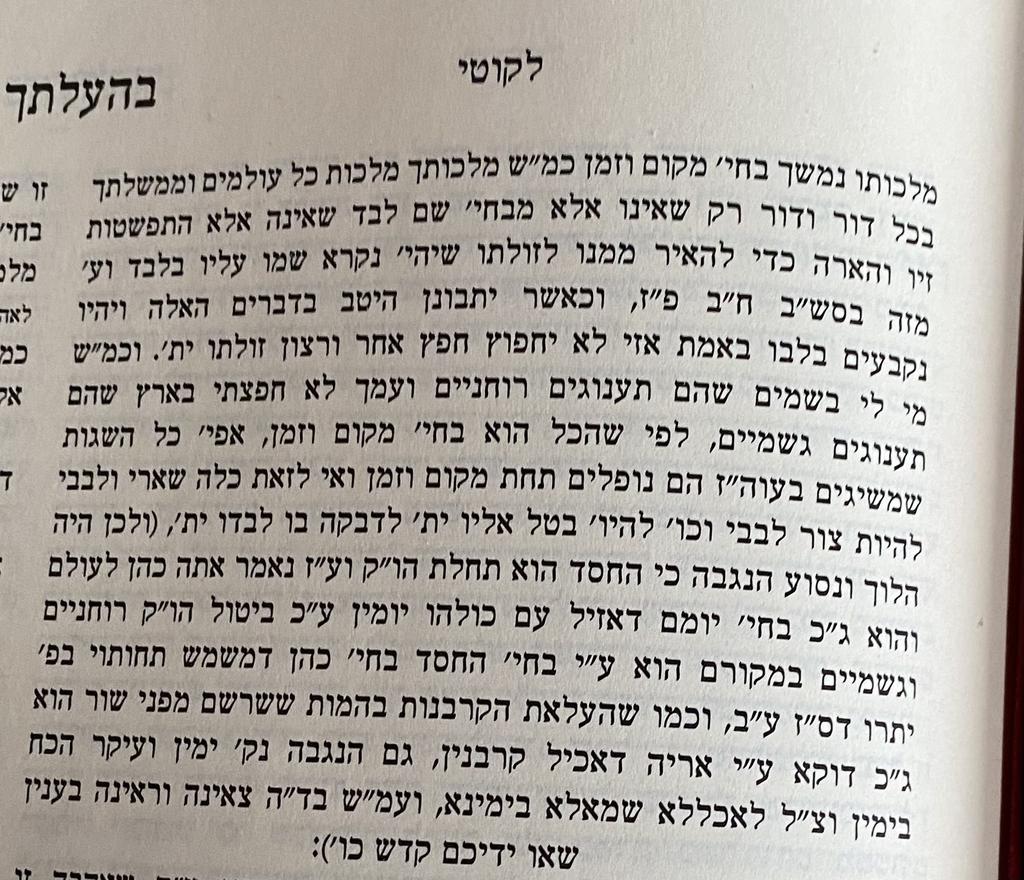
Now the Elter Rebbe makes an interesting jump. He compares the journey of Abraham to the order of the prayer in the Siddur. How so? We first say the prayer Baruch She Amar (Blessed is He that said the Word and the World was created) and then proceed with the Pesukei DiZimra (the recitation of Psalms and Piyyutim {poems} expressing the wondrous acts of G-d to reveal the love of G-d within the heart of person offering prayers) until finally we arrive at a higher spiritual level by the recitation of the Sh’ma etc. The love of G-d is not a commandment for the measure of the natural love that is in the heart, for this measure of natural love is surely hidden in the heart of each and every Jew. In contrast, the commandment “You shall love the Lord your G-d with all your heart with all your Soul and with all your might…” (found in the Sh’ma) is derived from the word Ava (אבה), meaning willing or desire. This word Ava refers to the internal desire of the emotional attributes. We sense that desire leads (directs) the emotional attributes of man. If man confronts something which by his nature will give him material pleasure, if he diverts his desire from it because of reason and understanding, then he will not receive pleasure from it. On the other hand, if he confronts, G-d forbid, sorrow and anguish, and he so desires it, he may not feel the anguish so much, for the emotional attributes are dependent upon man’s will which vitalizes the emotional attributes and internalizes them (because Desire has the attribute of Keter {the highest of the attributes “governing” the three intellectual attributes and the seven emotional attributes which we have discussed previously in the Kabbalistic cosmology}…..In any case, the lower desire also is drawn from the intellect (Chochmah, Binah and Da’at) which is above the emotional attributes drawn from the intellect. Similarly, the Menorah is the vessel (instrument, tool) for the Supernal Attribute above the intellect (Keter). This is the point of the term “raising up” referring to Aaron lighting the lamps of the Menorah {that is, this is the reason why the term “beha’alotcha (raising up)” was used in the passage quoted at the beginning of this commentary instead of the word “hidlik” (“he lit”, as in Lehadlik ner shel Shabat)})
And about this Mitzvah it is written, in contrast to his passionate desire to love G-d, he will not have any desire for others. As it is written “Whom else have I in heaven? And having You, I want no one on earth. My body and mind fail; but G-d is the stay of my mind, my portion forever.” (Psalms 75:25-26)
What is the way to achieve this love and desire prior to the recitation of the Sh’ma? -- Contemplation and concentration on the Unity of G-d in Heaven and the Earth. Meaning: even the Hishtalshalut (the cascading descent and reduction of Divine Energy) from the Heavens to the Earth, spiritually and physically, splitting in the worlds in six separate directions (up, down, north, south, east and west), unites in the Oneness of G-d, for they (the material things in the six directions) are all nullified vis à vis Him before Whom all else is naught. For He is above the Hishtalshalut, the Heavens, the Earth and one is not permitted to utter His One Name as it is written: ”I appeared to Abraham, Isaac, and Jacob as El Shaddai, but I did not make Myself known to them by My Name (the Tetragram)”. (Genesis 6:3). Even in the Source of the Hishtalshalut there is the attribute of the One Who renews each day with the act of creation”. He is called the Lord our G-d with the attribute of the two friends (referring of Chochmah and Binah—Wisdom and Understanding) _ who are not interpretable for “He always renews ….”. Not one word but falls except in the Hishtalshalut with the attribute of Heaven and Earth etc. which are the attributes of the Six Spiritual and Material directions derived from a separate world etc. He is One with them for they unite in His “Oneness” and are nullified with regard to Him for they are considered as naught before Him.
I apologize for the translation of the previous paragraph. That was the best I could do. I believe the main point the Elter Rebbe is making is that G-d is totally separate form all His creations and they are so miniscule compared to the infinite nature of the Divine as to be almost immeasurable. These concepts are amplified extensively in the Zohar.
Regarding the six Spiritual Directions it is written” לְךָ֣ יְ֠הוָה הַגְּדֻלָּ֨ה וְהַגְּבוּרָ֤ה וְהַתִּפְאֶ֙רֶת֙ וְהַנֵּ֣צַח וְהַה֔וֹד כִּי־כֹ֖ל בַּשָּׁמַ֣יִם וּבָאָ֑רֶץ לְךָ֤ יְהוָה֙ הַמַּמְלָכָ֔ה וְהַמִּתְנַשֵּׂ֖א לְכֹ֥ל ׀ לְרֹֽאשׁ׃ Yours, LORD, are greatness, might, splendor, triumph, and majesty—yes, all that is in heaven and on earth; to You, LORD, belong kingship and preeminence above all. (Chronicles 29:11). In addition, the six material directions are included in the Place as it is written “Here is the Place by Me”
Comment: What does the Elter Rebbe mean by saying Here is the Place by Me. This is actually a quotation from Exodus 33:21 where Moses is on Mount Sinai talking with G-d and is put in a Place (a cleft in the rock) as G-d passes by. Here is the exact quote:
“He (Moses) said, “Oh, let me behold Your Presence!”
וַיֹּ֗אמֶר אֲנִ֨י אַעֲבִ֤יר כׇּל־טוּבִי֙ עַל־פָּנֶ֔יךָ וְקָרָ֧אתִֽי בְשֵׁ֛ם יְהֹוָ֖ה לְפָנֶ֑יךָ וְחַנֹּתִי֙ אֶת־אֲשֶׁ֣ר אָחֹ֔ן וְרִחַמְתִּ֖י אֶת־אֲשֶׁ֥ר אֲרַחֵֽם׃ And He answered, “I will make all My goodness pass before you, and I will proclaim before you the name LORD, and the grace that I grant and the compassion that I show.
וַיֹּ֕אמֶר לֹ֥א תוּכַ֖ל לִרְאֹ֣ת אֶת־פָּנָ֑י כִּ֛י לֹֽא־יִרְאַ֥נִי הָאָדָ֖ם וָחָֽי׃ But,” He said, “you cannot see My face, for man may not see Me and live.”
וַיֹּ֣אמֶר יְהֹוָ֔ה הִנֵּ֥ה מָק֖וֹם אִתִּ֑י וְנִצַּבְתָּ֖ עַל־הַצּֽוּר׃ And the LORD said, “See, there is a place near Me. Station yourself on the rock
וְהָיָה֙ בַּעֲבֹ֣ר כְּבֹדִ֔י וְשַׂמְתִּ֖יךָ בְּנִקְרַ֣ת הַצּ֑וּר וְשַׂכֹּתִ֥י כַפִּ֛י עָלֶ֖יךָ עַד־עׇבְרִֽי׃ and, as My Presence passes by, I will put you in a cleft of the rock and shield you with My hand until I have passed by.”
Here is Rashi’s commentary on this passage which may clarify the Elter Rebbe’s meaning:
“הנה מקום אתי. בָּהָר אֲשֶׁר אֲנִי מְדַבֵּר עִמְּךָ תָמִיד, יֵשׁ מָקוֹם מוּכָן לִי לְצָרְכְּךָ שֶׁאַטְמִינְךָ שָׁם שֶׁלֹּא תִזֹּק, וּמִשָּׁם תִּרְאֶה מַה שֶּׁתִּרְאֶה, זֶהוּ פְּשׁוּטוֹ; וּמִדְרָשׁוֹ, עַל מָקוֹם שֶׁהַשְּׁכִינָה שָׁם מְדַבֵּר, וְאוֹמֵר הַמָּקוֹם אִתִּי, וְאֵינוֹ אוֹמֵר אֲנִי בַמָּקוֹם, שֶׁהַקָּבָּ"ה מְקוֹמוֹ שֶׁל עוֹלָם וְאֵין עוֹלָמוֹ מְקוֹמוֹ (תנחומא): הנה מקום אתי BEHOLD, THERE IS A PLACE BY ME — On the mountain where I am continually speaking with you there is a place prepared by Me for your sake where I will hide you that you may not be hurt by the vision. From there you will see what you will be permitted to see. A Midrashic explanation is that by the word מקום Scripture is speaking of the place where the Shechinah is and that He therefore said, “The place is by Me” and He did not say, “I am in the place”, because the Holy One, blessed be He, is the “place” of the Universe (comprises the Universe) but His Universe is not His place (does not encompass Him)”
The Elter Rebbe goes on to say (as alluded to in Rashi’s commentary above) that the Place is nullified vis à vis G-d for He encircles all the worlds and is not called by the name Place for before Him belongs no Place or Time for they have been created from nil to existence and therefore they say afterwards “Blessed be His Name the Glory of His Kingdom will be forever and ever” (this phrase is whispered immediately after reciting the first verse of the Sh’ma and is supposed to be said after each mention of G-d’s Name). This means that in terms of His Kingship, an examination of place and time continues as it is written: “our Kingdom is the Kingdom of all the worlds and You govern in every generation” only He is none other than the attribute of a Name alone which is none other than a suffusion of light in order to illuminate others who give Him a Name…… When one contemplates these issues, they will be truly fixed in one’s heart with no other desire or wish.
As it is written: “Who is for me in the Heavens” which are spiritual delights and with You I did not desire material pleasures of the land which all have the attributes of place (space) and time. Even all the achievements in this world are subject to space and time and are …… to nullified before Him and (I will) cleave only to Him.