15 Elul 5780 l September 4, 2020
Parshat Ki Tavo
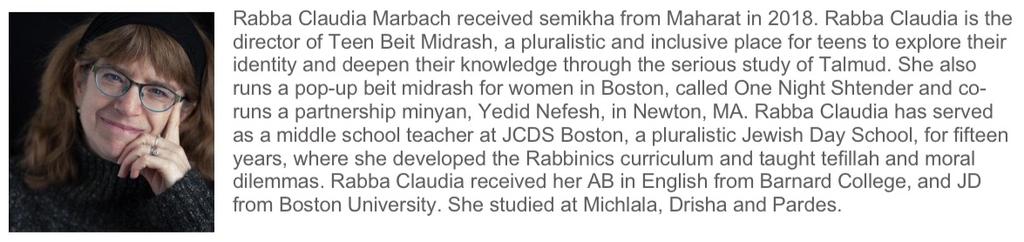
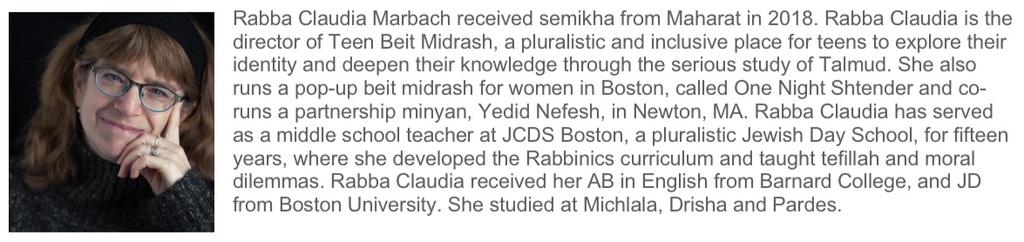
Rabba Claudia Marbach
Class of 2018
In Ki Tavo, Moshe tells the people that their first task when they come into the land of Israel is to erect large stone pillars, coat them with plaster and write the whole of the Torah on them.
The instruction to write the whole of this Torah is repeated a few pesukim later with the added directive of making sure that it is clear.
What did Moshe mean by all of the Torah and who was it for? These turn out to be complicated questions to answer. One possibility is that Moshe was referring to the blessings and curses that follow in the parsha. Alternatively, it could refer to the previous passage of the statement of the bikkurim which we repeat every year at the Pesach Seder. The Mechilta says that they wrote a peace declaration to the eleven nations who lived in the Land of Canaan. R. Shimon bar Yochai suggests that Moshe was referring to the Book of Devarim which is often referred to as the Mishneh Torah and which is echoed in Joshua 8:32 which says משנה תורת משה "copy of the Teaching that Moses”. In light of these answers, the Torah written on the stones was all about the arrival in Israel and the transition from the leadership of Moshe to that of Joshua. Shadal (Italy 1800-1865) explains that the reason for writing on the plaster coating rather than engraving in the stone was because this writing was temporary, not for every generation to come. A (con)temporary symbol of our commitment to God.
In contrast, other commentators have more expansive explanations. Ibn Ezra says that the writing was a list of the mitzvot - warnings of what to do and what not to do. Ramban proposes that the whole Torah from Bereshit to the end of Devarim was written on these stones, crowns and all. Rabbi Yehuda Henkin (US/Israel 1945-2021), in his Chiba Yiterah, says that “all this Torah” includes the Oral Torah too. All the effort of the large pillars and the clear writing seems to imply that these pillars would be around for a long time. A sort of Jewish Stonehenge. And Joshua, when he does erect them says that children in future generations will ask their parents what these stones mean. (Joshua 4:21). Ibn Ezra says that the plaster was there to preserve the writing. So perhaps these stones were a memorial of our values and eternal connection with God.
The Mishnah in Sotah 7:5 tells us that the text of the Torah was written on the stones in seventy languages. Tosefta Sotah 8:6-7 adds that Rabbi Yehuda says that God inspired every nation to send scribes (notarim, from notarius in Latin) who transcribed the texts into the seventy languages, whereas Rabbi Shimon says that it was the Jews who wrote the whole Torah in those languages. These stones were not just for us but an effort to spread the word of God throughout the world. The Kedushat Levi says that the purpose of the translations was for future Jews living in exile who might not understand the original but yearn to be connected.
The true meaning of these stone engravings, as the stones themselves, has been lost in time. What has not been forgotten is theTorah. Rabbi Moshe Chaim Ephraim of Sudilkov, (Ukraine 1748-1800), the grandson of the Baal Shem Tov, in his book Degel Machane Ephraim on Bereshit, tells us that the Torah is made whole in every generation, when we learn it and interpret it for the needs of our generation.
Those stones were needed to complete the Torah for that generation. What do we need to complete the Torah in our generation? How much do we need to learn to make our connection to God strong in these difficult times? We live in a time where Torah is accessible in so many languages and with so many access points. Are we creating a Torah response to this moment or for future generations? As we think about Elul and the New Year, let us think about what Torah we should write on the stone pillars for our generation and for those to come, for Jews and the whole world. Let us celebrate a Torah in many languages and let our Torah be a message of peace.