Pesach 5780 | April 2020
Pesach
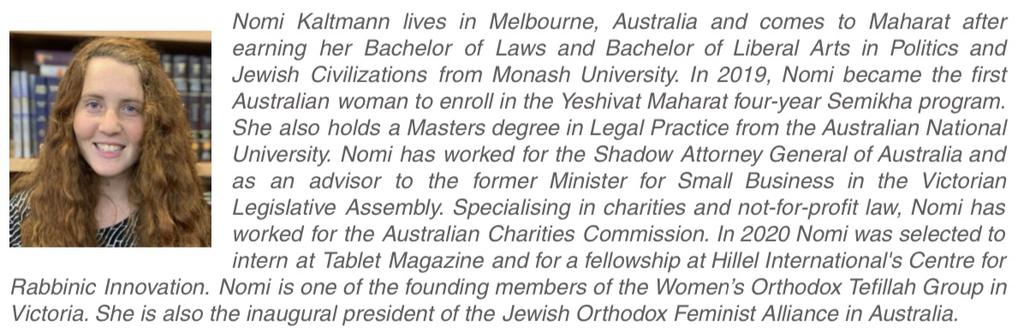
Nomi Kaltmann
Class of 2023
We, the Jewish people, are known as the ‘People of the Book’ because throughout our history we have placed critical emphasis on our texts. For almost 2000 years of exile the Jewish people relied on their texts to guide them, provide comfort and serve as a reminder to bridge the Jewish past and present.
Perhaps one of the most famous books in the Jewish canon is the Passover Haggadah which retells the story of Jewish slavery in Egypt to their Exodus. This book has linked modern Jews across the ages with our ancestors who escaped from Egypt as a free people.
The Haggadah’s text discusses the trauma of bondage, the process of redemption from slavery and examines the Israelites’ journey towards emancipation as a free nation. Through retelling the stories of our ancestors the Jewish people have comforted themselves as well as identified strategies for survival.
By using the stories of our people the Haggadah helps us to view our nations’ difficult history and use these experiences to switch our view and instead focus on our own power as a people to face challenges.
As Jewish people, events in our history have forever shaped our current perspectives. Throughout our texts we have immortalised the experiences of millennia of exile-the good, the bad, the traumatic and the blessings. As people who put so much emphasis on our books and our history, it is clear that the many opportunities to reflect on our past through our festivals also informs our current behaviours.
At Pesach time, the Haggadah serves as a national form of narrative therapy. Through the retelling of our history of slavery in Egypt we reduce the influence of a slave-like mentality upon our daily lives. Through the retelling of our freedom and escape, we increase our autonomy and self-determination.
Pesach and the Haggadah place us in both the protagonist and author roles: switching the view from a narrow perspective to a systemic and more flexible stance. The timeless messages from the Haggadah provide the Jewish people with guidance in our day to day lives and help to remind us of how far we have come.
The mindset of slavery can be hard to shake. It does not just apply to traditional enslavement as described in Egypt, but also relates to current events. We may feel like we are slaves to the daily grind of life, unable to free ourselves to focus on the things that are important. Instead of being able to enjoy time with our friends and family and engage in activities that give us joy, we are slaves to technology, food and other vices.
Pesach, the holiday which celebrates our freedom and redemption allows us to reset our perspective. Using the retelling of our history as a guide, we use the narrative to reshape our perspective and instead of being slaves we are redeemed. We work towards a greater future in which we are in the driver’s seat to achieve greatness and prosperity as a nation.
That is why the Seder is so important. Our time as a people for national introspection takes place in a unique format in which we retell our story in order to refresh our lives and our perspectives.