Parashat Tavo
Friday August 27, 2021
Translation and Commentary by Rabbi Gedalia Potash and William Schecter, MD
This draft has been neither edited nor approved by Rabbi Potash
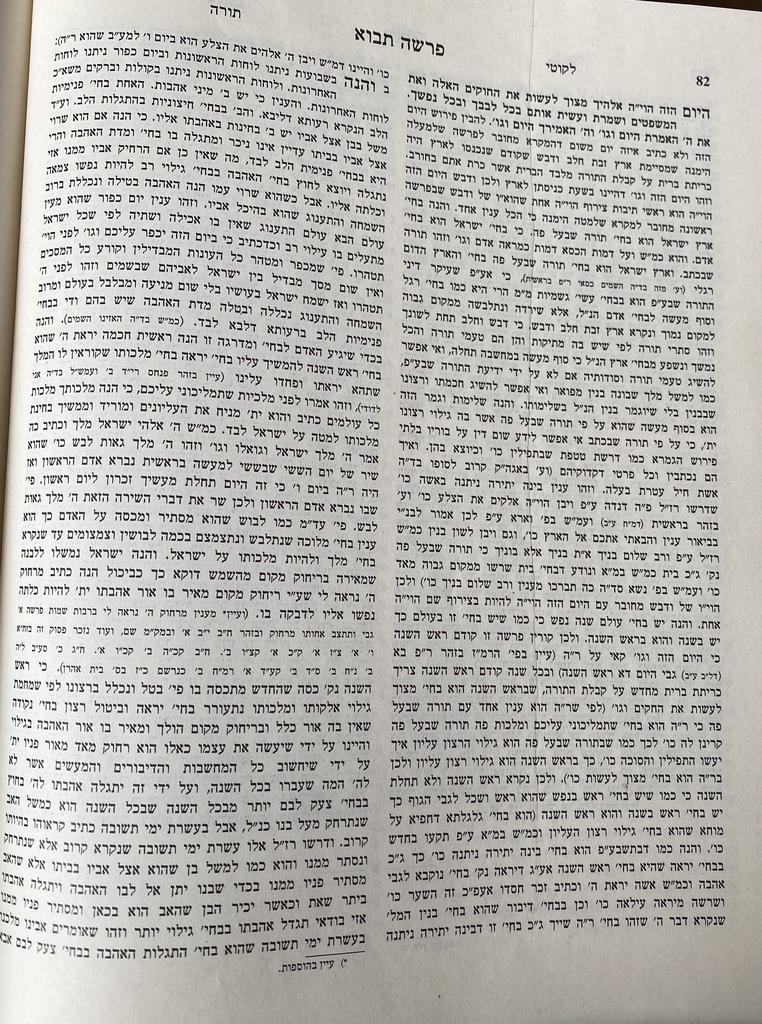
The Elter Rebbe begins his commentary by quoting the first pasukim of this week’s Parasha:
“הַיּ֣וֹם הַזֶּ֗ה יְהֹוָ֨ה אֱלֹהֶ֜יךָ מְצַוְּךָ֧ לַעֲשׂ֛וֹת אֶת־הַחֻקִּ֥ים הָאֵ֖לֶּה וְאֶת־הַמִּשְׁפָּטִ֑ים וְשָׁמַרְתָּ֤ וְעָשִׂ֙יתָ֙ אוֹתָ֔ם בְּכׇל־לְבָבְךָ֖ וּבְכׇל־נַפְשֶֽׁךָ׃
The LORD your God commands you this day to observe these laws and rules; observe them faithfully with all your heart and soul.
אֶת־יְהֹוָ֥ה הֶאֱמַ֖רְתָּ הַיּ֑וֹם לִהְיוֹת֩ לְךָ֨ לֵֽאלֹהִ֜ים וְלָלֶ֣כֶת בִּדְרָכָ֗יו וְלִשְׁמֹ֨ר חֻקָּ֧יו וּמִצְוֺתָ֛יו וּמִשְׁפָּטָ֖יו וְלִשְׁמֹ֥עַ בְּקֹלֽוֹ׃
You have affirmed this day that the LORD is your God, that you will walk in His ways, that you will observe His laws and commandments and rules, and that you will obey Him.
וַֽיהֹוָ֞ה הֶאֱמִֽירְךָ֣ הַיּ֗וֹם לִהְי֥וֹת לוֹ֙ לְעַ֣ם סְגֻלָּ֔ה כַּאֲשֶׁ֖ר דִּבֶּר־לָ֑ךְ וְלִשְׁמֹ֖ר כׇּל־מִצְוֺתָֽיו׃
And the LORD has affirmed this day that you are, as He promised you, His treasured people who shall observe all His commandments” (Deuteronomy 26:16-18).
The Elter Rebbe asks what is the meaning of "this day" for it does not say which specific day. To understand the meaning of “this day”, a general term, we have to understand that this sentence is connected to the sentence that precedes it (“Look down from Your holy abode, from heaven, and bless Your people and the land You have given us, a land flowing with milk and honey, as You swore to our fathers. “ [Deuteronomy 26:15]) The answer is clear, according to the Elter Rebbe if we look at the words preceding “This day” (Deuteronomy 26:15-16). The preceding passage ends with the words ארץ זבת חלב ודבש (a land flowing with milk and honey). הַיּ֣וֹם הַזֶּ֗ה – “this day” the day the Children of Israel enter the Land of Canaan because the phrase “a land flowing with milk and honey” preceded it. Therefore the second acceptance of the Commandments (the Torah) occurred on the specific day of entrance into the Land of Canaan because both passages are really one entity.
Comment: Rabbi Potash commented that an alternative explanation of the lack of specification of the specific day that the Torah was accepted a second time prior to the entrance to the Land of Canaan is that each of us in each generation must accept the Torah every day. The Elter Rebbe will deal with this explanation later in this document. This concept is specifically stated in Parashat Nitsavim – this coming week’s Parasha:
“וְלֹ֥א אִתְּכֶ֖ם לְבַדְּכֶ֑ם אָנֹכִ֗י כֹּרֵת֙ אֶת־הַבְּרִ֣ית הַזֹּ֔את וְאֶת־הָאָלָ֖ה הַזֹּֽאת׃
I make this covenant, with its sanctions, not with you alone,
כִּי֩ אֶת־אֲשֶׁ֨ר יֶשְׁנ֜וֹ פֹּ֗ה עִמָּ֙נוּ֙ עֹמֵ֣ד הַיּ֔וֹם לִפְנֵ֖י יְהֹוָ֣ה אֱלֹהֵ֑ינוּ וְאֵ֨ת אֲשֶׁ֥ר אֵינֶ֛נּוּ פֹּ֖ה עִמָּ֥נוּ הַיּֽוֹם׃
but both with those who are standing here with us this day before the LORD our God and with those who are not with us here this day.”
In effect, the Rebbe says, there two covenants: 1. The giving of the Torah at Mount Sinai (Horev) and 2. The giving of the Land of Israel to the Children of Israel. The Elter Rebbe then seeks to explain the expression “this day” by connecting the giving of the Torah at Mount Sinai and the entrance of the Children of Israel into the land of Israel. He does this by looking at the first letter of the word in the sentence preceding the “this day” sentence (that word being: and honey) and the first letters of the three words in the next sentence (This day G-d…) To clarify this, we must look at the Hebrew.
....ודבש. היום הזה יהו׳ .... (…and honey. This day G-d….). In Kabbalistic terms, each of the four letters, ו, ה, ה, י, rearranged, together form the Tetragrammaton of G-d’s name. The attachment of the letter Vav from ודבש to the outlined letters in the first three words of the following sentence (G-d commanded you this day—presumably referring to the giving of the Torah) completing the letters of the Tetragram means, according to the Rebbe, that the giving of the Torah and the Land are two parts of the same entity. The Rebbe then goes on to say that the Land of Israel is analogous to the Oral Law (the Talmud) and that the word Israel is analogous to man. How does he make this leap to compare Israel to man?
The Rebbe then refers to Ezekiel’s vision of G-d seated on a heavenly throne with the face of a man and his feet resting on a foot stool (Ezekiel1:4-28). This vision of the being with the face of man seated on the throne is analogous to the Written Torah whereas the feet resting on the foot stool (representing the Land) is analogous to Land of Israel=the Oral Torah. Even though that the Oral Torah concerns itself primarily with the performance of physical mitzvot, it has descended and been invested from a place on high (the Heavens) to our lower world and that is called a Land flowing with milk and honey. The Elter Rebbe makes an analogy between the leg and the head. The leg carries out the physical action but it is instructed and guided by the brain. Similarly, the Oral Torah is concerned primarily with the physical mitzvot, the details of which are “unpacked extensively” by the dialectic discussions and controversies of the Rabbis, but they are guided by and based upon the Written Torah.
The Rebbe then quotes a phrase from the Song of Songs (Song of Songs 4:11) “honey and milk underneath your tongue” and compares this phrase to the secrets of the Torah for within them is contained sweetness and the taste (the word “טעם” = taste can also be translated as reason so there is a double entendre here) so that the Land (the Talmud) has a direct connection to the Written Torah. The Rebbe then quotes a famous phrase from the second verse of the song Lecha Dodi sung during the Kabbalat Shabat prayers recited immediately prior to to Maariv on Erev Shabat (you can find this song in any standard Sidur): “Thought precedes Action (or a deed-- סוף מעשה במחשבה תחילה)”. The Elter Rebbe says it is impossible to understand the reasons and secrets of the Written Torah without knowledge of the Oral Torah (Talmud).
To illustrate this point, the Rebbe gives an analogy of a King who builds a luxurious building. It is impossible to appreciate the wisdom and intent of the King until the building is entirely complete so you can gaze upon and appreciated the structure in its entirety. So too with the Torah. It is impossible to completely understand any statute or law without referring to the Gemorah (Talmud) discussion of the details of the law in various situations. The Rebbe gives the example of the Totafot (the Frontlets) of the Tfillin worn during daily morning prayer (except Shabat and Holidays) (Deuteronomy 6:8). How were the passages contained in the Totafot to be written, how are the Totafot to be constructed, etc.? None of this information is in the Written Torah but is explained in great detail in the Oral Torah. Now referring back to the original argument, the Rebbe says “:Therefore the Vav (in ודבש—and honey) is joined to the first letters of the following three words in the next sentence forming the Tetragram (with the letters rearranged) indicating that both the Written and Oral Torah are one entity forming the name of G-d.
Next the Rebbe refers to the three elements of the universe: Space, Time and Life (עולם שנה נפש—direct translation: world, year, soul). This is the reason, the Rebbe says, that we read Parashat Ki Tavo, immediately prior to Rosh HaShana—because “this day” also refers not only to our renewal of the Covenant with G-d each day but especially on the first day of the New Year. This raises another question. Why do we call Rosh HaShana the Head of the year and not the Beginning of the year? The answer is that the Head is analogous to the intellect which controls the body and that the decision to enter into the Covenant with an understanding and study of the Laws of the Torah precedes their implementation.
The Elter Rebbe then goes on to compare the giving of the Torah at Mount Sinai 40 years prior to the entrance to the Land of Canaan celebrated by the Holiday of Shavuot and the giving of the second set of Tablets on Yom Kippur (Moses descended with the second set of Tablets after he broke the first set when confronted with the Sin of the Golden Calf on the 17th Day of the month of Tammuz). The first set of Tablets were given in the midst of thunder and lightening as opposed to the second set of tablets which were given quietly as the Children of Israel were repentant due to the Sin of the Golden Calf. The Elter Rebbe compares these two methods of giving the Tablets with two types of love: 1. The first has the attribute of “internality” of the heart and is called רעותא דליבא—an Aramaic term usually translated as Desire of the Heart and refers to the yearning to be connected to the Divine. 2. The second has the attribute of “externality” and refers to the revelation of the heart.
The Elter Rebbe then compares the relationship of Israel with G-d to the relationship of a father and a son. The son has two types of love for his father. If he is living in his father’s house, he is still not recognized and revealed (as an independent person) and the attribute of love is only within the depths of his heart. This is not the case if the son has distanced himself from his father’s abode for in this situation, the son’s love for the father is openly expressed so that the son’s soul desperately thirsts for his father. But when the son is living with the father, his love is nullified and joined with the great joy and delight in his father’s abode. This is analogous to Yom Kippur which is the spring to the World to Come, the World of Delight without food or drink for all Israel is hidden within the Great Supernal as it is written ” כִּֽי־בַיּ֥וֹם הַזֶּ֛ה יְכַפֵּ֥ר עֲלֵיכֶ֖ם לְטַהֵ֣ר אֶתְכֶ֑ם מִכֹּל֙ חַטֹּ֣אתֵיכֶ֔ם לִפְנֵ֥י יְהוָ֖ה תִּטְהָֽרוּ׃ For on this day atonement shall be made for you to cleanse you of all your sins; you shall be clean before the LORD.” (Leviticus: 16:30) The meaning is that G-d will forgive and purify all the sins which separate man from G-d and tear down all the screens (which separate Israel from G-d) so there will be no screen separating Israel from their Father in Heaven and this is prior to G-d’s purification of Israel. And Israel will rejoice in its works, without any impediment or confusion in the world and from great happiness and delight be absorbed into of love so much so that they lose their individuality with the great desire of their hearts (which was previously concealed).
In order to achieve this level, “The beginning of wisdom is the fear of the LORD” (Psalm 111:10)—this is what is supposed to happen on Rosh HaShana when we draw down upon us the awe and fear of His Kingship, when we call Him King so that Awe and Fear will be upon us.
Our discussion ended at this point.