Haazinu
From Likutei Torah by Rabbi Shneur Zalman of Liadi
Translation and Commentary by Rabbi Gedalia Potash and William Schecter, MD
This draft has neither been edited nor approved by Rabbi Potash
October 14, 2019
The Book of Deuteronomy, the last Book of the Torah, is a long speech given by Moses to the Children of Israel on the last day of his life. In it he reviews the 613 commandments of the Torah which are a guide as to how they will live their lives and conduct their affairs. This week’s portion, Haazinu, is the next to the last portion of Deuteronomy. It begins with the words: “Give ear, O heavens, and I will speak; and may the earth hear the words of my mouth. May my teaching drop like the rain, may my utterance flow like dew….”. The Rabbis of the Talmud raised the question: “Why use the metaphor of rain and dew and what is the difference between them?” Could it be that they are comparing the violence of a torrential downpour with the gentle droplets of dew? The implication is that the gentle continuous observance of the Commandments may be more efficacious than their sudden but intermittent application.
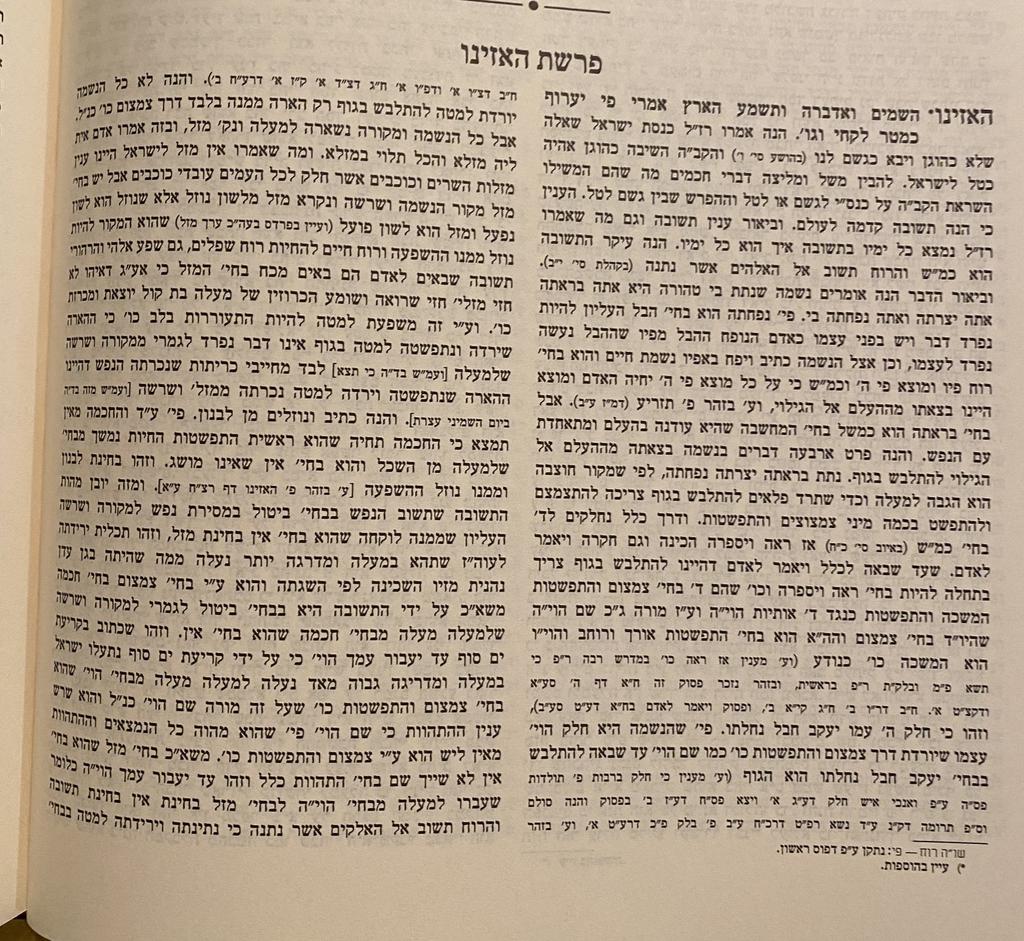
At this time of year, when we are contemplating Repentance and a Return to our Tradition (Teshuva), it may be helpful to recall that the Rabbis suggested that the spirit of Teshuva is eternal and preceded the creation of the world. Teshuva they suggest, like the air we breathe, is essential to but separate from our existence. They referred to the morning prayer (found in the Siddur): “My G-d, the soul that You placed within me is pure. Your created it, You fashioned it, You breathed it into me, You safeguard it within me and You will eventually take it from me and restore it to me in the Time to Come”. The Hebrew word for breath, Neshama, also means Soul. The Kabbalah inferred that the Divine “Breath of Life”, or Soul, which man inspires refers to the Divine Energy which must undergo a series of diminutions as it descends from the Heaven to safely be invested by the material flesh and blood of our world. The Elter Rebbe compares this Soul to the “Rope of Jacob’s Inheritance” (Chevel Nachalto”) referred to later in the portion Haazinu. Imagine a rope consisting of many strands extending from Heaven to each Soul. This is the Divine connection between each person and the Heaven. Each strand of the Rope is one of the 613 Commandments. When a Commandment is not observed, the strand breaks. The strength of the Rope (the connection between man and the Heaven) depends on the integrity of the Rope Strands.
Only a portion of the Divine Soul temporarily resides in man but is connected, through the Rope of Commandments, to the Source of the G-dly Soul in Heaven, which is called Mazal. Although we generally think of the word Mazal as “luck”, the root of the word is Nazal which means flowing or dripping. And so, man is maintained by Divine Inspiration continually dripping down the Rope of Commandments connecting the portion of man’s Divine Soul with its Source.