


(א) וַתֵּצֵ֤א דִינָה֙ בַּת־לֵאָ֔ה אֲשֶׁ֥ר יָלְדָ֖ה לְיַעֲקֹ֑ב לִרְא֖וֹת בִּבְנ֥וֹת הָאָֽרֶץ׃ (ב) וַיַּ֨רְא אֹתָ֜הּ שְׁכֶ֧ם בֶּן־חֲמ֛וֹר הַֽחִוִּ֖י נְשִׂ֣יא הָאָ֑רֶץ וַיִּקַּ֥ח אֹתָ֛הּ וַיִּשְׁכַּ֥ב אֹתָ֖הּ וַיְעַנֶּֽהָ׃ (ג) וַתִּדְבַּ֣ק נַפְשׁ֔וֹ בְּדִינָ֖ה בַּֽת־יַעֲקֹ֑ב וַיֶּֽאֱהַב֙ אֶת־הַֽנַּעֲרָ֔ וַיְדַבֵּ֖ר עַל־לֵ֥ב הַֽנַּעֲרָֽ׃ (ד) וַיֹּ֣אמֶר שְׁכֶ֔ם אֶל־חֲמ֥וֹר אָבִ֖יו לֵאמֹ֑ר קַֽח־לִ֛י אֶת־הַיַּלְדָּ֥ה הַזֹּ֖את לְאִשָּֽׁה׃ (ה) וְיַעֲקֹ֣ב שָׁמַ֗ע כִּ֤י טִמֵּא֙ אֶת־דִּינָ֣ה בִתּ֔וֹ וּבָנָ֛יו הָי֥וּ אֶת־מִקְנֵ֖הוּ בַּשָּׂדֶ֑ה וְהֶחֱרִ֥שׁ יַעֲקֹ֖ב עַד־בֹּאָֽם׃ (ו) וַיֵּצֵ֛א חֲמ֥וֹר אֲבִֽי־שְׁכֶ֖ם אֶֽל־יַעֲקֹ֑ב לְדַבֵּ֖ר אִתּֽוֹ׃ (ז) וּבְנֵ֨י יַעֲקֹ֜ב בָּ֤אוּ מִן־הַשָּׂדֶה֙ כְּשׇׁמְעָ֔ם וַיִּֽתְעַצְּבוּ֙ הָֽאֲנָשִׁ֔ים וַיִּ֥חַר לָהֶ֖ם מְאֹ֑ד כִּֽי־נְבָלָ֞ה עָשָׂ֣ה בְיִשְׂרָאֵ֗ל לִשְׁכַּב֙ אֶת־בַּֽת־יַעֲקֹ֔ב וְכֵ֖ן לֹ֥א יֵעָשֶֽׂה׃ (ח) וַיְדַבֵּ֥ר חֲמ֖וֹר אִתָּ֣ם לֵאמֹ֑ר שְׁכֶ֣ם בְּנִ֗י חָֽשְׁקָ֤ה נַפְשׁוֹ֙ בְּבִתְּכֶ֔ם תְּנ֨וּ נָ֥א אֹתָ֛הּ ל֖וֹ לְאִשָּֽׁה׃ (ט) וְהִֽתְחַתְּנ֖וּ אֹתָ֑נוּ בְּנֹֽתֵיכֶם֙ תִּתְּנוּ־לָ֔נוּ וְאֶת־בְּנֹתֵ֖ינוּ תִּקְח֥וּ לָכֶֽם׃ (י) וְאִתָּ֖נוּ תֵּשֵׁ֑בוּ וְהָאָ֙רֶץ֙ תִּהְיֶ֣ה לִפְנֵיכֶ֔ם שְׁבוּ֙ וּסְחָר֔וּהָ וְהֵֽאָחֲז֖וּ בָּֽהּ׃ (יא) וַיֹּ֤אמֶר שְׁכֶם֙ אֶל־אָבִ֣יהָ וְאֶל־אַחֶ֔יהָ אֶמְצָא־חֵ֖ן בְּעֵינֵיכֶ֑ם וַאֲשֶׁ֥ר תֹּאמְר֛וּ אֵלַ֖י אֶתֵּֽן׃ (יב) הַרְבּ֨וּ עָלַ֤י מְאֹד֙ מֹ֣הַר וּמַתָּ֔ן וְאֶ֨תְּנָ֔ה כַּאֲשֶׁ֥ר תֹּאמְר֖וּ אֵלָ֑י וּתְנוּ־לִ֥י אֶת־הַֽנַּעֲרָ֖ לְאִשָּֽׁה׃ (יג) וַיַּעֲנ֨וּ בְנֵֽי־יַעֲקֹ֜ב אֶת־שְׁכֶ֨ם וְאֶת־חֲמ֥וֹר אָבִ֛יו בְּמִרְמָ֖ה וַיְדַבֵּ֑רוּ אֲשֶׁ֣ר טִמֵּ֔א אֵ֖ת דִּינָ֥ה אֲחֹתָֽם׃ (יד) וַיֹּאמְר֣וּ אֲלֵיהֶ֗ם לֹ֤א נוּכַל֙ לַעֲשׂוֹת֙ הַדָּבָ֣ר הַזֶּ֔ה לָתֵת֙ אֶת־אֲחֹתֵ֔נוּ לְאִ֖ישׁ אֲשֶׁר־ל֣וֹ עׇרְלָ֑ה כִּֽי־חֶרְפָּ֥ה הִ֖וא לָֽנוּ׃ (טו) אַךְ־בְּזֹ֖את נֵא֣וֹת לָכֶ֑ם אִ֚ם תִּהְי֣וּ כָמֹ֔נוּ לְהִמֹּ֥ל לָכֶ֖ם כׇּל־זָכָֽר׃ (טז) וְנָתַ֤נּוּ אֶת־בְּנֹתֵ֙ינוּ֙ לָכֶ֔ם וְאֶת־בְּנֹתֵיכֶ֖ם נִֽקַּֽח־לָ֑נוּ וְיָשַׁ֣בְנוּ אִתְּכֶ֔ם וְהָיִ֖ינוּ לְעַ֥ם אֶחָֽד׃ (יז) וְאִם־לֹ֧א תִשְׁמְע֛וּ אֵלֵ֖ינוּ לְהִמּ֑וֹל וְלָקַ֥חְנוּ אֶת־בִּתֵּ֖נוּ וְהָלָֽכְנוּ׃ (יח) וַיִּֽיטְב֥וּ דִבְרֵיהֶ֖ם בְּעֵינֵ֣י חֲמ֑וֹר וּבְעֵינֵ֖י שְׁכֶ֥ם בֶּן־חֲמֽוֹר׃ (יט) וְלֹֽא־אֵחַ֤ר הַנַּ֙עַר֙ לַעֲשׂ֣וֹת הַדָּבָ֔ר כִּ֥י חָפֵ֖ץ בְּבַֽת־יַעֲקֹ֑ב וְה֣וּא נִכְבָּ֔ד מִכֹּ֖ל בֵּ֥ית אָבִֽיו׃ (כ) וַיָּבֹ֥א חֲמ֛וֹר וּשְׁכֶ֥ם בְּנ֖וֹ אֶל־שַׁ֣עַר עִירָ֑ם וַֽיְדַבְּר֛וּ אֶל־אַנְשֵׁ֥י עִירָ֖ם לֵאמֹֽר׃ (כא) הָאֲנָשִׁ֨ים הָאֵ֜לֶּה שְֽׁלֵמִ֧ים הֵ֣ם אִתָּ֗נוּ וְיֵשְׁב֤וּ בָאָ֙רֶץ֙ וְיִסְחֲר֣וּ אֹתָ֔הּ וְהָאָ֛רֶץ הִנֵּ֥ה רַֽחֲבַת־יָדַ֖יִם לִפְנֵיהֶ֑ם אֶת־בְּנֹתָם֙ נִקַּֽח־לָ֣נוּ לְנָשִׁ֔ים וְאֶת־בְּנֹתֵ֖ינוּ נִתֵּ֥ן לָהֶֽם׃ (כב) אַךְ־בְּ֠זֹ֠את יֵאֹ֨תוּ לָ֤נוּ הָאֲנָשִׁים֙ לָשֶׁ֣בֶת אִתָּ֔נוּ לִהְי֖וֹת לְעַ֣ם אֶחָ֑ד בְּהִמּ֥וֹל לָ֙נוּ֙ כׇּל־זָכָ֔ר כַּאֲשֶׁ֖ר הֵ֥ם נִמֹּלִֽים׃ (כג) מִקְנֵהֶ֤ם וְקִנְיָנָם֙ וְכׇל־בְּהֶמְתָּ֔ם הֲל֥וֹא לָ֖נוּ הֵ֑ם אַ֚ךְ נֵא֣וֹתָה לָהֶ֔ם וְיֵשְׁב֖וּ אִתָּֽנוּ׃ (כד) וַיִּשְׁמְע֤וּ אֶל־חֲמוֹר֙ וְאֶל־שְׁכֶ֣ם בְּנ֔וֹ כׇּל־יֹצְאֵ֖י שַׁ֣עַר עִיר֑וֹ וַיִּמֹּ֙לוּ֙ כׇּל־זָכָ֔ר כׇּל־יֹצְאֵ֖י שַׁ֥עַר עִירֽוֹ׃ (כה) וַיְהִי֩ בַיּ֨וֹם הַשְּׁלִישִׁ֜י בִּֽהְיוֹתָ֣ם כֹּֽאֲבִ֗ים וַיִּקְח֣וּ שְׁנֵֽי־בְנֵי־יַ֠עֲקֹ֠ב שִׁמְע֨וֹן וְלֵוִ֜י אֲחֵ֤י דִינָה֙ אִ֣ישׁ חַרְבּ֔וֹ וַיָּבֹ֥אוּ עַל־הָעִ֖יר בֶּ֑טַח וַיַּֽהַרְג֖וּ כׇּל־זָכָֽר׃ (כו) וְאֶת־חֲמוֹר֙ וְאֶת־שְׁכֶ֣ם בְּנ֔וֹ הָרְג֖וּ לְפִי־חָ֑רֶב וַיִּקְח֧וּ אֶת־דִּינָ֛ה מִבֵּ֥ית שְׁכֶ֖ם וַיֵּצֵֽאוּ׃ (כז) בְּנֵ֣י יַעֲקֹ֗ב בָּ֚אוּ עַל־הַ֣חֲלָלִ֔ים וַיָּבֹ֖זּוּ הָעִ֑יר אֲשֶׁ֥ר טִמְּא֖וּ אֲחוֹתָֽם׃ (כח) אֶת־צֹאנָ֥ם וְאֶת־בְּקָרָ֖ם וְאֶת־חֲמֹרֵיהֶ֑ם וְאֵ֧ת אֲשֶׁר־בָּעִ֛יר וְאֶת־אֲשֶׁ֥ר בַּשָּׂדֶ֖ה לָקָֽחוּ׃ (כט) וְאֶת־כׇּל־חֵילָ֤ם וְאֶת־כׇּל־טַפָּם֙ וְאֶת־נְשֵׁיהֶ֔ם שָׁב֖וּ וַיָּבֹ֑זּוּ וְאֵ֖ת כׇּל־אֲשֶׁ֥ר בַּבָּֽיִת׃ (ל) וַיֹּ֨אמֶר יַעֲקֹ֜ב אֶל־שִׁמְע֣וֹן וְאֶל־לֵוִי֮ עֲכַרְתֶּ֣ם אֹתִי֒ לְהַבְאִישֵׁ֙נִי֙ בְּיֹשֵׁ֣ב הָאָ֔רֶץ בַּֽכְּנַעֲנִ֖י וּבַפְּרִזִּ֑י וַאֲנִי֙ מְתֵ֣י מִסְפָּ֔ר וְנֶאֶסְפ֤וּ עָלַי֙ וְהִכּ֔וּנִי וְנִשְׁמַדְתִּ֖י אֲנִ֥י וּבֵיתִֽי׃ (לא) וַיֹּאמְר֑וּ הַכְזוֹנָ֕ה יַעֲשֶׂ֖ה אֶת־אֲחוֹתֵֽנוּ׃ {פ}
(1) Now Dinah, the daughter whom Leah had borne to Jacob, went out to visit the daughters of the land. (2) Shechem son of Hamor the Hivite, chief of the country, saw her, and took her and lay with her and disgraced her. (3) Being strongly drawn to Dinah daughter of Jacob, and in love with the maiden, he spoke to the maiden tenderly. (4) So Shechem said to his father Hamor, “Get me this girl as a wife.” (5) Jacob heard that he had defiled his daughter Dinah; but since his sons were in the field with his cattle, Jacob kept silent until they came home. (6) Then Shechem’s father Hamor came out to Jacob to speak to him. (7) Meanwhile Jacob’s sons, having heard the news, came in from the field. The men were distressed and very angry, because he had committed an outrage in Israel by lying with Jacob’s daughter—a thing not to be done. (8) And Hamor spoke with them, saying, “My son Shechem longs for your daughter. Please give her to him in marriage. (9) Intermarry with us: give your daughters to us, and take our daughters for yourselves: (10) You will dwell among us, and the land will be open before you; settle, move about, and acquire holdings in it.” (11) Then Shechem said to her father and brothers, “Do me this favor, and I will pay whatever you tell me. (12) Ask of me a bride-price ever so high, as well as gifts, and I will pay what you tell me; only give me the maiden for a wife.” (13) Jacob’s sons answered Shechem and his father Hamor—speaking with guile because he had defiled their sister Dinah— (14) and said to them, “We cannot do this thing, to give our sister to a man who is uncircumcised, for that is a disgrace among us. (15) Only on this condition will we agree with you; that you will become like us in that every male among you is circumcised. (16) Then we will give our daughters to you and take your daughters to ourselves; and we will dwell among you and become as one kindred. (17) But if you will not listen to us and become circumcised, we will take our daughter and go.” (18) Their words pleased Hamor and Hamor’s son Shechem. (19) And the youth lost no time in doing the thing, for he wanted Jacob’s daughter. Now he was the most respected in his father’s house. (20) So Hamor and his son Shechem went to the public place of their town and spoke to their town council, saying, (21) “These people are our friends; let them settle in the land and move about in it, for the land is large enough for them; we will take their daughters to ourselves as wives and give our daughters to them. (22) But only on this condition will their representatives agree with us to dwell among us and be as one kindred: that all our males become circumcised as they are circumcised. (23) Their cattle and substance and all their beasts will be ours, if we only agree to their terms, so that they will settle among us.” (24) All his fellow townsmen heeded Hamor and his son Shechem, and all males, all his fellow townsmen, were circumcised. (25) On the third day, when they were in pain, Simeon and Levi, two of Jacob’s sons, brothers of Dinah, took each his sword, came upon the city unmolested, and slew all the males. (26) They put Hamor and his son Shechem to the sword, took Dinah out of Shechem’s house, and went away. (27) The other sons of Jacob came upon the slain and plundered the town, because their sister had been defiled. (28) They seized their flocks and herds and asses, all that was inside the town and outside; (29) all their wealth, all their children, and their wives, all that was in the houses, they took as captives and booty. (30) Jacob said to Simeon and Levi, “You have brought trouble on me, making me odious among the inhabitants of the land, the Canaanites and the Perizzites; my fighters are few in number, so that if they unite against me and attack me, I and my house will be destroyed.” (31) But they answered, “Should our sister be treated like a whore?”
ואת אחד עשר ילדיו. וְדִינָה הֵיכָן הָיְתָה? נְתָנָהּ בְּתֵבָה וְנָעַל בְּפָנֶיהָ, שֶׁלֹּא יִתֵּן בָּהּ עֵשָׂו עֵינָיו, וּלְכָךְ נֶעֱנַשׁ יַעֲקֹב שֶׁמְּנָעָהּ מֵאָחִיו, שֶׁמָּא תַּחֲזִירֶנּוּ לַמּוּטָב, וְנָפְלָה בְּיַד שְׁכֶם (בראשית רבה):
ואת אחד עשר ילדיו AND HIS ELEVEN CHILDREN — But where was Dinah? He placed her in a chest and locked her in so that Esau should not set his fancy upon her (desire to marry her). On this account Jacob was punished — because he had kept her away from his brother for she might have led him back to the right path; she therefore fell into the power of Shechem (Genesis Rabbah 76:9).
The Silence of Dinah and Other Rape Victims by Rabbi Laura Geller
While many commentaries understand that by locking Dinah in a box Jacob intends to protect her from marrying his brother Esau, we know the truth of the story. Hiding Dinah — locking her up — is a powerful image about silencing women. And that silence echoes loudly through the rest of the Torah.
What happens next? Dinah gets an ultimate act of silencing: The commentaries understand Dinah’s rape as Jacob’s punishment for withholding her from Esau. Dinah’s rape is Jacob’s punishment? What about Dinah? What has she done? How does she feel? Out text is silent. We only know what her brothers and father think: that she has been defiled (34:5-7), that she must not be treated as a whore (34:31). No one in the Torah or the midrashic accounts asks her what she wants, what she needs, or how she can be comforted.
While many commentaries understand that by locking Dinah in a box Jacob intends to protect her from marrying his brother Esau, we know the truth of the story. Hiding Dinah — locking her up — is a powerful image about silencing women. And that silence echoes loudly through the rest of the Torah.
What happens next? Dinah gets an ultimate act of silencing: The commentaries understand Dinah’s rape as Jacob’s punishment for withholding her from Esau. Dinah’s rape is Jacob’s punishment? What about Dinah? What has she done? How does she feel? Out text is silent. We only know what her brothers and father think: that she has been defiled (34:5-7), that she must not be treated as a whore (34:31). No one in the Torah or the midrashic accounts asks her what she wants, what she needs, or how she can be comforted.


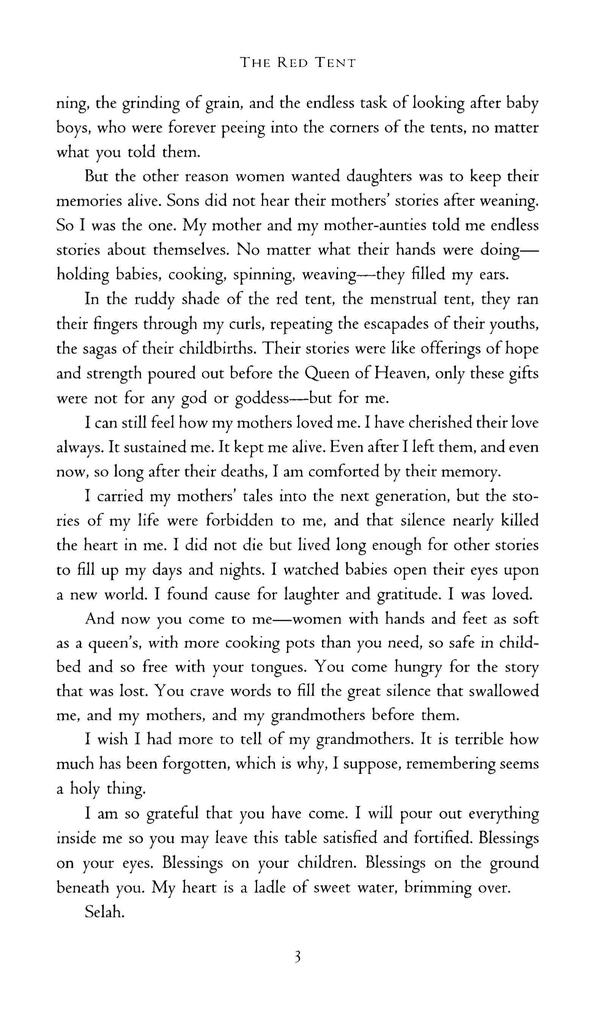
from Dina's Own Story, by Vanessa Ochs
Source: A Woman's Commentary
Dina tried to imagine having a story of her own to tell, of connections she had made that could widen their world. Her story would make her brothers lean forward with curiosity and jealousy, their elbows on their knees, their faces lit orange by the fire.
What if it were she, and not her father, who had encountered angels of God ascending and descending a ladder? She would have learned the name of each angel. She would have held on to their wings, climbed on their backs, and followed them homeward--and then she'd reciprocate, inviting them to her home. If she could only meet people outside her world, hear their languages, eat their foods, shop for red ribbon in their bazaars, wear their clothes, style her hair as they did. She would make a friend, who would reach for her hand...
Source: A Woman's Commentary
Dina tried to imagine having a story of her own to tell, of connections she had made that could widen their world. Her story would make her brothers lean forward with curiosity and jealousy, their elbows on their knees, their faces lit orange by the fire.
What if it were she, and not her father, who had encountered angels of God ascending and descending a ladder? She would have learned the name of each angel. She would have held on to their wings, climbed on their backs, and followed them homeward--and then she'd reciprocate, inviting them to her home. If she could only meet people outside her world, hear their languages, eat their foods, shop for red ribbon in their bazaars, wear their clothes, style her hair as they did. She would make a friend, who would reach for her hand...
A Poem written to Anita Diamant from the perspective of Dina, by Muktha Nair
To my daughter
Through whose words,
my soul lives on.
Some say I was raped,
But the world is yet to know the truth,
One that cannot be avenged, in my name.
But you, my Anita,
You have given me voice.
No longer just a forgotten name
Among words,
Written by men who know not.
You, as a fellow woman,
Have fulfilled the secret womanly vow,
By ensuring utterance of my name
giving a life to my name,
Thoughts to my name,
A voice to my name.
Giving me a place in the hearts of all;
Realizing the debacles of debates
Only wither away at the little felicity
Left for me.
Now my name
will be remembered,
In love,
In pain,
At birth
At death.
Not as a cursed whore;
But as a knowing Woman.
To my daughter
Through whose words,
my soul lives on.
Some say I was raped,
But the world is yet to know the truth,
One that cannot be avenged, in my name.
But you, my Anita,
You have given me voice.
No longer just a forgotten name
Among words,
Written by men who know not.
You, as a fellow woman,
Have fulfilled the secret womanly vow,
By ensuring utterance of my name
giving a life to my name,
Thoughts to my name,
A voice to my name.
Giving me a place in the hearts of all;
Realizing the debacles of debates
Only wither away at the little felicity
Left for me.
Now my name
will be remembered,
In love,
In pain,
At birth
At death.
Not as a cursed whore;
But as a knowing Woman.
(A poem written to Anita Diamant from the perspective of Dina)
A Note to Anita by Sara Milic
(source: https://lilith.org/2019/08/talking-back-to-the-red-tent-in-the-metoo-era/)
I am being stripped of my story
You’re covering my mouth
I can’t breathe, I’m panicking
You were supposed to be the knight on the white horse,
The foreign prince coming to save me
You tricked me with your stories of sweet bread
And nights of cuddling in the tent
I trusted you, my sister, to let my soul go free
To unleash me from this burden I’ve been carrying
To tell my truth, to expose my aggressor
Anita, I’m crying – can’t you hear me?
Tell them he raped me, Anita
Are you listening?
You changed my story
I know it’s hard to read
My sister, I wish I could forget it
You’ve taken from me, just as he did,
My voice and my sense of self
Will there ever be justice for me,
Or for the sisters before me?
Will the sisters after me be believed?
Anita, will you be the savior of the silenced?
Or will you lay your hand over their mouth,
And take from them what isn’t yours to keep?
Don’t tell them he loved me,
Don’t lie and say I loved him
Please, don’t tell them I was happy
When will my rape end?
A Note to Anita by Sara Milic
(source: https://lilith.org/2019/08/talking-back-to-the-red-tent-in-the-metoo-era/)
I am being stripped of my story
You’re covering my mouth
I can’t breathe, I’m panicking
You were supposed to be the knight on the white horse,
The foreign prince coming to save me
You tricked me with your stories of sweet bread
And nights of cuddling in the tent
I trusted you, my sister, to let my soul go free
To unleash me from this burden I’ve been carrying
To tell my truth, to expose my aggressor
Anita, I’m crying – can’t you hear me?
Tell them he raped me, Anita
Are you listening?
You changed my story
I know it’s hard to read
My sister, I wish I could forget it
You’ve taken from me, just as he did,
My voice and my sense of self
Will there ever be justice for me,
Or for the sisters before me?
Will the sisters after me be believed?
Anita, will you be the savior of the silenced?
Or will you lay your hand over their mouth,
And take from them what isn’t yours to keep?
Don’t tell them he loved me,
Don’t lie and say I loved him
Please, don’t tell them I was happy
When will my rape end?