Chanukah 2011/5772
Chanukah
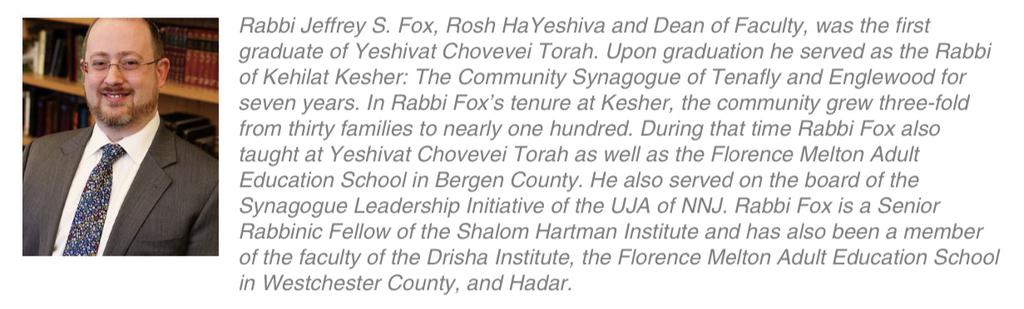
Rabbi Jeffrey Fox
Rosh Yeshiva
We are all wondering about leadership these days. Every few weeks a new front runner emerges for the Republican nomination. And as the primaries approach, we need to think carefully about the type of leader that we imagine ought to occupy the White House. In the Jewish community, leadership is also a central feature in conversation. What type of leader do you think the Torah envisions?
As Chanukah approaches, we have the opportunity to drill down to the question of the ideal Jewish leader. The chashmonaim represent a certain type of aggressive religious leadership that sits at the center of a debate between Rambam and Ramban. The point of departure for this analysis is the technical question of whether a kohen, a descendant of Aharon, may take a position of Jewish political leadership.
Ramban, in his commentary on Bereishit (49:10) talks about the necessity of keeping Jewish political leadership within the line of Judah. “The rod [of leadership] may not turn away from Judah”, says Jacob at the end of his life. The Ramban expounds on this,
Ramban points out two violations. First, they usurped the power from the line of Judah and David; something for which they had no right. Second, they committed a special violation because they are kohanim who were meant
Rambam in his Code (Mishneh Torah, Hilkhot Megila v’Channukah 3:1 outlines a very different version of this story.
As the Rambam introduces the story of Channukah he emphasizes the positive aspect of having a King from the
It seems that for the Rambam perhaps the ideal Jewish political leader is also a kohen; a person who is committed to the service of God as well as the service of people.
While there is no doubt a technical debate regarding political leadership from outside of the line of Judah at play between Ramban and Rambam; I believe their debate touches on a more fundamental question regarding the ideal Jewish leader. For the Ramban, the chashmonaim committed a grave sin by combining religious and political leadership. For the Rambam, part of the greatness of the chashmonaim was the very fact that they combined religious and political leadership.
How we think about this question has serious implications for the modern State of Israel and its government. In addition, we might use this model to think about the person we want in the White House. Before you enter into the polling booth take a few minutes to ask yourself what guidance this debate in particular, and Torah-values in general, might have to offer.
To see the sources in full, both Hebrew and English, click through this link.