


(א) וַיֹּ֤אמֶר ה' אֶל־מֹשֶׁ֣ה וְאֶֽל־אַהֲרֹ֔ן בְּאֶ֥רֶץ מִצְרַ֖יִם לֵאמֹֽר׃ (ב) הַחֹ֧דֶשׁ הַזֶּ֛ה לָכֶ֖ם רֹ֣אשׁ חֳדָשִׁ֑ים רִאשׁ֥וֹן הוּא֙ לָכֶ֔ם לְחׇדְשֵׁ֖י הַשָּׁנָֽה׃
(1) GOD said to Moses and Aaron in the land of Egypt: (2) This month הַחֹ֧דֶשׁ shall be for you the beginning of months רֹ֣אשׁ חֳדָשִׁ֑ים; it shall be the first of the months of the year לְחׇדְשֵׁ֖י הַשָּׁנָֽה for you.
I. חֹ֫דֶשׁ282 noun masculineGenesis 7:11 (newness), new moon, month
https://bibliaparalela.com/bdb/2320.htm
החדש הזה. שם חדש יבא על חדשי הלבנה שהיא תתעלם ותתחדש, והחמה אין לה חדשים
Malbim - "this month /chodesh / newness" - the name chodesh refers to the months of the moon, in that she disappears and is then renewed. Whereas the sun does not have chodashim / months / newnesses.
והנה אין ללבנה שנה כלל. כאשר אין לשמש חדש כלל. כי לא יתחדש בשמש דבר רק דבר החדוש הוא לאור הלבנה. ובעבור זה נקרא חדש.
Ibn Ezra:
... the moon doesn't have a year, just like the sun doesn't have a month. Because the sun does not have any renewal - the only thing that is renewed is the light of the moon. And therefore a month is called 'chodesh' (new).
(1) החדש הזה This month — God showed him (Moses) the moon in her newness (ie the first stage of its renewal), and said to him, “The time when the moon renews herself thus shall be unto you the beginning of the month.” (This is a quote from an ancient midrash, the Mekhilta d'Rabbi Yishmael 12:2:2).
But no Scriptural verse can lose its literal meaning, which is that God was speaking of this in reference to the month of Nisan: ie that this month shall be the beginning in the order of counting the months, so that Iyar shall be called the second, Sivan the third (and so on).
So let's summarise: what are the various ideas we have seen thus far regarding the moon, months, newness, and the origin of the Jewish calendar?
Now let's consider on a more abstract level what it means to have control of our own time, and our own definitions of time:
החודש הזה לכם ראש חדשים This month shall be for you the beginning of months:
From now on these months will be yours, to do with as you like.
This is by way of contrast to the years when you were enslaved when you had no control over your time or timetable at all. While you were enslaved, your days, hours, minutes even, were always at the beck and call of your taskmasters.
(א) החדש הזה. א''ר יהודה הפרסי כי ישראל היו מונים כפי שנות החמה כמשפט העמים הערלים...
This month - Rabbi Yehuda the Persian says that the Jewish people used to count according to solar years, like the uncircumcised nations of the world...
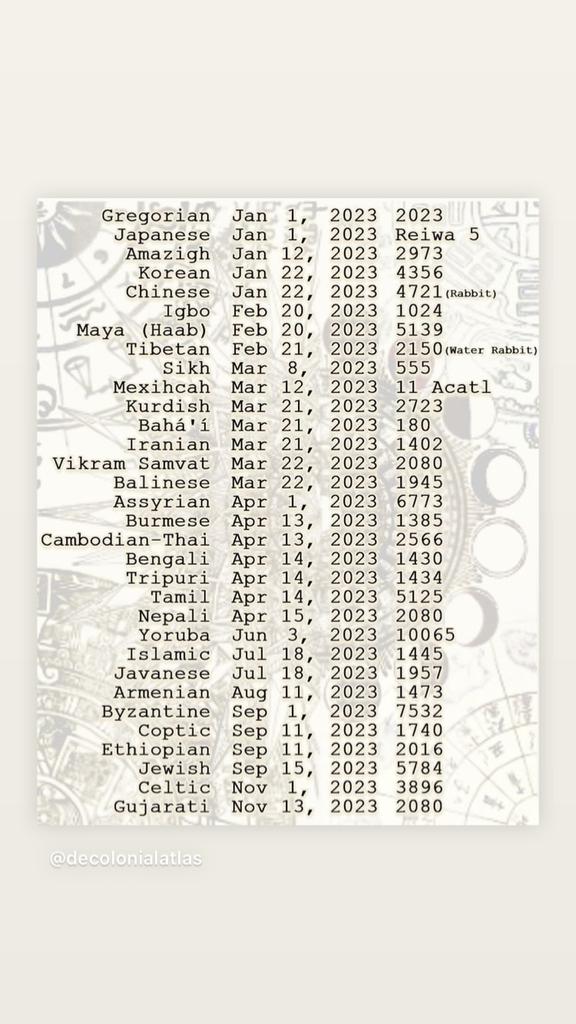
-
decolonialatlas
Whether or not you count the same days, observe the same holidays, or recognize the same cycles of time as your ancestors – the systems they developed, and even our current systems, will outlast the cultural memory. Every day is likely New Years Day in some culture, somewhere on this Earth, even if no one living remembers. And that’s a reason to celebrate every day.
-
-
wongway.e
Also! Lunar new year (which lots of people call Chinese New Year but is different) is celebrated by lots of eastern Asian countries like Singapore, Japan, and Vietnam (which is also called Tết)
-
nebo.zelene.boje
There is also Julian (Russian and Serbian Orthodox church follow that calendar) new year - 13th of January. ;)
-
totallymaturenow
I'm Iranian. I DONT expect anyone to know this but we are actually much much older than 1402 - that is just when we were invaded and forced to convert to Islam. Our civilization is an estimated 5000 years old. Respect this list & the true owners of turtle Island.
-
twomoonlife
Reiwa comes from the Japanese calendar system based on naming periods in association with different emperors i.e. from Japanese imperialism fyi, it definitely shouldn’t be included in a post on decolonizing time! But the lunar calendar is pretty cool
-
beingamanda
YAY!! Thank you for including the Assyrian calendar! 👏🙌❤️
-
feige_
Jewish new year falls on the same day every year: the first of Tishrei
-
tylerivesnyc
Thanks for this. Decolonize time forever
-
lanco_0
For the Lakota it’s around July (sun-dance)
-
aradsarkis
According to ancient Armenian calendar (hin haykakan tomar) it is the year of 4515 🤔 Or have you picked the Armenian church calendar as a basis?
- rapture_realm
-
Aren’t there different month names and lengths too? Would love to hear about those. Is this chart just translated to Gregorian months and dates?
-
ashr.wgln
The Jewish New Year is 2 days...
-
scarlettwestwrites
Mexika Aztec March 12. 😍
-
zaryaazadi
Ezidi new year is missing
-
wongway.e
Now let's look at our calendar and our identity being synced to the moon through a more mythopoetic lens. We will start by examining the Torah's account of the creation of the heavenly bodies:
(יד) וַיֹּ֣אמֶר אֱלֹקִ֗ים יְהִ֤י מְאֹרֹת֙ בִּרְקִ֣יעַ הַשָּׁמַ֔יִם לְהַבְדִּ֕יל בֵּ֥ין הַיּ֖וֹם וּבֵ֣ין הַלָּ֑יְלָה וְהָי֤וּ לְאֹתֹת֙ וּלְמ֣וֹעֲדִ֔ים וּלְיָמִ֖ים וְשָׁנִֽים׃ (טו) וְהָי֤וּ לִמְאוֹרֹת֙ בִּרְקִ֣יעַ הַשָּׁמַ֔יִם לְהָאִ֖יר עַל־הָאָ֑רֶץ וַֽיְהִי־כֵֽן׃
(טז) וַיַּ֣עַשׂ אֱלֹקִ֔ים אֶת־שְׁנֵ֥י הַמְּאֹרֹ֖ת הַגְּדֹלִ֑ים אֶת־הַמָּא֤וֹר הַגָּדֹל֙ לְמֶמְשֶׁ֣לֶת הַיּ֔וֹם וְאֶת־הַמָּא֤וֹר הַקָּטֹן֙ לְמֶמְשֶׁ֣לֶת הַלַּ֔יְלָה וְאֵ֖ת הַכּוֹכָבִֽים׃ (יז) וַיִּתֵּ֥ן אֹתָ֛ם אֱלֹקִ֖ים בִּרְקִ֣יעַ הַשָּׁמָ֑יִם לְהָאִ֖יר עַל־הָאָֽרֶץ׃ (יח) וְלִמְשֹׁל֙ בַּיּ֣וֹם וּבַלַּ֔יְלָה וּֽלֲהַבְדִּ֔יל בֵּ֥ין הָא֖וֹר וּבֵ֣ין הַחֹ֑שֶׁךְ וַיַּ֥רְא אֱלֹקִ֖ים כִּי־טֽוֹב׃ (יט) וַֽיְהִי־עֶ֥רֶב וַֽיְהִי־בֹ֖קֶר י֥וֹם רְבִיעִֽי׃ (פ)
(14) Divinity declared, “Let there be lights in the expanse of the sky to distinguish day from night; they shall serve as signs for the set times, for the days and for the years; (15) and they serve as lights in the expanse of the sky to shine upon the earth.” And it was so.
(16) Divinity made the two great lights, the great light to have rulership of the day and the little light to have rulership of the night; and the stars. (17) And Divinity set them in the expanse of the sky to shine upon the earth, (18) to have rulership of the day and the night, and to separate light from darkness. And Divinity saw that this was good. (19) And there was evening and there was morning, a fourth day.
A close reading of Gen 1:14-15 reveals a lot of different functions of the heavenly bodies. How many specific functions can you list?
Looking closely at this whole passage, do you notice anything else that might be surprising?
Rabbi Shimon ben Pazi raises a contradiction between two verses. It is written: “And God made the two great lights” (Genesis 1:16), and it is also written in the same verse: “The greater light to rule the day, and the lesser light to rule the night,” indicating that only one was great.
Rabbi Shimon ben Pazi explains:
When God first created the sun and the moon, they were equally bright. Then, the moon said before the Holy One, Blessed be He: "Master of the Universe, is it possible for two kings to serve with one crown? One of us must be subservient to the other."
God, therefore, said to her [the moon]: "If so, go and diminish yourself."
She said before Him: "Master of the Universe! Since I made a correct observation before You, must I diminish myself?"
God said to her: "As compensation, go and rule both during the day along with the sun and during the night."
She said to Him: "What is the greatness of shining alongside the sun? What use is a candle in the middle of the day?"
God said to her: "Go; let the Jewish people count the days and years with you, and this will be your greatness."
She said to Him: "But the Jewish people will count with the sun as well, as it is impossible that they will not count seasons with it, as it is written: “And let them be for signs, and for seasons, and for days and years” (Genesis 1:14).
God said to her: "Go; let righteous men be named after you. Just as you are called the lesser [hakatan] light, there will be Ya’akov HaKatan, i.e., Jacob our forefather (see Amos 7:2), Shmuel HaKatan the Tanna, and David HaKatan, i.e., King David (see I Samuel 17:14)."
God saw that the moon was not comforted.
The Holy One, Blessed be He, said: Bring atonement for me, since I diminished the moon. The Gemara notes: And this is what Rabbi Shimon ben Lakish says: What is different about the goat offering of the New Moon, that it is stated with regard to it: “For the Lord” (Numbers 28:15)? The Holy One, Blessed be He, said: This goat shall be an atonement for Me for having diminished the size of the moon.
(יא) וּבְרָאשֵׁי֙ חָדְשֵׁיכֶ֔ם תַּקְרִ֥יבוּ עֹלָ֖ה לַה' פָּרִ֨ים בְּנֵֽי־בָקָ֤ר שְׁנַ֙יִם֙ וְאַ֣יִל אֶחָ֔ד כְּבָשִׂ֧ים בְּנֵי־שָׁנָ֛ה שִׁבְעָ֖ה תְּמִימִֽם׃ (יב) וּשְׁלֹשָׁ֣ה עֶשְׂרֹנִ֗ים סֹ֤לֶת מִנְחָה֙ בְּלוּלָ֣ה בַשֶּׁ֔מֶן לַפָּ֖ר הָאֶחָ֑ד וּשְׁנֵ֣י עֶשְׂרֹנִ֗ים סֹ֤לֶת מִנְחָה֙ בְּלוּלָ֣ה בַשֶּׁ֔מֶן לָאַ֖יִל הָֽאֶחָֽד׃ (יג) וְעִשָּׂרֹ֣ן עִשָּׂר֗וֹן סֹ֤לֶת מִנְחָה֙ בְּלוּלָ֣ה בַשֶּׁ֔מֶן לַכֶּ֖בֶשׂ הָאֶחָ֑ד עֹלָה֙ רֵ֣יחַ נִיחֹ֔חַ אִשֶּׁ֖ה לַה'׃ (יד) וְנִסְכֵּיהֶ֗ם חֲצִ֣י הַהִין֩ יִהְיֶ֨ה לַפָּ֜ר וּשְׁלִישִׁ֧ת הַהִ֣ין לָאַ֗יִל וּרְבִיעִ֥ת הַהִ֛ין לַכֶּ֖בֶשׂ יָ֑יִן זֹ֣את עֹלַ֥ת חֹ֙דֶשׁ֙ בְּחָדְשׁ֔וֹ לְחָדְשֵׁ֖י הַשָּׁנָֽה׃ (טו) וּשְׂעִ֨יר עִזִּ֥ים אֶחָ֛ד לְחַטָּ֖את לַה' עַל־עֹלַ֧ת הַתָּמִ֛יד יֵעָשֶׂ֖ה וְנִסְכּֽוֹ׃ (ס)
(11) On your new moons, you shall present a burnt offering to [or for] the LORD: two bulls of the herd, one ram, and seven yearling lambs, without blemish. (12) As meal offering for each bull: three-tenths of a measure of choice flour with oil mixed in. As meal offering for each ram: two-tenths of a measure of choice flour with oil mixed in. (13) As meal offering for each lamb: a tenth of a measure of fine flour with oil mixed in. Such shall be the burnt offering of pleasing odor, an offering by fire to the LORD. (14) Their libations shall be: half a hin of wine for a bull, a third of a hin for a ram, and a quarter of a hin for a lamb. That shall be the monthly burnt offering for each new moon of the year. (15) And there shall be one goat as a sin offering to [or for] the LORD, to be offered in addition to the regular burnt offering and its libation.
And therefore we are able to have Rosh Hashanah because Rosh Hashanah is on Rosh Chodesh. And this is a great kindness from God, because on Rosh Chodesh God said, "Bring for Me an atonement," and therefore we have the opportunity to ask for atonement ourselves. We find that the essence of Rosh Hashanah is the renewal of the moon, because God said, "Bring for Me an atonement because I diminished the moon," this is itself a renewal because the moon now begins to grow since God is sorry for having decreased its size.
וִיהִי רָצוֹן מִלְּפָנֶיךָ ה' אֱלֹקַי וֵאלֹקֵי אֲבוֹתַי לְמַלֹּאת פְּגִימַת הַלְּבָנָה וְלֹא יִהְיֶה בָּהּ שׁוּם מִעוּט. וִיהִי אוֹר הַלְּבָנָה כְּאוֹר הַחַמָּה וּכְאוֹר שִׁבְעַת יְמֵי בְרֵאשִׁית כְּמו שֶׁהָיְתָה קוֹדֶם מִעוּטָהּ. שֶׁנֶּאֱמַר אֶת שְׁנֵי הַמְּארוֹת הַגְּדוֹלִים: וְיִתְקַיֶם בָּנוּ מִקְרָא שֶׁכָּתוּב וּבִקְשׁוּ אֶת ה' אֱלֹהֵיהֶם וְאֵת דָּוִיד מַלְכָּם. אָמֵן:
May it be your will, Lord my God and God of my ancestors, to fill the flaw of the moon so that it is no longer in its diminished state. May the light of the moon be like the light of the sun and like the light of the seven days of creation as it was before it was diminished, as the verse states, "the two great luminaries".
(א) ויקרא שמו זרח. זרח על שם החמה, פרץ על שם הלבנה, ומלכות בית דוד בא מפרץ שהוא כנגד הלבנה. וידוע כי ימות הלבנה כ"ט יום וע"כ תמצא מפרץ בן יהודה עד צדקיהו כ"ט איש... הם כ"ט איש כנגד ימות הלבנה. וכשם שהלבנה שוקעת אחר כ"ט יום כן מלכות בית דוד נפסקה וחרב המקדש בימי צדקיהו שהוא כ"ט לפרץ. (ו) ומעתה התבונן בענין יהודה ותמר ושני הילדים האלה פרץ וזרח... וראוים היו פרץ וזרח להיותם נאצלים מתמר, כי הם כנגד חמה ולבנה הנאצלים מן האור הראשון הכולל זכר ונקבה, כי זרח כנגד החמה שזורחת תמיד בענין שוה, ופרץ כנגד הלבנה שהיא פעם מתמלאת פעם חסרה ונפרצת, ע"כ יתחייב מלכות בית דוד הבא מפרץ להיות בזמן מן הזמנים פעם קיים פעם בטל... ולפי שמלכות בית דוד בא מפרץ ופרץ כנגד הלבנה הזכירו חכמי האמת בחדוש הלבנה ושלח לי' סימנא דוד מלך ישראל חי וקיים. והמאמר הזה ע"ד פשוטו כי קרא הלבנה בשם דוד לפי שדוד בא מפרץ שהוא כנגד הלבנה ועוד שהלבנה נקראת המאור הקטן. וכתיב בדוד (ש"א יז) ודוד הוא הקטן. ובאמרו חי וקיים כונתו לומר נראית הלבנה.
(1) ויקרא שמו זרח, “he called his name Zerach.” The name Zerach (shines) symbolised the sun, whereas the name Peretz (interruption) symbolised the moon. We know that the moon’s orbit is completed every 29 days. This is why you will find that there were 29 righteous people (descended from him) listed in the Bible from the time of Peretz until the last King of the Davidic dynasty, Tzidkiyahu... These comprise a total of 29 men corresponding to the days in the lunar orbit; the lunar “sun” sets after such a period of time. The dynasty of David underwent a similar decline after Tzidkiyah and this is why the Temple was destroyed during the lifetime of Tzidkiyah who was the twenty-ninth scion counting from Peretz. (6) And now you will understand what occurred in the case of Yehudah, Tamar, and these two children born to Tamar and Yehudah respectively... Zerach corresponded to the element sun, the male element, the sun which shines without interruption, whereas Peretz corresponded to the element moon, the female element, a light which is uneven, sometimes stronger sometimes waning completely such as the light of the moon. It was therefore almost a historical must that the dynasty of King David be the product of Peretz rather than Zerach, seeing that he, Peretz — as indicated by his name already — represented the type of light we get from the moon, i.e. light which fluctuates constantly in intensity as does the light of the moon... Seeing that the kingdom of the house of David is derived from Peretz, and Peretz in turn has been likened to the moon, the sages formulated the words דוד מלך ישראל חי וקיים, “David King of Israel is alive and endures,” when we recite the monthly benedictions welcoming the arrival of the renewal of the light of the moon.
(ו) ויעקב נקרא קטן, והוא מונה מספר שלו למאור הקטן (שם). ומפני זה נקרא "אדום". ואמרו במדרש (ב"ר סג, יב) תבשילו אדום, שנאמר (בראשית כה, ל) "הלעיטני נא מן האדום". ארצו אדומה, שנאמר (בראשית לב, ג) "ארצה שעיר שדה אדום". גבוריו אדומים, שנאמר (ר' נחום ב, ד) "גבוריו מאדם". לבושיהן אדום, שנאמר (שם) "אנשי חיל מתולעים". ופורע ממנו אדום, שנאמר (שיה"ש ה, י) "דודי צח ואדום". בלבוש אדום, שנאמר (ישעיה סג, ב) "מדוע אדום ללבושך", עד כאן. ובארו בזה כי שם "אדום" ראוי אל עשו, ולכך כל אשר שייך אליו נקרא בשם "אדום". וכל זה מפני כי מקבל כחו מן החמה, אשר היא אדומה, וכדאיתא בבבא בתרא (פד. ) האי שמשא סומקתא היא. בשביל כך נקראת השמש חרסה, (שופטים יד, יח) "בטרם תבא החרסה", כי החרס הוא אדום. וכמו שנקרא המאור הקטן "לבנה" (ישעיה כד, כג) על שם הלבנות, כך נקראת השמש "חרסה" על שם האדמימות, ואין ספק בדבר זה:
Ya'akov is called small and his calendar is based on the small luminary (the moon, literally "the white one"). Edom (Esav) is called red, his food is red, his land is red, his warriors are red, his clothing is red... because Esav receives his strength from the sun which is red.
Perhaps we would rather be small and sometime victims than big red aggressors? Scholar and historian Daniel Boyarin has written a whole book about Jewish masculinity in contradistinction to the 'normative' masculinity of Greece, Rome and the Euro-American world. Unheroic Conduct: The Rise of Heterosexuality and the Invention of the Jewish Man
One final connection it seems worth pointing out is the idea that antisemitism, unlike other forms of prejudice (but like the moon), is peculiarly "cyclical" in its appearance.
Antisemitism is cyclical. It vacillates between periods of overt persecution, violence and genocide, and periods of more subtle, covert forms of antisemitism. This insecurity about when antisemitism might arise has left many Jews super-vigilant, always worrying and on edge. Even in periods of relative security, the worries are always present. Has the cycle turned? Is another Inquisition, pogrom, or Holocaust imminent? Are we in possible danger? These concerns get passed down from generation to generation and seep into every aspect of life...
https://evolve.reconstructingjudaism.org/antisemitism-race-intersections/