


קָדֹשׁ: to be cut off, separated, to be/become pure, sacred, holy (Jastrow Dictionary)
This "separated" quality is probably the basic meaning of the Hebrew word kadosh. Much like the English word "distinguished," which can mean both "separate" and "special," kadosh begins by meaning "separate" and ends by meaning "special" or "sacred," "holy," "elevated" (Neil Gilman, Sacred Fragments, p.229)
God calls to Moses from the Tent of Meeting and tells him the laws of the animal and meal offerings (korbanot) brought in the Sanctuary.
There are various offerings:
• Olah (ascending) that is wholly burned by the fire on top of the altar. Represents giving everything, having entire commitment. (voluntary)
• Minchah (meal offering), of which there are 5 kinds prepared with fine flour, olive oil and frankincense
• Shelamim (complete, means wholeness) known as the offering of well-being, whose meat was eaten by the one bringing the offering {after parts are burned on the altar}, parts of which are also given to the kohanim (priests). (voluntary)
• Chatat (sin offering) brought to atone for transgressions committed unintentionally by the Kohein Gadol (High Priest) or the entire community, or an ordinary person. Some is offered up, some eaten by Kohanim, none by people. (mandatory)
• Asham (guilt offering) brought a person guilty of a wrongdoing (does not report a wrong, or knowingly commits a sin, or by swearing falsely to defraud another person, or deals dishonestly. Sacrifice occurs after restoration is made. (mandatory)
§ The Gemara cites similar interpretations of verses: Reish Lakish said: What is the meaning of that which is written: “This is the law [torah] of the burnt offering, of the meal offering, and of the sin offering, and of the guilt offering, and of the consecration offering, and of the sacrifice of peace offerings” (Leviticus 7:37)? This teaches that anyone who engages in Torah study is considered as though he sacrificed a burnt offering, a meal offering, a sin offering, and a guilt offering. Rava said an objection to this interpretation: This verse states: “Of the burnt offering, of the meal offering.” If the interpretation of Reish Lakish is correct, the verse should have written: “Burnt offering and meal offering.” Rather, Rava says that the correct interpretation of this verse is: Anyone who engages in Torah study need not bring a burnt offering, nor a sin offering, nor a meal offering, nor a guilt offering.
For over the Tabernacle a cloud of יהוה rested by day, and fire would appear in it by night, in the view of all the house of Israel throughout their journeys.
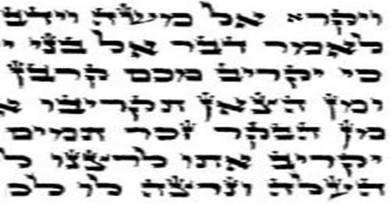
וַיִּקְרָ֖א אֶל־מֹשֶׁ֑ה וַיְדַבֵּ֤ר יְהוָה֙ אֵלָ֔יו מֵאֹ֥הֶל מוֹעֵ֖ד לֵאמֹֽר׃ דַּבֵּ֞ר אֶל־בְּנֵ֤י יִשְׂרָאֵל֙ וְאָמַרְתָּ֣ אֲלֵהֶ֔ם אָדָ֗ם כִּֽי־יַקְרִ֥יב מִכֶּ֛ם קָרְבָּ֖ן לַֽיהוָ֑ה מִן־הַבְּהֵמָ֗ה מִן־הַבָּקָר֙ וּמִן־הַצֹּ֔אן תַּקְרִ֖יבוּ אֶת־קָרְבַּנְכֶֽם׃
The LORD called to Moses and spoke to him from the Tent of Meeting, saying: Speak to the Israelite people, and say to them: When any of you presents an offering of cattle to the LORD, he shall choose his offering from the herd or from the flock.
-
- to come near, approach, enter into, draw near
- (Qal) to approach, draw near
- (Niphal) to be brought near
- (Piel) to cause to approach, bring near, cause to draw near
- (Hiphil) to bring near, bring, present
- to come near, approach, enter into, draw near
Rabbi Shlomo Wolbe, (1914 - 2005), Alei Shur
אדם כי יקריב מכם IF A MAN OF YOU OFFER [AN OFFERING] — This means, when he offers: Scripture is speaking here of free — will offerings (cf. Sifra, Vayikra Dibbura d'Nedavah, Section 2 4).
Leviticus 1,1. “He called out to Moses;” the fact that the letter א in this verse is written in smaller script is explained by something we had discussed in Exodus 24,1 on the line: ואל משה אמר עלה אל ה', “and to Moses He had said: ‘ascend towards Hashem.’” When a person performs one of G’d’s commandments this makes an impression in the celestial spheres and helps to awaken in him the desire to perform additional commandments so that he will constantly be occupied with doing G’d’s will. It had been Moses’ will to continuously perform G’d’s will and to thereby continue to ascend ever higher and come closer to Hashem as stated by the Zohar when explaining the line: ומשה עלה אל האלוקים, “and Moses had ascended towards G’d,” (Exodus 19,3)....This is reflected here by the letter א being written in small script. It acknowledges the humility of Moses which exceeded anyone else’s humility, i.e. the “small” א. We have a rule when offering a sacrifice to G’d that this offering is to reflect the largesse that G’d has seen fit to bestow upon us, without us in the lower regions of the universe having performed any good deeds to deserve this. This is the reason that the animal sacrifice must be dedicated and consecrated while still alive, as the ultimate gift G’d can bestow us is life itself. Life can only be bestowed by G’d Himself. While the Israelites were in the desert they were in the position of receiving G’d’s largesse without having made an input of their own as they could not seed or plant orchards or grow grain in the desert.
Remember that if Adam had not sinned the whole concept of areas that are sanctified and areas that are not would not have existed. The whole earth would have been like גן עדן, and every place on earth would have enjoyed the status of sanctity.....There similarly would not have been people specially selected to perform the service in the Sanctuary since the whole of mankind would have been a kingdom of priests and a holy nation. Neither would certain times have been singled out as especially suitable for festivals or as times for atonement, etc.. Every single day would have enjoyed the same high status of holiness. Every day would have exuded the atmosphere of the Sabbath as promised for the future after the arrival of the messianic age....Man would not have been required to bring himself close to G–d by means of an animal sacrifice....this is why the Torah writes: אדם כי יקריב, an allusion to אדם הראשון, first man.
The essence of sacrifice, said Rabbi Shneur Zalman, is that we offer ourselves. We bring to God our faculties, our energies, our thoughts and emotions. The physical form of sacrifice – an animal offered on the altar – is only an external manifestation of an inner act. The real sacrifice is mikem, “of you.” We give God something of ourselves.
Rabbi Lord Jonathan Sacks on Rabbi Zalman of Liadi, Likutei Torah.
You may fall to the lowest depths, Heaven forbid. But no matter how far you have fallen, it is still forbidden to give up hope. Repentance is higher even than the Torah – therefore there is absolutely no place for despair.
TO BRING GUILT ON THE PEOPLE. The kohen gadol taught incorrectly and the people were guilty, all of them having acted inadvertently. On the other hand, the meaning of leashmat ha-am (to bring guilt on the people) might be, because of the guilt of all of the people. It is mentioned here because the kohen is the bearer of the Torah and he is very careful and holy unto God.
Furthermore, it is said of a large ox, ‘An offering made by fire of a sweet savour’; of a small bird, ‘An offering made by fire of a sweet savour’; and of a meal-offering, ‘An offering made by fire of a sweet savour’: to teach you that it is the same whether one offers much or little, so long as he directs his heart to heaven. And lest you say, God needs it for food, the text therefore states (Psalms 50:12), If I were hungry, I would not tell you; for the world is Mine and the fullness thereof. And it also says (Psalms 50:10), For every beast of the forest is Mine, and the cattle upon a thousand hills. I know all the fowls of the mountains; and the wild beasts of the field are mine. Do I eat the flesh of bulls, or drink the blood of goats? I did not tell you to sacrifice so that you should say, I will do God's will that God will do my will. You do not sacrifice for My sake, but for your own sakes, as it is written (Lev. 19:5), At your will shall you sacrifice it.
Another interpretation is: ‘At your will shall you sacrifice it.’: sacrifice it of your own free will, sacrifice it with the proper intention.
And if his means do not suffice for two turtledoves or two pigeons, he shall bring as his offering for that of which he is guilty a tenth of an ephah of choice flour for a sin offering; he shall not add oil to it or lay frankincense on it, for it is a sin offering.
1) (Vayikra 19:1) "And the L–rd spoke to Moses, saying (Vayikra 19:2) Speak to the entire congregation of the children of Israel, and say to them: Holy shall you be." We are hereby taught that this section was stated in the presence of all. Why so? Because most of the major tenets of Torah are inherent in it. "Holy shall you be": Separate yourselves (from arayoth.) "Holy shall you be, for holy am I, the L–rd your G d." If you sanctify yourselves, I will consider it as if you had sanctified Me, and if you do not sanctify yourselves, I will consider it as if you had not sanctified Me. — But perhaps the meaning is: If you sanctify Me, I am holy, and if not I am not holy. It is, therefore, written "for holy am I" — I remain in My holiness whether or not I am sanctified (by men). Abba Shaul says: What is the duty of the King's retinue? To follow in the footsteps of the King (and to be holy).
And on the face of it, it is an impossible thing! How could the text say that all of the congregation of Israel should be holy! Holiness is beyond even the greatest among Israel, since not every person can merit to be called holy. And it is a positive commandment for every human. And this is extraordinary: even though every person is what they are, they can still be holy. And it seems that the explanation is that each, according to what The Holy One commands each person, that person needs to separate and comprehend their standing. The holiness of simple people is not appropriate for those who are in a higher standing, and a person who understands what for them is materialism and coarseness and separates themselves from it, that is holiness. But for those in a higher level that is not holiness at all, and a person in that standing needs to separate from other things, constantly - even if for the simple people their separating constantly from their materialism is real and great kedushah. And the general rule is that this is a general mitzvah but for each person it will look like a different mitzvah, as there is a different holiness, as each person needs to make holy their tendencies that their nature gives them.