
Save "«Рождения Феминизма»

Тазрия-Мецора 5783
"
«Рождения Феминизма» Тазрия-Мецора 5783

“No man should bring children into the world who is unwilling to persevere to the end in their nature and education.”

Plato

דַּבֵּ֞ר אֶל־בְּנֵ֤י יִשְׂרָאֵל֙ לֵאמֹ֔ר אִשָּׁה֙ כִּ֣י תַזְרִ֔יעַ וְיָלְדָ֖ה זָכָ֑ר וְטָֽמְאָה֙ שִׁבְעַ֣ת יָמִ֔ים כִּימֵ֛י נִדַּ֥ת דְּוֺתָ֖הּ תִּטְמָֽא׃

וּשְׁלֹשִׁ֥ים יוֹם֙ וּשְׁלֹ֣שֶׁת יָמִ֔ים תֵּשֵׁ֖ב בִּדְמֵ֣י טָהֳרָ֑ה בְּכָל־קֹ֣דֶשׁ לֹֽא־תִגָּ֗ע וְאֶל־הַמִּקְדָּשׁ֙ לֹ֣א תָבֹ֔א עַד־מְלֹ֖את יְמֵ֥י טָהֳרָֽהּ׃

(ה) וְאִם־נְקֵבָ֣ה תֵלֵ֔ד וְטָמְאָ֥ה שְׁבֻעַ֖יִם כְּנִדָּתָ֑הּ וְשִׁשִּׁ֥ים יוֹם֙ וְשֵׁ֣שֶׁת יָמִ֔ים תֵּשֵׁ֖ב עַל־דְּמֵ֥י טׇהֳרָֽהֿ׃

Speak to the Israelite people thus: When a woman at childbirth bears a male, she shall be impure seven days; she shall be impure as at the time of her condition of menstrual separation.—

She shall remain in a state of blood purification for thirty-three days: she shall not touch any consecrated thing, nor enter the sanctuary until her period of purification is completed.

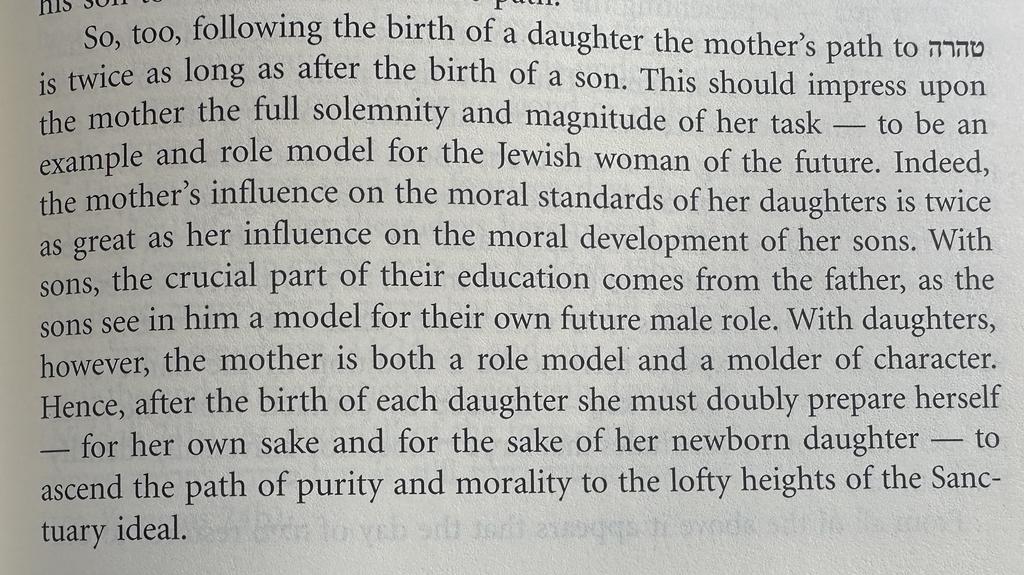
(5) If she bears a female, she shall be impure two weeks as during her menstruation, and she shall remain in a state of blood purification for sixty-six days.

השאלה הא' למה כשרצתה התורה להזהיר על טומאות בני אדם התחילה ביולד' והיה ראוי שתתחיל אם בטומאה היותר קלה והיא הזבה או בטומאה היותר חמורה מטומאות בני אדם החי והיא הצרעת:

השאלה הב' למה חייבה תורה את היולדת שמלבד שתטמא שבעת ימים שממנה יוצא דם עוד תטמא ל"ג יום לימי טהרה כי כיון שאין לה אז דם מטמא למה תטמא לעניני המקדש. ואם מפני שהם כלם מ' יום כמספר הימים שנוצר הולד בהם הלא כבר נוצר זה תשעה חדשים למה לנו להטמא כנגד ימי יצירת הולד שהם ימי טהרה ונקיון לא טומאה:

השאלה הג' למה חייבה ליולדת נקבה בכפל הימים ליולדת זכר אם בימי הטומאה שצוה שתטמא היולדת זכר שבעת ימים והיולדת נקבה י"ד יום ואם בשאר הימים שחייב' את היולדת זכר שתשב עוד בדמי טהרה ל"ג יום והיולדת נקבה כפל ס"ו יום. וכל שכן שיקשה זה לדעת האומ' שיצירת זכר או נקבה לאחד וארבעים יום:

(ס) ...יתכן כי הצרעת והזיבות תלויות בטמאת המת כי המות הוא ההפסד הכללי לגוף והאבר המצרע דומה למת וכן הזרע הנפסד כי יש בו רוח חיים טבעי ובו ההכנה להיות לטפת ממנה דם ממנה יתהוה האדם הפסדו של זרע זה הוא אם כן נגוד לתכונת החיות ורוח החיים

60...I take, however, the liberty of stating--though not with absolute certainty--that leprosy and issue are occasionally the consequence of contamination by corpses. A dead body represents the highest degree of malignancy, and a leprous limb is as if dead. It is the same with lost σπέρμα, because it had been endowed with living power, capable of engendering a human being. Its loss, therefore, forms a contrast to the living and breathing

Free the child's potential, and you will transform him into the world.

Maria Montessori

חֲנֹ֣ךְ לַ֭נַּעַר עַל־פִּ֣י דַרְכּ֑וֹ גַּ֥ם כִּֽי־יַ֝זְקִ֗ין לֹֽא־יָס֥וּר מִמֶּֽנָּה׃
Train a lad in the way he ought to go;
He will not swerve from it even in old age.
חנוך לנער. לפי מה שתלמד לנער ותחנכהו בדברים אם לטוב אם לרע: גם כי יזקין לא יסור ממנה:
Train a child According to what you teach a child and train him in matters, either for good or bad, even when he grows old, he will not turn away from it.
חנוך לנער על פי דרכו, מצוה ב' דברים, א] <שיחנכו את הנער, והוא שירגילנו מנעוריו אל השלמות, אם בדעות, אם במעשים ובמדות, כי ההרגל שיורגל בנעוריו, יעשו בו חקוי עצום ורושם שמור בנפש לא יסור גם לעת זקנה, לא כן החינוך שיתחנך בגדלותו אין החקוי קבוע בנפש, וימוש ממנו לעת זקנתו, ב] מצוה שיהיה החינוך ע"פ דרכו כי כל אדם מסוגל מטבעו לענין אחר, בין בדעות יש שמוחם חד, ויש ששכלם ישר בלתי מחודד, וצריך ללמדם כפי ההכנה שנמצא בו, ובין במעשים, יש שמוכן לאומנות מיוחד, ולמדה מיוחדת, ויקבל אותה בקל, וזה יוכר בהנער לפי התשוקה, ולפי מה שמשתדל בעצמו באיזה דבר מיוחד, צריך לחנכו לפי דרכו ולפי הרושמים שיש בו אל מה שהוא מוכן אליה, שאז לא יסור ממנה גם כי יזקין, לא כן אם יחנכהו אל מה שהוא זולת טבעו:
תָּנוּ רַבָּנַן לְעוֹלָם תְּהֵא שְׂמֹאל דּוֹחָה וְיָמִין מְקָרֶבֶת לֹא כֶּאֱלִישָׁע שֶׁדְּחָפוֹ לְגֵחֲזִי בִּשְׁתֵּי יָדָיו וְלֹא כִּיהוֹשֻׁעַ בֶּן פְּרַחְיָה שֶׁדְּחָפוֹ לְיֵשׁוּ הַנּוֹצְרִי מִתַּלְמִידָיו בִּשְׁתֵּי יָדָיו
The Sages taught: It should always be the left, weaker, hand that pushes another away and the right, stronger, hand that draws him near. In other words, even when a student is rebuffed, he should be given the opportunity to return. This is not like Elisha, who pushed Gehazi away with both hands, and not like Yehoshua ben Peraḥya, who pushed Jesus the Nazarene, one of his students, away with both hands.
(א) וַיְהִ֗י בִּימֵי֙ שְׁפֹ֣ט הַשֹּׁפְטִ֔ים וַיְהִ֥י רָעָ֖ב בָּאָ֑רֶץ וַיֵּ֨לֶךְ אִ֜ישׁ מִבֵּ֧ית לֶ֣חֶם יְהוּדָ֗ה לָגוּר֙ בִּשְׂדֵ֣י מוֹאָ֔ב ה֥וּא וְאִשְׁתּ֖וֹ וּשְׁנֵ֥י בָנָֽיו׃
(1) In the days when the chieftains ruled, there was a famine in the land; and a man of Bethlehem in Judah, with his wife and two sons, went to reside in the country of Moab.
וְאָמַר רַבִּי יוֹחָנָן מַאי דִּכְתִיב וַיְהִי בִּימֵי שְׁפוֹט הַשּׁוֹפְטִים דּוֹר שֶׁשּׁוֹפֵט אֶת שׁוֹפְטָיו אוֹמֵר לוֹ טוֹל קֵיסָם מִבֵּין עֵינֶיךָ אוֹמֵר לוֹ טוֹל קוֹרָה מִבֵּין עֵינֶיךָ אֹמֵר לוֹ כַּסְפְּךָ הָיָה לְסִיגִים אֹמֵר לוֹ סׇבְאֲךָ מָהוּל בְּמַיִם
And further, with regard to Rabbi Elazar’s statement in the baraita that the generation of the judging of the Judges was one of vanity, Rabbi Yoḥanan says: What is the meaning of that which is written: “And it happened in the days of the judging of the Judges” (Ruth 1:1)? This indicates a generation that judged its judges. If a judge would say to the defendant standing before him: Remove the splinter from between your eyes, meaning rid yourself of some minor infraction, the defendant would say to him: Remove the beam from between your eyes, meaning you have committed far more severe sins. If the judge would say to him: “Your silver is become dross” (Isaiah 1:22), meaning your coins are counterfeit, the defendant would say to him: “Your wine is mixed with water” (Isaiah 1:22), meaning you yourself dilute your wine with water and sell it. Since nobody behaved in proper manner, the judges were unable to judge.
מַה נִּשְׁתַּנָּה הַלַּיְלָה הַזֶּה מִכָּל הַלֵּילוֹת? שֶׁבְּכָל הַלֵּילוֹת אָנוּ אוֹכְלִין חָמֵץ וּמַצָּה, הַלַּיְלָה הַזֶּה – כֻּלּוֹ מַצָּה. שֶׁבְּכָל הַלֵּילוֹת אָנוּ אוֹכְלִין שְׁאָר יְרָקוֹת – הַלַּיְלָה הַזֶּה (כֻּלּוֹ) מָרוֹר. שֶׁבְּכָל הַלֵּילוֹת אֵין אָנוּ מַטְבִּילִין אֲפִילוּ פַּעַם אֶחָת – הַלַּיְלָה הַזֶּה שְׁתֵּי פְעָמִים. שֶׁבְּכָל הַלֵּילוֹת אָנוּ אוֹכְלִין בֵּין יוֹשְׁבִין וּבֵין מְסֻבִּין – הַלַּיְלָה הַזֶּה כֻּלָּנוּ מְסֻבִּין.
What differentiates this night from all [other] nights? On all [other] nights we eat chamets and matsa; this night, only matsa? On all [other] nights we eat other vegetables; tonight (only) marror. On all [other] nights, we don't dip [our food], even one time; tonight [we dip it] twice. On [all] other nights, we eat either sitting or reclining; tonight we all recline.
מַה נִּשְׁתַּנָּה הַלַּיְלָה הַזֶּה. מִכָּל הַלֵּילוֹת: שֶׁבְּכָל-הַלֵּילוֹת אֵין אֲנַחְנוּ מְטַבְּלִין אֲפִילוּ פַּעַם אַחַת. וְהַלַּיְלָה הַזֶּה שְׁתֵּי פְעָמִים: שֶׁבְּכָל-הַלֵּילוֹת אֲנַחְנוּ אוֹכְלִין חָמֵץ אוֺ מַצָּה. וְהַלַּיְלָה הַזֶּה כֻּלּוֹ מַצָּה: שֶׁבְּכָל-הַלֵּילוֹת אֲנַחְנוּ אוֹכְלִין שְׁאָר יְרָקוֹת. וְהַלַּיְלָה הַזֶּה מָרוֹר: שֶׁבְּכָל-הַלֵּילוֹת אֲנַחְנוּ אוֹכְלִין וְשׁוֺתִין בֵּין יוֹשְׁבִין וּבֵין מְסֻבִּין. וְהַלַּיְלָה הַזֶּה כֻּלָּנוּ מְסֻבִּין:
Why is this night different from all other nights? On all other nights we don’t even dip once, and on this night, twice. On all other nights we eat chametz and matzah, and on this night, only matzah. On all other nights we eat many vegetables, and on this night, maror. On all other nights we eat and drink sitting and reclining, and on this night we all recline.

סדר הקושיות ברמב"ם אינו מתאים לא לפי חשיבות המצוות, ולא לפי מה שרואה הילד. אלא זאת ההוראה הגדולה בסדר הקושיות: הדבר הראשון
שהילד שואל, הדבר הראשון שהוא שם לב אליו ופועל בו רושם, הוא לא חיוב דאורייתא ודרבנן, אלא מנהג ישראל. זה מה שתופס לו את העיניים ויוצר את גודל ההשפעה.

Lubavicher Rebbe, Likutei Sichot 1/245

הורים חייבים להשתדל תמיד להוות לילדיהם דוגמא חיה של התנהגות
מהסוג שהיו רוצים לראות אצלם. יתירה מזו, ילדים חושבים שזה יהיה מספיק עבורם אם יהיו להם סטנדרטים שהם רק מחצית מאלה של הוריהם. הורים חייבים לקחת זאת בחשבון ולהשתדל
שהסטנדרטים שלהם עצמם יהיו גבוהים לפחות פי שניים מהמינימום שהם מצפים לו מילדיהם.

Lubavicher Rebbe, Moreh LeDor Navoch 3/176

(כ) וַיִּקְרָ֧א הָֽאָדָ֛ם שֵׁ֥ם אִשְׁתּ֖וֹ חַוָּ֑ה כִּ֛י הִ֥וא הָֽיְתָ֖ה אֵ֥ם כׇּל־חָֽי׃
(20) The Human named his wife Eve, because she was the mother of all the living.
(יט) כִּ֣י יְדַעְתִּ֗יו לְמַ֩עַן֩ אֲשֶׁ֨ר יְצַוֶּ֜ה אֶת־בָּנָ֤יו וְאֶת־בֵּיתוֹ֙ אַחֲרָ֔יו וְשָֽׁמְרוּ֙ דֶּ֣רֶךְ יְהֹוָ֔ה לַעֲשׂ֥וֹת צְדָקָ֖ה וּמִשְׁפָּ֑ט לְמַ֗עַן הָבִ֤יא יְהֹוָה֙ עַל־אַבְרָהָ֔ם אֵ֥ת אֲשֶׁר־דִּבֶּ֖ר עָלָֽיו׃
(19) For I have singled him out, that he may instruct his children and his posterity to keep the way of יהוה by doing what is just and right, in order that יהוה may bring about for Abraham what has been promised him.”

Note that motherhood is drawn attention to in the Torah long before fatherhood (twenty generations to be precise, ten from Adam to Noah, and ten from Noah to Abraham). The reason is that motherhood is a biological phenomenon. It is common to almost all forms of advanced life. Fatherhood is a cultural phenomenon. There is little in biology that supports pair-bonding, monogamy, and faithfulness in marriage, and less still that connects males with their offspring. That is why fatherhood always needs reinforcement from the moral code operative in a society

Rabbi Johnathan Sacks, C&C, Va'erah, "The Space Between Us"
והנני מוסר בידך מפתח גדול. דע כי בהיות הדבר כמו שאנו אומרים, סמך השם ית' בתורתו הקדושה פרשת אשה כי תזריע למאכלות אסורות, ואמ' להבדיל בין הטמא ובין הטהור ובין החיה הנאכלת ובין החיה אשר לא תאכל, וסמך לו אשה כי תזריע, וסמך מצד אחר פרשת נגעים. ואלו השלש פרשיות [נסמכו] לסודות נפלאים. ופרשת [אשה] כי תזריע באמצע, להורות שאם יבדל אדם מן המאכלות הרעים הויין לו בנים הגונים קדושים וטהורים, ואם לאו, הרי נגעים גדולים וקשים מתחדשין עליהם, מצד טפת הזרע, שהיתה מאותן מאכלות האסורות והמשוקצות. והנה סמך מאכלות אסורות לפרשת אשה כי תזריע, להודיע כי צריך האדם לקדש עצמו גם במאכלות הגונות סמוך לתשמיש, כדי שיהיה הזרע נקי וטהור ובינוני, בין צפון לדרום, כמו שאמרנו. והנה הודענוך כי כפי המזון יהיה הדם הנולד, וכפי הדם יהיה הזרע, וכפי הזרע יהיה הוולד הנולד ממנו.

לא תעמד על דם רעך. לִרְאוֹת בְּמִיתָתוֹ וְאַתָּה יָכוֹל לְהַצִּילוֹ, כְּגוֹן טוֹבֵעַ בַּנָּהָר וְחַיָּה אוֹ לִיסְטִים בָּאִים עָלָיו (סנהדרין ע"ג):
לא תעמד על דם רעך NEITHER SHALT THOU STAND AGAINST THE BLOOD OF THY FELLOW — witnessing his death, you being able to rescue him: if, for instance, he is drowning in the river or if a wild beast or a robber is attacking him (Sifra, Kedoshim, Chapter 4 8; Sanhedrin 73a).