


בָּרוּךְ אַתָּה ה' אֱלהֵינוּ מֶלֶךְ הָעולָם אֲשֶׁר קִדְּשָׁנוּ בְּמִצְותָיו וְצִוָּנוּ לַעֲסוק בְּדִבְרֵי תורָה:
Blessing for Torah Study
Barukh Atah Adonai Eloheinu Melekh Ha'Olam Asher Kideshanu Bemitzvotav Vetzivanu La'asok Bedivrei Torah
Blessed are you Adonai, our God, Sovereign of Eternity, who has made us holy through Your sacred callings and called upon us to immerse ourselves in the words of Torah.
(27) And God created humankind in the divine image, creating it in the image of God—creating them male and female.
והקב"ה יושב ומשחק שנאמר יושב בשמים ישחק וגו' א"ר יצחק אין לו להקב"ה שחוק אלא אותו היום בלבד
איני והא אמר רב יהודה אמר רב שתים עשרה שעות הוי היום שלש הראשונות הקב"ה יושב ועוסק בתורה
שניות יושב ודן את כל העולם כולו כיון שרואה שנתחייב עולם כלייה עומד מכסא הדין ויושב על כסא רחמים
שלישיות יושב וזן את כל העולם כולו מקרני ראמים עד ביצי כנים
רביעיות יושב ומשחק עם לויתן שנאמר (תהלים קד, כו) לויתן זה יצרת לשחק בו
אמר רב נחמן בר יצחק עם בריותיו משחק ועל בריותיו אינו משחק אלא אותו היום בלבד
א"ל רב אחא לרב נחמן בר יצחק מיום שחרב בית המקדש אין שחוק להקב"ה
ומנלן דליכא שחוק אילימא מדכתיב (ישעיהו כב, יב) ויקרא ה' אלהים צבאות ביום ההוא לבכי ולמספד ולקרחה וגו' דלמא ההוא יומא ותו לא
אלא דכתיב (תהלים קלז, ה) אם אשכחך ירושלם תשכח ימיני תדבק לשוני לחכי אם לא אזכרכי
דלמא שכחה הוא דליכא אבל שחוק מיהא איכא
אלא מהא (ישעיהו מב, יד) החשיתי מעולם אחריש אתאפק וגו'
ברביעיות מאי עביד
יושב ומלמד תינוקות של בית רבן תורה שנאמר (ישעיהו כח, ט) את מי יורה דעה ואת מי יבין שמועה גמולי מחלב עתיקי משדים
למי יורה דעה ולמי יבין שמועה לגמולי מחלב ולעתיקי משדים
ומעיקרא מאן הוה מיגמר להו
איבעית אימא מיטטרון ואיבעית אימא הא והא עביד
ובליליא מאי עביד
איבעית אימא מעין יממא ואיבעית אימא רוכב על כרוב קל שלו ושט בשמונה עשר אלף עולמות שנאמר (תהלים סח, יח) רכב אלהים רבותים אלפי שנאן
אל תקרי שנאן אלא שאינן
ואיבעית אימא יושב ושומע שירה מפי חיות שנאמר (תהלים מב, ט) יומם יצוה ה' חסדו ובלילה שירו עמי
And the Holy One, Blessed be He, sits and laughs as it is stated: “He that sits in heaven will laugh" (Psalms 2:4). Rabbi Yitzḥak says: The Holy One, Blessed be He, does not have laughter except for on that day alone [the day before the arrival of the Messiah].
The Gemara asks: Is that so? Is there no other laughter for the Holy One, Blessed be He? But doesn’t Rav Yehuda say that Rav says: There are twelve hours in the day. During the first three, the Holy One, Blessed be He, sits and engages in Torah study.
During the second three hours, He sits and judges the entire world. Once He sees that the world has rendered itself liable to destruction, He arises from the throne of judgment and sits on the throne of mercy, and the world is not destroyed.
During the third set of three hours, the Holy One, Blessed be He, sits and provides nourishment for the entire world, from the horns of wild oxen to the eggs of lice.
During the fourth three hours, He sits and makes sport with the leviathan, as it is stated: “There is leviathan, whom You have formed to sport with” (Psalms 104:26). Evidently, God makes sport (i.e., laughs) every day, not only on that one day.
The gemara answers:
Rav Naḥman bar Yitzḥak says He laughs with His creations every day, but about His creations — that is, on account of the sins the committed (Rashi) — He does not laugh but on that day alone.
The gemara questions the statement that God laughs with God's creations everyday.
Rav Aḥa said to Rav Naḥman bar Yitzḥak: From the day the Temple was destroyed, there is no longer any laughter for the Holy One, Blessed be He.
And from where do we derive that there is no longer any laughter? If we say that it is from that which is written: “And in that day did the Lord, the God of hosts, call to weeping, and to lamentation, and to baldness and to girding with sackcloth” (Isaiah 22:12), that is inconclusive: Perhaps that day alone was called for weeping and lamentation, and no additional days.
Rather, you might suggest that the source is that it is written: “If I forget you, O Jerusalem, let my right hand forget her cunning. Let my tongue cleave to the roof of my mouth, if I do not remember you” (Psalms 137:5–6).
This is also inconclusive, as perhaps there is no forgetting for God, but it is possible that there is still laughter.
Rather, it is derived from this verse: “I have long time held My peace, I have been still, and refrained Myself.” (Isaiah 42:14).
The Gemara asks: If God no longer laughs since the time of the destruction, what does He now do during the fourth three-hour period of the day?
The Gemara answers: God sits and teaches Torah to schoolchildren, as it is stated: “Whom shall one teach knowledge? And whom shall one make to understand the message? Them that are weaned from the milk, them that are drawn from the breasts” (Isaiah 28:9).
The verse is interpreted in the following manner: To whom does God teach knowledge, and to whom does He make to understand the message? To those who are just weaned from the milk and to those who are drawn from the breasts, i.e., children only recently weaned from nursing.
The Gemara asks: And initially, before the destruction of the Temple, who would teach the schoolchildren?
The Gemara answers: If you wish, say that the angel Metatron would teach them, and if you wish, say instead that He would do both this, sport with the leviathan, and that, teach the schoolchildren; whereas after the destruction of the Temple in the fourth period of the day He only teaches the schoolchildren.
The Gemara asks: And during the twelve hours of the night, what does God do?
The Gemara answers: If you wish, say that the night is similar to the day, i.e., God performs the same activities as in the day. And if you wish, say instead that He rides on his light cherub and flies in eighteen thousand worlds, as it is stated: “The chariots of God are myriads upon myriads, thousands upon [shinan] thousands” (Psalms 68:18).
Do not read it as upon [shinan], rather read it as: That which are not [she’einan]. That is, God's entourage of worlds is twenty thousand (two myriads) minus two thousand (the minimum amount of "thousands"), or eighteen thousand.
And if you wish, say instead that God sits and listens to the songs from the mouths of the angelic creatures, as it is stated: “By day the Lord will command His loving-kindness, and in the night His song shall be with me” (Psalms 42:9).
והקב"ה יושב ומשחק שנאמר יושב בשמים ישחק וגו' א"ר יצחק אין לו להקב"ה שחוק אלא אותו היום בלבד
איני והא אמר רב יהודה אמר רב שתים עשרה שעות הוי היום שלש הראשונות הקב"ה יושב ועוסק בתורה
שניות יושב ודן את כל העולם כולו כיון שרואה שנתחייב עולם כלייה עומד מכסא הדין ויושב על כסא רחמים
And the Holy One, Blessed be He, sits and laughs as it is stated: “He that sits in heaven will laugh (Psalms 2:4). Rabbi Yitzḥak says: The Holy One, Blessed be He, does not have laughter except for on that day alone [the day before the arrival of the Messiah].
The Gemara asks: Is that so? Is there no other laughter for the Holy One, Blessed be He? But doesn’t Rav Yehuda say that Rav says: There are twelve hours in the day. During the first three, the Holy One, Blessed be He, sits and engages in Torah study.
During the second three hours, He sits and judges the entire world. Once He sees that the world has rendered itself liable to destruction, He arises from the throne of judgment and sits on the throne of mercy, and the world is not destroyed.
שלישיות יושב וזן את כל העולם כולו מקרני ראמים עד ביצי כנים
During the third set of three hours, the Holy One, Blessed be He, sits and provides nourishment for the entire world, from the horns of wild oxen to the eggs of lice.
יושב וזן - קוצב להם מהיכן תזדמן להם פרנסתן:
"Sits and provides" - God determines anew each day from where each species will find its nourishment
רביעיות יושב ומשחק עם לויתן שנאמר (תהלים קד, כו) לויתן זה יצרת לשחק בו
אמר רב נחמן בר יצחק עם בריותיו משחק ועל בריותיו אינו משחק אלא אותו היום בלבד
During the fourth three hours, He sits and makes sport with the leviathan, as it is stated: “There is leviathan, whom You have formed to sport with” (Psalms 104:26). Evidently, God makes sport (i.e., laughs) every day, not only on that one day.
Rav Naḥman bar Yitzḥak says He laughs with His creations, but about His creations — that is, on account of the sins they committed (Rashi) — He does not laugh but on that day alone.
אָמַר רַב כֹּל מַה שֶּׁבָּרָא הַקָּדוֹשׁ בָּרוּךְ הוּא בְּעוֹלָמוֹ זָכָר וּנְקֵבָה בְּרָאָם אַף לִוְיָתָן נָחָשׁ בָּרִיחַ וְלִוְיָתָן נָחָשׁ עֲקַלָּתוֹן זָכָר וּנְקֵבָה בְּרָאָם וְאִלְמָלֵי נִזְקָקִין זֶה לָזֶה מַחְרִיבִין כָּל הָעוֹלָם כּוּלּוֹ מָה עָשָׂה הַקָּדוֹשׁ בָּרוּךְ הוּא סֵירַס אֶת הַזָּכָר וְהָרַג הַנְּקֵבָה וּמְלָחָהּ לַצַּדִּיקִים לֶעָתִיד לָבֹא שֶׁנֶּאֱמַר וְהָרַג אֶת הַתַּנִּין אֲשֶׁר בַּיָּם
Rav says: Everything that the Holy One, Blessed be He, created in His world, He created male and female. Even leviathan the slant serpent and leviathan the tortuous serpent He created male and female. And if they would have coupled and produced offspring, they would have destroyed the entire world. What did the Holy One, Blessed be He, do? He castrated the male and killed the female, and salted the female to preserve it for the banquet for the righteous in the future. As it is stated: “And He will slay the serpent that is in the sea” (Isaiah 27:1).
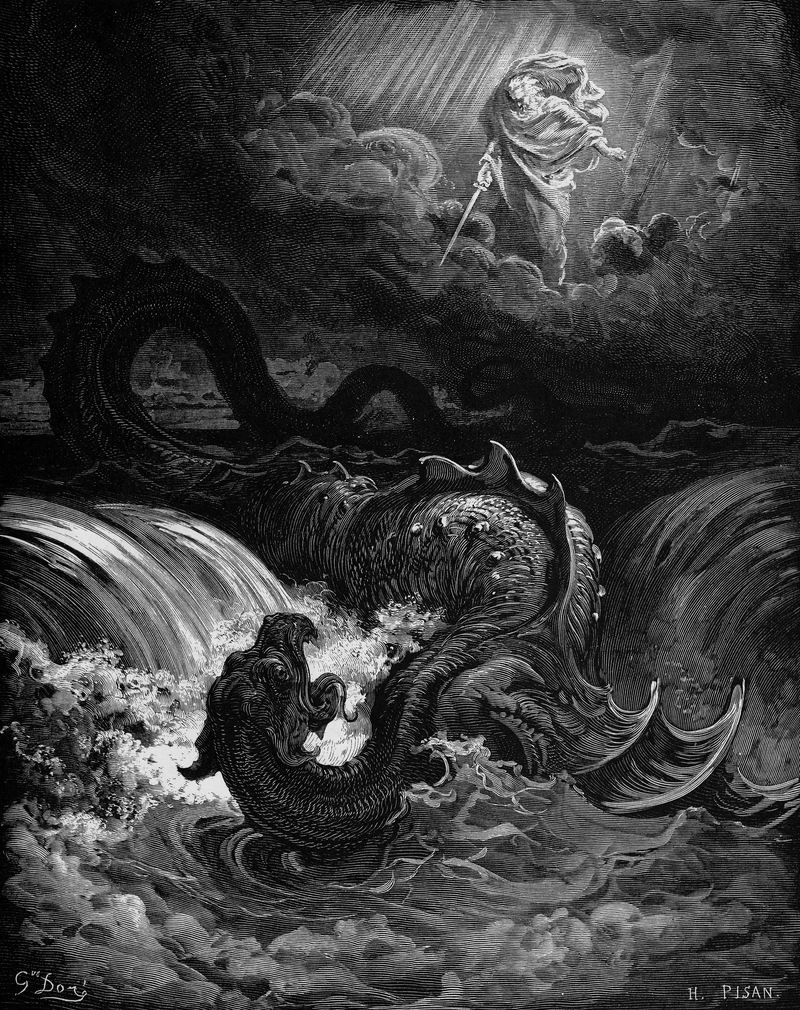
The point of this passage is to dispel the idea that God is not intimately involved with the events of this world. Each of the four "activities" cited here (studying Torah, judgment of the world, providing for the world, and sporting with the Leviathan) reflects — in increasing order — God's association with this world. God first studies Torah which provides the blueprint of the Creation. God then judges the world, an action which demonstrates an even greater degree of involvement with God's creation. God then provides sustenance, which is an even more intimate act, and finally, God sports with God's creation.
רביעיות יושב ומשחק עם לויתן שנאמר (תהלים קד, כו) לויתן זה יצרת לשחק בו
אמר רב נחמן בר יצחק עם בריותיו משחק ועל בריותיו אינו משחק אלא אותו היום בלבד
During the fourth three hours, He sits and makes sport with the leviathan, as it is stated: “There is leviathan, whom You have formed to sport with” (Psalms 104:26). Evidently, God makes sport (i.e., laughs) every day, not only on that one day.
Rav Naḥman bar Yitzḥak says He laughs with His creations, but about His creations — that is, on account of the sins they committed (Rashi) — He does not laugh but on that day alone.
א"ל רב אחא לרב נחמן בר יצחק מיום שחרב בית המקדש אין שחוק להקב"ה
ומנלן דליכא שחוק אילימא מדכתיב (ישעיהו כב, יב) ויקרא ה' אלהים צבאות ביום ההוא לבכי ולמספד ולקרחה וגו' דלמא ההוא יומא ותו לא
אלא דכתיב (תהלים קלז, ה) אם אשכחך ירושלם תשכח ימיני תדבק לשוני לחכי אם לא אזכרכי
דלמא שכחה הוא דליכא אבל שחוק מיהא איכא
אלא מהא (ישעיהו מב, יד) החשיתי מעולם אחריש אתאפק וגו'
ברביעיות מאי עביד
יושב ומלמד תינוקות של בית רבן תורה שנאמר (ישעיהו כח, ט) את מי יורה דעה ואת מי יבין שמועה גמולי מחלב עתיקי משדים
למי יורה דעה ולמי יבין שמועה לגמולי מחלב ולעתיקי משדים
Rav Aḥa said to Rav Naḥman bar Yitzḥak: From the day the Temple was destroyed, there is no longer any laughter for the Holy One, Blessed be He.
And from where do we derive that there is no longer any laughter? If we say that it is from that which is written: “And in that day did the Lord, the God of hosts, call to weeping, and to lamentation, and to baldness and to girding with sackcloth” (Isaiah 22:12), that is inconclusive: Perhaps that day alone was called for weeping and lamentation, and no additional days.
Rather, you might suggest that the source is that it is written: “If I forget you, O Jerusalem, let my right hand forget her cunning. Let my tongue cleave to the roof of my mouth, if I do not remember you” (Psalms 137:5–6).
This is also inconclusive, as perhaps there is no forgetting for God, but it is possible that there is still laughter.
Rather, it is derived from this verse: “I have long time held My peace, I have been still, and refrained Myself.” (Isaiah 42:14).
The Gemara asks: If God no longer laughs since the time of the destruction, what does He now do during the fourth three-hour period of the day?
The Gemara answers: He sits and teaches Torah to schoolchildren, as it is stated: “Whom shall one teach knowledge? And whom shall one make to understand the message? Them that are weaned from the milk, them that are drawn from the breasts” (Isaiah 28:9).
The verse is interpreted in the following manner: To whom does God teach knowledge, and to whom does He make to understand the message? To those who are just weaned from the milk and to those who are drawn from the breasts, i.e., children only recently weaned from nursing.
גמולי מחלב - שמתו כשהן קטנים:
"Just weaned from milk" - The ones that died when they were young.
ומעיקרא מאן הוה מיגמר להו
איבעית אימא מיטטרון ואיבעית אימא הא והא עביד
The Gemara asks: And initially, before the destruction of the Temple, who would teach the schoolchildren?
The Gemara answers: If you wish, say that the angel Metatron would teach them, and if you wish, say instead that He would do both this, sport with the leviathan, and that, teach the schoolchildren; whereas after the destruction of the Temple in the fourth period of the day He only teaches the schoolchildren.
ובכל אלהי מצרים אעשה שפטים ולא על ידי השליח השלוח מאתו יתברך לכל המעשים הנעשים בארץ, והוא המלאך הגדול שנקרא בעבור כן מטטרון. כי פירוש המלה מורה הדרך.
“And against all the gods of Egypt I will execute judgments," and not by means of the messenger sent by God for whatever is to be done upon the earth. This is the great angel, who on account of it is called Metatron, the meaning of the word being “the guide of the road.”
ובליליא מאי עביד
איבעית אימא מעין יממא ואיבעית אימא רוכב על כרוב קל שלו ושט בשמונה עשר אלף עולמות שנאמר (תהלים סח, יח) רכב אלהים רבותים אלפי שנאן
אל תקרי שנאן אלא שאינן
The Gemara asks: And during the twelve hours of the night, what does God do?
The Gemara answers: If you wish, say that the night is similar to the day, i.e., God performs the same activities as in the day. And if you wish, say instead that He rides on his light cherub and flies in eighteen thousand worlds, as it is stated: “The chariots of God are myriads upon myriads, thousands upon [shinan] thousands” (Psalms 68:18).
Do not read it as upon [shinan], rather read it as: That which are not [she’einan]. That is, God's entourage of worlds is twenty thousand (two myriads) minus two thousand (the minimum amount of "thousands"), or eighteen thousand.
The custom to recite Selichos during the last portion of the evening is based on this gemara. During the evening hours God "travels" throughout the eighteen thousand worlds, and towards the morning, God travels through our world.
ואיבעית אימא יושב ושומע שירה מפי חיות שנאמר (תהלים מב, ט) יומם יצוה ה' חסדו ובלילה שירו עמי
And if you wish, say instead that God sits and listens to the songs from the mouths of the angelic creatures, as it is stated: “By day the Lord will command His loving-kindness, and in the night His song shall be with me” (Psalms 42:9).
During the day, God is involved in acts of lovingkindness. God provides sustenance for God's creation and teaches Torah. By night, the song sung are "with me" i.e., they are with King David, the author of the psalm, who joins them in song and praise of God.