


The home should be the treasure chest of living.
Le Corbusier
גְּמָ׳ ״מִשֶּׁנִּגְנַז״ לָא קָתָנֵי, אֶלָּא ״מִשֶּׁנִּיטַּל״. תְּנַן כְּמַאן דְּאָמַר אָרוֹן גָּלָה לְבָבֶל. דְּתַנְיָא, רַבִּי אֱלִיעֶזֶר אוֹמֵר: אָרוֹן גָּלָה לְבָבֶל, שֶׁנֶּאֱמַר: ״וְלִתְשׁוּבַת הַשָּׁנָה שָׁלַח הַמֶּלֶךְ נְבוּכַדְנֶאצַּר וַיְבִיאֵהוּ בָבֶלָה עִם כְּלֵי חֶמְדַּת בֵּית ה׳״.
אֶבֶן הָיְתָה בְּקֹדֶשׁ הַקָּדָשִׁים בְּמַעֲרָבוֹ שֶׁעָלֶיהָ הָיָה הָאָרוֹן מֻנָּח. וּלְפָנָיו צִנְצֶנֶת הַמָּן וּמַטֵּה אַהֲרֹן. וּבְעֵת שֶׁבָּנָה שְׁלֹמֹה אֶת הַבַּיִת וְיָדַע שֶׁסּוֹפוֹ לֵחָרֵב בָּנָה בּוֹ מָקוֹם לִגְנֹז בּוֹ הָאָרוֹן לְמַטָּה בְּמַטְמוֹנִיּוֹת עֲמֻקוֹת וַעֲקַלְקַלּוֹת וְיֹאשִׁיָּהוּ הַמֶּלֶךְ צִוָּה וּגְנָזוֹ בַּמָּקוֹם שֶׁבָּנָה שְׁלֹמֹה שֶׁנֶּאֱמַר (דברי הימים ב לה ג) "וַיֹּאמֶר לַלְוִיִּם הַמְּבִינִים לְכָל יִשְׂרָאֵל הַקְּדוֹשִׁים לַה' תְּנוּ אֶת אֲרוֹן הַקֹּדֶשׁ בַּבַּיִת אֲשֶׁר בָּנָה שְׁלֹמֹה בֶן דָּוִיד מֶלֶךְ יִשְׂרָאֵל אֵין לָכֶם מַשָּׂא בַּכָּתֵף עַתָּה עִבְדוּ אֶת ה' אֱלֹהֵיכֶם" וְגוֹ'. וְנִגְנַז עִמּוֹ מַטֵּה אַהֲרֹן וְהַצִּנְצֶנֶת וְשֶׁמֶן הַמִּשְׁחָה וְכָל אֵלּוּ לֹא חָזְרוּ בְּבַיִת שֵׁנִי.
When Solomon built the Temple, he was aware that it would ultimately be destroyed. [Therefore,] he constructed a chamber, in which the ark could be entombed below [the Temple building] in deep, maze-like vaults.
King Josiah commanded that [the Ark] be entombed in the chamber built by Solomon, as it is said (II Chronicles 35:3 : "And he said to the Levites who would teach wisdom to all of Israel: 'Place the Holy Ark in the chamber built by Solomon, the son of David, King of Israel. You will no [longer] carry it on your shoulders. Now, serve the Lord, your God.'
When it was entombed, Aharon's staff, the vial of manna, and the oil used for anointing were entombed with it. All these [sacred articles] did not return in the Second Temple.
Similarly, the Urim V'Tumim that existed in the Second Temple did not answer with Ruach HaKodesh (Divine inspiration) and questions were not asked of them, as stated [in Ezra 2:63]: "until a priest will arise with the Urim V'Tumim." [In the Second Temple,] they only made them to fulfill the requirement of eight garments for the High Priest. Thus, the High Priest would not lack one of the required garments.
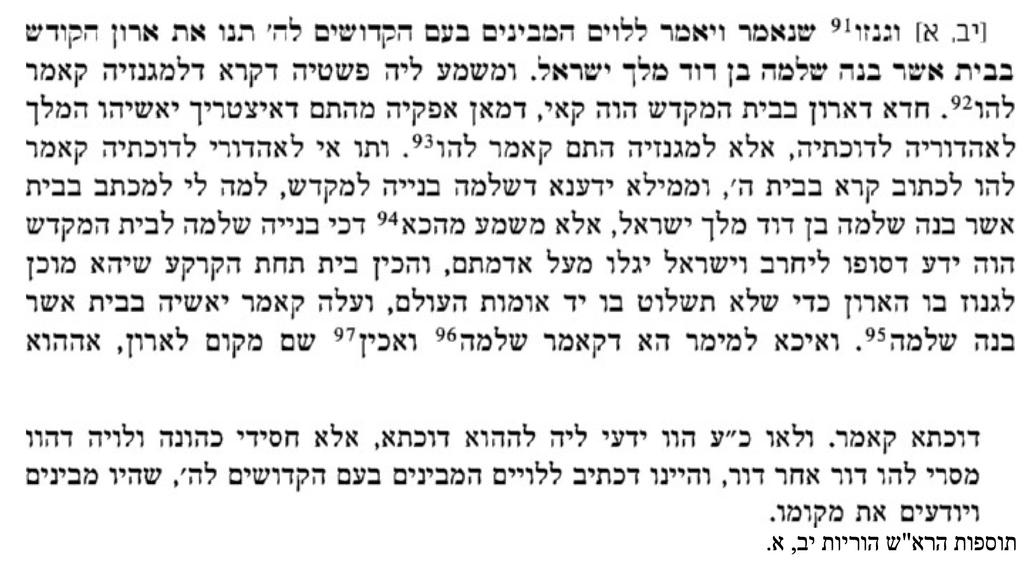
ויאשיה צוה וגנזו. נראה לענ"ד דבר נאה במה שהביא רבינו דברים אלו כאן שנראה לכאורה שאין נפקותא מזה לענין דינא, וידוע שכל דבריו להלכה אמורים אי הילכתא למשיחא או לזמן הזה, ודברים שאין יוצא מהן דין מהדינים ולא מוסר והנהגה וידיעה הצריכה אין מדרכו ז"ל להטפל בהם בחיבור זה, כל שכן שהדבר במחלוקת שנוי ורבינו הכריע כדברי האחד, הלא לא דבר רק הוא, אלא שאיזה צורך הביאו לכך:
...וּבְמַה נִּתְקַדְּשָׁה בִּקְדֻשָּׁה רִאשׁוֹנָה שֶׁקִּדְּשָׁהּ שְׁלֹמֹה שֶׁהוּא קִדֵּשׁ הָעֲזָרָה וִירוּשָׁלַיִם לִשְׁעָתָן וְקִדְּשָׁן לֶעָתִיד לָבוֹא:
לְפִיכָךְ מַקְרִיבִין הַקָּרְבָּנוֹת כֻּלָּן אַף עַל פִּי שֶׁאֵין שָׁם בַּיִת בָּנוּי. וְאוֹכְלִין קָדְשֵׁי קָדָשִׁים בְּכָל הָעֲזָרָה אַף עַל פִּי שֶׁהִיא חֲרֵבָה וְאֵינָהּ מֻקֶּפֶת בִּמְחִצָּה וְאוֹכְלִין קָדָשִׁים קַלִּים וּמַעֲשֵׂר שֵׁנִי בְּכָל יְרוּשָׁלַיִם אַף עַל פִּי שֶׁאֵין שָׁם חוֹמוֹת שֶׁהַקְּדֻשָּׁה רִאשׁוֹנָה קָדְשָׁה לִשְׁעָתָהּ וְקָדְשָׁה לֶעָתִיד לָבוֹא:
...[If so,] how was [the Second Temple] consecrated? With the first consecration performed by Solomon, for he consecrated the Temple Courtyard and Jerusalem, for that time and for eternity.
Therefore, we may offer all the sacrifices [on the Temple site], even though the Temple itself is not built. Similarly, sacrifices of the most holy order can be eaten in the entire [area of the] Courtyard, even though it is in ruin and not surrounded by a divider.
We may also eat sacrifices of lesser sanctity and Ma'aser Sheni throughout Jerusalem, even though [it is not surrounded by] a wall, for through its original consecration, it was consecrated for that time and for eternity.
ולכן לבי אומר לי שצורך גדול יש לרבינו בדבר זה לפי שיטתו שתפס לו לקמן בפ"ו מהל' הללו שאנו עסוקין בהן שקדושת הבית לא בטלה, וראוי להקריב בו עתה, וכן הנכנס לשם חייב עליו כרת, שלא כדברי ראב"ד החולק שם. ונראה שאותן הדינים שהביא רבינו בהל' ביאת המקדש גם לזמן הזה שנאם ולא משום הילכתא למשיחא לחוד אלא משום דס"ל כדאמרן דקדושת הבית לא בטלה, ומשמע לי דסבר רבינו דהך מילתא דקדושת הבית לא בטלה אזלא כמאן דס"ל ארון במקומו נגנז, דאי למ"ד ארון גלה לבבל גם קדושת הבית בטלה ע"י כך...
שְׁלֹשָׁה עָשָׂר שׁוֹפָרוֹת, שְׁלֹשָׁה עָשָׂר שֻׁלְחָנוֹת, שְׁלשׁ עֶשְׂרֵה הִשְׁתַּחֲוָיוֹת, הָיוּ בַּמִקְדָּשׁ. שֶׁל בֵּית רַבָּן גַּמְלִיאֵל וְשֶׁל בֵּית רַבִּי חֲנַנְיָא סְגַן הַכֹּהֲנִים הָיוּ מִשְׁתַּחֲוִין אַרְבַּע עֶשְׂרֵה. וְהֵיכָן הָיְתָה יְתֵרָה, כְּנֶגֶד דִּיר הָעֵצִים, שֶׁכֵּן מָסֹרֶת בְּיָדָם מֵאֲבוֹתֵיהֶם שֶׁשָּׁם הָאָרוֹן נִגְנַז:
מַעֲשֶׂה בְּכֹהֵן אֶחָד שֶׁהָיָה מִתְעַסֵּק, וְרָאָה הָרִצְפָּה שֶׁהִיא מְשֻׁנָּה מֵחֲבֵרוֹתֶיהָ. בָּא וְאָמַר לַחֲבֵרוֹ. לֹא הִסְפִּיק לִגְמֹר אֶת הַדָּבָר עַד שֶׁיָּצְתָה נִשְׁמָתוֹ, וְיָדְעוּ בְיִחוּד שֶׁשָּׁם הָאָרוֹן נִגְנַז:
There were thirteen collection horns, narrow at the top and wide at the bottom, into which were placed the shekels that were collected for the various needs of the Temple. There were also thirteen tables for various purposes, and thirteen prostrations in the Temple. The members of the household of Rabban Gamliel and the members of the household of Rabbi Ḥananya, the deputy High Priest, would prostrate themselves in fourteen places. And where was this extra location? It was facing the wood depository, as there was a tradition handed down to them from their fathers that the Ark was sequestered there.
The mishna relates that there was an incident involving a certain priest who was going about his duties and saw a certain flagstone that was different from the others. He noticed that one of the stones was slightly raised above the others, indicating that it had been removed and returned to its place. The priest understood that this was the opening to an underground tunnel where the Ark was concealed. He came and said to his fellow that he had noticed this deviation in the floor. He did not manage to conclude relating the incident before his soul left him, i.e., he died. Following this event, they knew with certainty that the Ark was sequestered there and that God had prevented that priest from revealing its location.
Advance, O יהוה !
May Your enemies be scattered,
And may Your foes flee before You! (36) And when it halted, he would say:
*Return … thousands! Others “Return, O יהוה, unto the / ten thousands of the families of Israel!” Return, O יהוה,
You who are Israel’s myriads of thousands!
תָּנוּ רַבָּנַן: ״וַיְהִי בִּנְסוֹעַ הָאָרוֹן וַיֹּאמֶר מֹשֶׁה״ — פָּרָשָׁה זוֹ עָשָׂה לָהּ הַקָּדוֹשׁ בָּרוּךְ הוּא סִימָנִיּוֹת מִלְּמַעְלָה וּלְמַטָּה, לוֹמַר שֶׁאֵין זֶה מְקוֹמָהּ. רַבִּי אוֹמֵר: לֹא מִן הַשֵּׁם הוּא זֶה, אֶלָּא מִפְּנֵי שֶׁסֵּפֶר חָשׁוּב הוּא בִּפְנֵי עַצְמוֹ.
כְּמַאן אָזְלָא הָא דְּאָמַר רַבִּי שְׁמוּאֵל בַּר נַחְמָן אָמַר רַבִּי יוֹנָתָן: ״חָצְבָה עַמּוּדֶיהָ שִׁבְעָה״, אֵלּוּ שִׁבְעָה סִפְרֵי תוֹרָה? — כְּמַאן כְּרַבִּי.
Apropos the portion: “And when the Ark traveled,” the Gemara cites that which the Sages taught in a baraita. It is stated: “And when the Ark traveled and Moses proclaimed: Rise up, God, and Your enemies will scatter and those who hate You will flee from before You.” And The Holy One, Blessed be He, made signs in the Torah for this portion, above and below, i.e., before and after it, in order to say
that this is not its place, as the previous portion does not discuss the nation’s travels. Rabbi Yehuda HaNasi says: It is not for that reason that signs were inserted. Rather, the signs are there because this portion is considered a book unto itself.
The Gemara asks: According to whose opinion is that which Rabbi Shmuel bar Naḥman said that Rabbi Yonatan said, that with regard to the verse: “With wisdom she built her house, she carved its seven pillars” (Proverbs 9:1), these are the seven books of the Torah? According to whose opinion? It is according to the opinion of Rabbi Yehuda HaNasi, as by his count there are seven books of the Torah: Genesis; Exodus; Leviticus; Numbers until: “And when the Ark traveled”; the portion: “And when the Ark traveled,” which is considered its own book; the remainder of Numbers; and Deuteronomy.
She has hewn her seven pillars.
וְהָא דְּרַב מַתְנָא מָטְיָיא לִדְרַבִּי יְהוֹשֻׁעַ בֶּן לֵוִי. דְּאָמַר רַבִּי יְהוֹשֻׁעַ בֶּן לֵוִי: לָמָּה נִקְרָא שְׁמָן אַנְשֵׁי כְּנֶסֶת הַגְּדוֹלָה — שֶׁהֶחְזִירוּ עֲטָרָה לְיוֹשְׁנָהּ. אֲתָא מֹשֶׁה, אָמַר: ״הָאֵל הַגָּדוֹל הַגִּבּוֹר וְהַנּוֹרָא״. אֲתָא יִרְמְיָה וַאֲמַר: גּוֹיִם מְקַרְקְרִין בְּהֵיכָלוֹ, אַיֵּה נוֹרְאוֹתָיו? לָא אֲמַר ״נוֹרָא״. אֲתָא דָּנִיאֵל אֲמַר: גּוֹיִם מִשְׁתַּעְבְּדִים בְּבָנָיו, אַיֵּה גְּבוּרוֹתָיו? לָא אֲמַר ״גִּבּוֹר״.
אֲתוֹ אִינְהוּ וְאָמְרוּ: אַדְּרַבָּה, זוֹ הִיא (גְּבוּרַת) גְּבוּרָתוֹ: שֶׁכּוֹבֵשׁ אֶת יִצְרוֹ — שֶׁנּוֹתֵן אֶרֶךְ אַפַּיִם לָרְשָׁעִים. וְאֵלּוּ הֵן נוֹרְאוֹתָיו — שֶׁאִלְמָלֵא מוֹרָאוֹ שֶׁל הַקָּדוֹשׁ בָּרוּךְ הוּא הֵיאַךְ אוּמָּה אַחַת יְכוֹלָה לְהִתְקַיֵּים בֵּין הָאוּמּוֹת?
The Gemara comments: This interpretation that Rav Mattana said leans to, i.e., is consonant with, the exposition of Rabbi Yehoshua ben Levi. As Rabbi Yehoshua ben Levi said: Why are the Sages of those generations called the members of the Great Assembly? It is because they returned the crown of the Holy One, Blessed be He, to its former glory. How so? Moses came and said in his prayer: “The great, the mighty, and the awesomeGod” (Deuteronomy 10:17). Jeremiah the prophet came and said: Gentiles, i.e., the minions of Nebuchadnezzar, are carousing in His sanctuary; where is His awesomeness? Therefore, he did not say awesome in his prayer: “The great God, the mighty Lord of Hosts, is His name” (Jeremiah 32:18). Daniel came and said: Gentiles are enslaving His children; where is His might? Therefore he did not say mighty in his prayer: “The great and awesome God” (Daniel 9:4).
The members of the Great Assembly came and said: On the contrary, this is the might of His might, i.e., this is the fullest expression of it, that He conquers His inclination in that He exercises patience toward the wicked. God’s anger is flared by the gentile nations’ enslavement of His people, yet He expresses tremendous might by suppressing His anger and holding back from punishing them immediately. Therefore, it is still appropriate to refer to God as mighty. And these acts also express His awesomeness: Were it not for the awesomeness of the Holy One, Blessed be He, how could one people, i.e., the Jewish people, who are alone and hated by the gentile nations, survive among the nations?
תַּנְיָא, רַבִּי שִׁמְעוֹן בֶּן יוֹחַי אוֹמֵר: בּוֹא וּרְאֵה כַּמָּה חֲבִיבִין יִשְׂרָאֵל לִפְנֵי הַקָּדוֹשׁ בָּרוּךְ הוּא, שֶׁבְּכָל מָקוֹם שֶׁגָּלוּ — שְׁכִינָה עִמָּהֶן.
§ It is taught in a baraita: Rabbi Shimon ben Yoḥai says: Come and see how beloved the Jewish people are before the Holy One, Blessed be He. As every place they were exiled, the Divine Presence went with them.
נורא <=> ארון
it is the God of Israel who gives might and power to the people.
Blessed is God.
It is better to be feared than loved, if you cannot be both.
Niccolo Machiavelli