


(ה) אִ֣ישׁ יְהוּדִ֔י הָיָ֖ה בְּשׁוּשַׁ֣ן הַבִּירָ֑ה וּשְׁמ֣וֹ מׇרְדֳּכַ֗י בֶּ֣ן יָאִ֧יר בֶּן־שִׁמְעִ֛י בֶּן־קִ֖ישׁ אִ֥ישׁ יְמִינִֽי׃(ו) אֲשֶׁ֤ר הׇגְלָה֙ מִיר֣וּשָׁלַ֔יִם עִם־הַגֹּלָה֙ אֲשֶׁ֣ר הׇגְלְתָ֔ה עִ֖ם יְכׇנְיָ֣ה מֶֽלֶךְ־יְהוּדָ֑ה אֲשֶׁ֣ר הֶגְלָ֔ה נְבוּכַדְנֶצַּ֖ר מֶ֥לֶךְ בָּבֶֽל׃(ז) וַיְהִ֨י אֹמֵ֜ן אֶת־הֲדַסָּ֗ה הִ֤יא אֶסְתֵּר֙ בַּת־דֹּד֔וֹ כִּ֛י אֵ֥ין לָ֖הּ אָ֣ב וָאֵ֑ם וְהַנַּעֲרָ֤ה יְפַת־תֹּ֙אַר֙ וְטוֹבַ֣ת מַרְאֶ֔ה וּבְמ֤וֹת אָבִ֙יהָ֙ וְאִמָּ֔הּ לְקָחָ֧הּ מׇרְדֳּכַ֛י ל֖וֹ לְבַֽת׃
(5) In the fortress Shushan lived a Jew by the name of Mordecai, son of Jair son of Shimei son of Kish, a Benjaminite.(6) [Kish] had been exiled from Jerusalem in the group that was carried into exile along with King Jeconiah of Judah, which had been driven into exile by King Nebuchadnezzar of Babylon.(7) He was foster father to Hadassah—that is, Esther—his uncle’s daughter, for she had neither father nor mother. The maiden was shapely and beautiful; and when her father and mother died, Mordecai adopted her as his own daughter.
״וַיְהִי אוֹמֵן אֶת הֲדַסָּה״, קָרֵי לַהּ ״הֲדַסָּה״ וְקָרֵי לַהּ ״אֶסְתֵּר״? תַּנְיָא, רַבִּי מֵאִיר אוֹמֵר: אֶסְתֵּר שְׁמָהּ, וְלָמָּה נִקְרָא שְׁמָהּ הֲדַסָּה — עַל שֵׁם הַצַּדִּיקִים שֶׁנִּקְרְאוּ הֲדַסִּים. וְכֵן הוּא אוֹמֵר: ״וְהוּא עוֹמֵד בֵּין הַהֲדַסִּים״. רַבִּי יְהוּדָה אוֹמֵר: הֲדַסָּה שְׁמָהּ, וְלָמָּה נִקְרֵאת שְׁמָהּ אֶסְתֵּר? עַל שֵׁם שֶׁהָיְתָה מַסְתֶּרֶת דְּבָרֶיהָ, שֶׁנֶּאֱמַר: ״אֵין אֶסְתֵּר מַגֶּדֶת אֶת עַמָּהּ וְגוֹ׳״. רַבִּי נְחֶמְיָה אוֹמֵר: הֲדַסָּה שְׁמָהּ, וְלָמָּה נִקְרֵאת אֶסְתֵּר? שֶׁהָיוּ אוּמּוֹת הָעוֹלָם קוֹרִין אוֹתָהּ עַל שׁוּם אִסְתַּהַר. בֶּן עַזַּאי אוֹמֵר: אֶסְתֵּר, לֹא אֲרוּכָּה וְלֹא קְצָרָה הָיְתָה, אֶלָּא בֵּינוֹנִית כַּהֲדַסָּה. רַבִּי יְהוֹשֻׁעַ בֶּן קׇרְחָה אָמַר: אֶסְתֵּר — יְרַקְרוֹקֶת הָיְתָה, וְחוּט שֶׁל חֶסֶד מָשׁוּךְ עָלֶיהָ.
The verse states: “And he had brought up Hadassah, that is, Esther” (Esther 2:7). She is referred to as “Hadassah” and she is referred to as “Esther.” What was her real name? It is taught in a baraita that the Sages differed in their opinion as to which was in fact her name and which one was a description: Rabbi Meir says: Esther was her real name. Why then was she called Hadassah? On account of the righteous, who are called myrtles [hadassim], and so it states: “And he stood among the myrtles [hahadassim]” (Zechariah 1:8). Rabbi Yehuda differs and says: Hadassah was her real name. Why then was she called Esther? Because she concealed [masteret] the truth about herself, as it is stated: “Esther had not yet made known her kindred nor her people” (Esther 2:20). Rabbi Neḥemya concurs and says: Hadassah was her real name. Why then was she called Esther? This was her non-Hebrew name, for owing to her beauty the nations of the world called her after Istahar, Venus. Ben Azzai says: Esther was neither tall nor short, but of average size like a myrtle tree, and therefore she was called Hadassah, the Hebrew name resembling that myrtle tree. Rabbi Yehoshua ben Korḥa said: Esther was called Hadassah because she was greenish, having a pale complexion like a myrtle, but a cord of Divine grace was strung around her, endowing her with a beautiful appearance.

Esther and Mordechai, Medium steel engraving. circa 1845 Albert Henry Payne.
(ח) וַיְהִ֗י בְּהִשָּׁמַ֤ע דְּבַר־הַמֶּ֙לֶךְ֙ וְדָת֔וֹ וּֽבְהִקָּבֵ֞ץ נְעָר֥וֹת רַבּ֛וֹת אֶל־שׁוּשַׁ֥ן הַבִּירָ֖ה אֶל־יַ֣ד הֵגָ֑י וַתִּלָּקַ֤ח אֶסְתֵּר֙ אֶל־בֵּ֣ית הַמֶּ֔לֶךְ אֶל־יַ֥ד הֵגַ֖י שֹׁמֵ֥ר הַנָּשִֽׁים׃(ט) וַתִּיטַ֨ב הַנַּעֲרָ֣ה בְעֵינָיו֮ וַתִּשָּׂ֣א חֶ֣סֶד לְפָנָיו֒ וַ֠יְבַהֵ֠ל אֶת־תַּמְרוּקֶ֤יהָ וְאֶת־מָנוֹתֶ֙הָ֙ לָתֵ֣ת לָ֔הּ וְאֵת֙ שֶׁ֣בַע הַנְּעָר֔וֹת הָרְאֻי֥וֹת לָֽתֶת־לָ֖הּ מִבֵּ֣ית הַמֶּ֑לֶךְ וַיְשַׁנֶּ֧הָ וְאֶת־נַעֲרוֹתֶ֛יהָ לְט֖וֹב בֵּ֥ית הַנָּשִֽׁים׃
(8) When the king’s order and edict was proclaimed, and when many girls were assembled in the fortress Shushan under the supervision of Hegai, Esther too was taken into the king’s palace under the supervision of Hegai, guardian of the women.(9) The girl pleased him and won his favor, and he hastened to furnish her with her cosmetics and her rations, as well as with the seven maids who were her due from the king’s palace; and he treated her and her maids with special kindness in the harem.
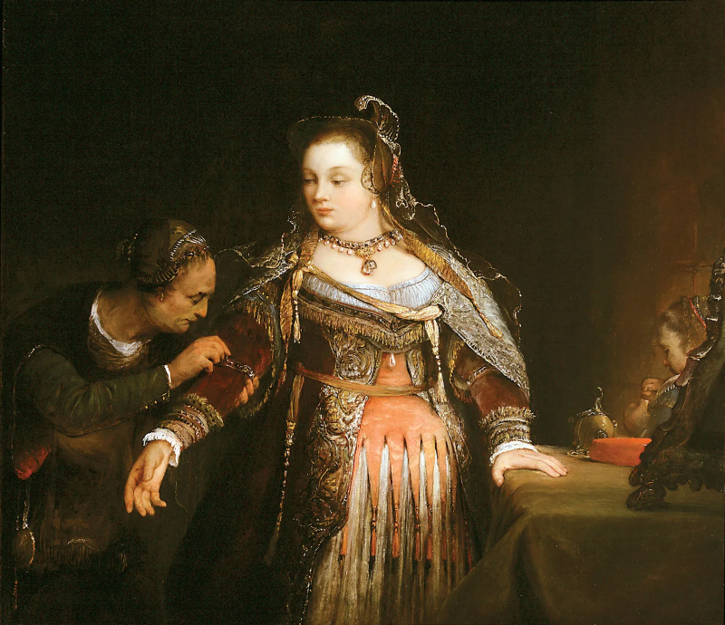
Esther at Her Toilet, oil on canvas by Aert de Gelder, c. 1684; in a private collection.
(י) לֹא־הִגִּ֣ידָה אֶסְתֵּ֔ר אֶת־עַמָּ֖הּ וְאֶת־מֽוֹלַדְתָּ֑הּ כִּ֧י מׇרְדֳּכַ֛י צִוָּ֥ה עָלֶ֖יהָ אֲשֶׁ֥ר לֹא־תַגִּֽיד׃ {ס}
(10) Esther did not reveal her people or her kindred, for Mordecai had told her not to reveal it.
(טו) וּבְהַגִּ֣יעַ תֹּר־אֶסְתֵּ֣ר בַּת־אֲבִיחַ֣יִל דֹּ֣ד מׇרְדֳּכַ֡י אֲשֶׁר֩ לָקַֽח־ל֨וֹ לְבַ֜ת לָב֣וֹא אֶל־הַמֶּ֗לֶךְ לֹ֤א בִקְשָׁה֙ דָּבָ֔ר כִּ֠י אִ֣ם אֶת־אֲשֶׁ֥ר יֹאמַ֛ר הֵגַ֥י סְרִיס־הַמֶּ֖לֶךְ שֹׁמֵ֣ר הַנָּשִׁ֑ים וַתְּהִ֤י אֶסְתֵּר֙ נֹשֵׂ֣את חֵ֔ן בְּעֵינֵ֖י כׇּל־רֹאֶֽיהָ׃(טז) וַתִּלָּקַ֨ח אֶסְתֵּ֜ר אֶל־הַמֶּ֤לֶךְ אֲחַשְׁוֵרוֹשׁ֙ אֶל־בֵּ֣ית מַלְכוּת֔וֹ בַּחֹ֥דֶשׁ הָעֲשִׂירִ֖י הוּא־חֹ֣דֶשׁ טֵבֵ֑ת בִּשְׁנַת־שֶׁ֖בַע לְמַלְכוּתֽוֹ׃(יז) וַיֶּאֱהַ֨ב הַמֶּ֤לֶךְ אֶת־אֶסְתֵּר֙ מִכׇּל־הַנָּשִׁ֔ים וַתִּשָּׂא־חֵ֥ן וָחֶ֛סֶד לְפָנָ֖יו מִכׇּל־הַבְּתוּל֑וֹת וַיָּ֤שֶׂם כֶּֽתֶר־מַלְכוּת֙ בְּרֹאשָׁ֔הּ וַיַּמְלִיכֶ֖הָ תַּ֥חַת וַשְׁתִּֽי׃(יח) וַיַּ֨עַשׂ הַמֶּ֜לֶךְ מִשְׁתֶּ֣ה גָד֗וֹל לְכׇל־שָׂרָיו֙ וַעֲבָדָ֔יו אֵ֖ת מִשְׁתֵּ֣ה אֶסְתֵּ֑ר וַהֲנָחָ֤ה לַמְּדִינוֹת֙ עָשָׂ֔ה וַיִּתֵּ֥ן מַשְׂאֵ֖ת כְּיַ֥ד הַמֶּֽלֶךְ׃
(15) When the turn came for Esther daughter of Abihail—the uncle of Mordecai, who had adopted her as his own daughter—to go to the king, she did not ask for anything but what Hegai, the king’s eunuch, guardian of the women, advised. Yet Esther won the admiration of all who saw her.(16) Esther was taken to King Ahasuerus, in his royal palace, in the tenth month, which is the month of Tebeth, in the seventh year of his reign.(17) The king loved Esther more than all the other women, and she won his grace and favor more than all the virgins. So he set a royal diadem on her head and made her queen instead of Vashti.(18) The king gave a great banquet for all his officials and courtiers, “the banquet of Esther.” He proclaimed a remission of taxes for the provinces and distributed gifts as befits a king.
(כא) בַּיָּמִ֣ים הָהֵ֔ם וּמׇרְדֳּכַ֖י יוֹשֵׁ֣ב בְּשַֽׁעַר־הַמֶּ֑לֶךְ קָצַף֩ בִּגְתָ֨ן וָתֶ֜רֶשׁ שְׁנֵֽי־סָרִיסֵ֤י הַמֶּ֙לֶךְ֙ מִשֹּׁמְרֵ֣י הַסַּ֔ף וַיְבַקְשׁוּ֙ לִשְׁלֹ֣חַ יָ֔ד בַּמֶּ֖לֶךְ אֲחַשְׁוֵרֹֽשׁ׃(כב) וַיִּוָּדַ֤ע הַדָּבָר֙ לְמׇרְדֳּכַ֔י וַיַּגֵּ֖ד לְאֶסְתֵּ֣ר הַמַּלְכָּ֑ה וַתֹּ֧אמֶר אֶסְתֵּ֛ר לַמֶּ֖לֶךְ בְּשֵׁ֥ם מׇרְדֳּכָֽי׃
(21) At that time, when Mordecai was sitting in the palace gate, Bigthan and Teresh, two of the king’s eunuchs who guarded the threshold, became angry, and plotted to do away with King Ahasuerus.(22) Mordecai learned of it and told it to Queen Esther, and Esther reported it to the king in Mordecai’s name.
(ה) וַיַּ֣רְא הָמָ֔ן כִּי־אֵ֣ין מׇרְדֳּכַ֔י כֹּרֵ֥עַ וּמִֽשְׁתַּחֲוֶ֖ה ל֑וֹ וַיִּמָּלֵ֥א הָמָ֖ן חֵמָֽה׃(ו) וַיִּ֣בֶז בְּעֵינָ֗יו לִשְׁלֹ֤חַ יָד֙ בְּמׇרְדֳּכַ֣י לְבַדּ֔וֹ כִּֽי־הִגִּ֥ידוּ ל֖וֹ אֶת־עַ֣ם מׇרְדֳּכָ֑י וַיְבַקֵּ֣שׁ הָמָ֗ן לְהַשְׁמִ֧יד אֶת־כׇּל־הַיְּהוּדִ֛ים אֲשֶׁ֛ר בְּכׇל־מַלְכ֥וּת אֲחַשְׁוֵר֖וֹשׁ עַ֥ם מׇרְדֳּכָֽי׃
(5) When Haman saw that Mordecai would not kneel or bow low to him, Haman was filled with rage.(6) But he disdained to lay hands on Mordecai alone; having been told who Mordecai’s people were, Haman plotted to do away with all the Jews, Mordecai’s people, throughout the kingdom of Ahasuerus.
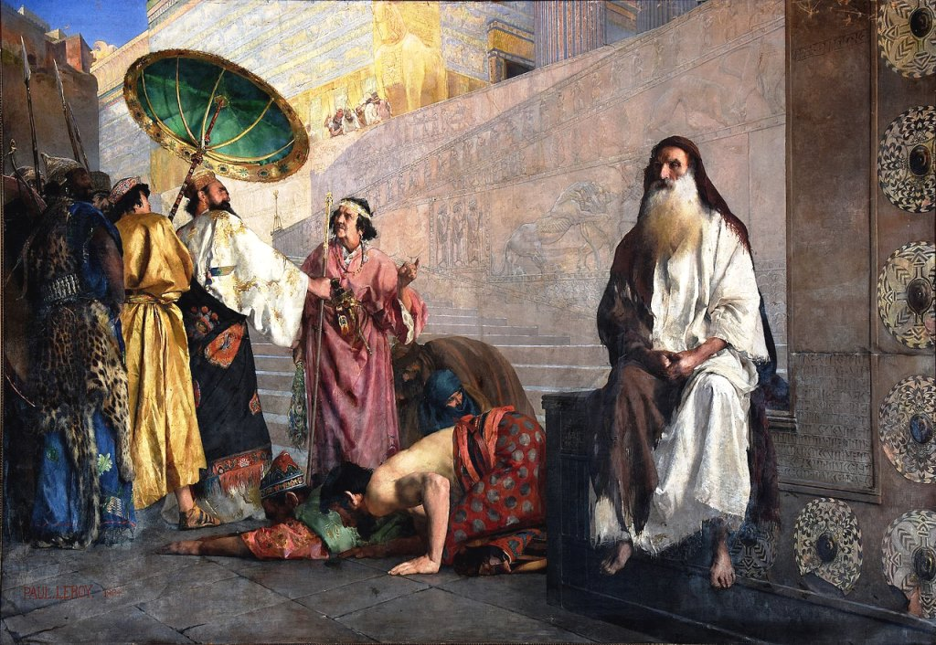
Haman and Mordecai, Paul Alexander Leroy 1884. Wikimedia
(יג) וְנִשְׁל֨וֹחַ סְפָרִ֜ים בְּיַ֣ד הָרָצִים֮ אֶל־כׇּל־מְדִינ֣וֹת הַמֶּ֒לֶךְ֒ לְהַשְׁמִ֡יד לַהֲרֹ֣ג וּלְאַבֵּ֣ד אֶת־כׇּל־הַ֠יְּהוּדִ֠ים מִנַּ֨עַר וְעַד־זָקֵ֜ן טַ֤ף וְנָשִׁים֙ בְּי֣וֹם אֶחָ֔ד בִּשְׁלוֹשָׁ֥ה עָשָׂ֛ר לְחֹ֥דֶשׁ שְׁנֵים־עָשָׂ֖ר הוּא־חֹ֣דֶשׁ אֲדָ֑ר וּשְׁלָלָ֖ם לָבֽוֹז׃
(13) Accordingly, written instructions were dispatched by couriers to all the king’s provinces to destroy, massacre, and exterminate all the Jews, young and old, children and women, on a single day, on the thirteenth day of the twelfth month—that is, the month of Adar—and to plunder their possessions.
(ד) (ותבואינה) [וַ֠תָּב֠וֹאנָה] נַעֲר֨וֹת אֶסְתֵּ֤ר וְסָרִיסֶ֙יהָ֙ וַיַּגִּ֣ידוּ לָ֔הּ וַתִּתְחַלְחַ֥ל הַמַּלְכָּ֖ה מְאֹ֑ד וַתִּשְׁלַ֨ח בְּגָדִ֜ים לְהַלְבִּ֣ישׁ אֶֽת־מׇרְדֳּכַ֗י וּלְהָסִ֥יר שַׂקּ֛וֹ מֵעָלָ֖יו וְלֹ֥א קִבֵּֽל׃(ה) וַתִּקְרָא֩ אֶסְתֵּ֨ר לַהֲתָ֜ךְ מִסָּרִיסֵ֤י הַמֶּ֙לֶךְ֙ אֲשֶׁ֣ר הֶעֱמִ֣יד לְפָנֶ֔יהָ וַתְּצַוֵּ֖הוּ עַֽל־מׇרְדֳּכָ֑י לָדַ֥עַת מַה־זֶּ֖ה וְעַל־מַה־זֶּֽה׃
(4) When Esther’s maidens and eunuchs came and informed her, the queen was greatly agitated. She sent clothing for Mordecai to wear, so that he might take off his sackcloth; but he refused.(5) Thereupon Esther summoned Hathach, one of the eunuchs whom the king had appointed to serve her, and sent him to Mordecai to learn the why and wherefore of it all.
(ז) וַיַּגֶּד־ל֣וֹ מׇרְדֳּכַ֔י אֵ֖ת כׇּל־אֲשֶׁ֣ר קָרָ֑הוּ וְאֵ֣ת ׀ פָּרָשַׁ֣ת הַכֶּ֗סֶף אֲשֶׁ֨ר אָמַ֤ר הָמָן֙ לִ֠שְׁק֠וֹל עַל־גִּנְזֵ֥י הַמֶּ֛לֶךְ (ביהודיים) [בַּיְּהוּדִ֖ים] לְאַבְּדָֽם׃(ח) וְאֶת־פַּתְשֶׁ֣גֶן כְּתָֽב־הַ֠דָּ֠ת אֲשֶׁר־נִתַּ֨ן בְּשׁוּשָׁ֤ן לְהַשְׁמִידָם֙ נָ֣תַן ל֔וֹ לְהַרְא֥וֹת אֶת־אֶסְתֵּ֖ר וּלְהַגִּ֣יד לָ֑הּ וּלְצַוּ֣וֹת עָלֶ֗יהָ לָב֨וֹא אֶל־הַמֶּ֧לֶךְ לְהִֽתְחַנֶּן־ל֛וֹ וּלְבַקֵּ֥שׁ מִלְּפָנָ֖יו עַל־עַמָּֽהּ׃
(7) and Mordecai told him all that had happened to him, and all about the money that Haman had offered to pay into the royal treasury for the destruction of the Jews.(8) He also gave him the written text of the law that had been proclaimed in Shushan for their destruction. [He bade him] show it to Esther and inform her, and charge her to go to the king and to appeal to him and to plead with him for her people.
(י) וַתֹּ֤אמֶר אֶסְתֵּר֙ לַהֲתָ֔ךְ וַתְּצַוֵּ֖הוּ אֶֽל־מׇרְדֳּכָֽי׃(יא) כׇּל־עַבְדֵ֣י הַמֶּ֡לֶךְ וְעַם־מְדִינ֨וֹת הַמֶּ֜לֶךְ יֹֽדְעִ֗ים אֲשֶׁ֣ר כׇּל־אִ֣ישׁ וְאִשָּׁ֡ה אֲשֶׁ֣ר יָבֽוֹא־אֶל־הַמֶּ֩לֶךְ֩ אֶל־הֶחָצֵ֨ר הַפְּנִימִ֜ית אֲשֶׁ֣ר לֹֽא־יִקָּרֵ֗א אַחַ֤ת דָּתוֹ֙ לְהָמִ֔ית לְ֠בַ֠ד מֵאֲשֶׁ֨ר יֽוֹשִׁיט־ל֥וֹ הַמֶּ֛לֶךְ אֶת־שַׁרְבִ֥יט הַזָּהָ֖ב וְחָיָ֑ה וַאֲנִ֗י לֹ֤א נִקְרֵ֙אתִי֙ לָב֣וֹא אֶל־הַמֶּ֔לֶךְ זֶ֖ה שְׁלוֹשִׁ֥ים יֽוֹם׃
(10) Esther told Hathach to take back to Mordecai the following reply:(11) “All the king’s courtiers and the people of the king’s provinces know that if any person, man or woman, enters the king’s presence in the inner court without having been summoned, there is but one law for him—that he be put to death. Only if the king extends the golden scepter to him may he live. Now I have not been summoned to visit the king for the last thirty days.”
(יג) וַיֹּ֥אמֶר מׇרְדֳּכַ֖י לְהָשִׁ֣יב אֶל־אֶסְתֵּ֑ר אַל־תְּדַמִּ֣י בְנַפְשֵׁ֔ךְ לְהִמָּלֵ֥ט בֵּית־הַמֶּ֖לֶךְ מִכׇּל־הַיְּהוּדִֽים׃(יד) כִּ֣י אִם־הַחֲרֵ֣שׁ תַּחֲרִ֘ישִׁי֮ בָּעֵ֣ת הַזֹּאת֒ רֶ֣וַח וְהַצָּלָ֞ה יַעֲמ֤וֹד לַיְּהוּדִים֙ מִמָּק֣וֹם אַחֵ֔ר וְאַ֥תְּ וּבֵית־אָבִ֖יךְ תֹּאבֵ֑דוּ וּמִ֣י יוֹדֵ֔עַ אִם־לְעֵ֣ת כָּזֹ֔את הִגַּ֖עַתְּ לַמַּלְכֽוּת׃
(13) Mordecai had this message delivered to Esther: “Do not imagine that you, of all the Jews, will escape with your life by being in the king’s palace.(14) On the contrary, if you keep silent in this crisis, relief and deliverance will come to the Jews from another quarter, while you and your father’s house will perish. And who knows, perhaps you have attained to royal position for just such a crisis.”
(טו) וַתֹּ֥אמֶר אֶסְתֵּ֖ר לְהָשִׁ֥יב אֶֽל־מׇרְדֳּכָֽי׃(טז) לֵךְ֩ כְּנ֨וֹס אֶת־כׇּל־הַיְּהוּדִ֜ים הַֽנִּמְצְאִ֣ים בְּשׁוּשָׁ֗ן וְצ֣וּמוּ עָ֠לַ֠י וְאַל־תֹּאכְל֨וּ וְאַל־תִּשְׁתּ֜וּ שְׁלֹ֤שֶׁת יָמִים֙ לַ֣יְלָה וָי֔וֹם גַּם־אֲנִ֥י וְנַעֲרֹתַ֖י אָצ֣וּם כֵּ֑ן וּבְכֵ֞ן אָב֤וֹא אֶל־הַמֶּ֙לֶךְ֙ אֲשֶׁ֣ר לֹֽא־כַדָּ֔ת וְכַאֲשֶׁ֥ר אָבַ֖דְתִּי אָבָֽדְתִּי׃(יז) וַֽיַּעֲבֹ֖ר מׇרְדֳּכָ֑י וַיַּ֕עַשׂ כְּכֹ֛ל אֲשֶׁר־צִוְּתָ֥ה עָלָ֖יו אֶסְתֵּֽר׃ {ס}
(15) Then Esther sent back this answer to Mordecai:(16) “Go, assemble all the Jews who live in Shushan, and fast in my behalf; do not eat or drink for three days, night or day. I and my maidens will observe the same fast. Then I shall go to the king, though it is contrary to the law; and if I am to perish, I shall perish!”(17) So Mordecai went about [the city] and did just as Esther had commanded him.
Aviva Zornberg, The Murmuring Deep (p. 123-125)
Throughout her marriage, Esther has remained silent about her origins (Esther 2:20). Now Mordecai, who commanded that silence, urges her to break it. That silence was for the sake of this moment. Now she must speak, take up a position, or else lose her voice forever. This moment is all she has, her chance to make herself heard.... In her crisis, she is alone.... By accepting Mordecai's challenge, Esther fully enters, for the first time, Ahasuerus's world.... With a voice of new authority, she charges Mordecai with assembling the people and having them fast for her. Fasting may seem a dubious preparation for the fateful encounter on which her life depends: her beauty will suffer. But perhaps she is removing her last and most basic source of worldly confidence, as though to acknowledge that even the king's favor is, in the end, in God's hands.... (123-124)
Michael E. Fox, Character and Ideology in the Book of Esther (p. 66)
4:13-17 is the turning point in Esther’s development. She moves from being a dependent of others (all of them men) to an independent operator who, whatever the objective restrictions on her freedom, will work out her own plans and execute them in order to manipulate one man and break another.
(א) וַיְהִ֣י ׀ בַּיּ֣וֹם הַשְּׁלִישִׁ֗י וַתִּלְבַּ֤שׁ אֶסְתֵּר֙ מַלְכ֔וּת וַֽתַּעֲמֹ֞ד בַּחֲצַ֤ר בֵּית־הַמֶּ֙לֶךְ֙ הַפְּנִימִ֔ית נֹ֖כַח בֵּ֣ית הַמֶּ֑לֶךְ וְ֠הַמֶּ֠לֶךְ יוֹשֵׁ֞ב עַל־כִּסֵּ֤א מַלְכוּתוֹ֙ בְּבֵ֣ית הַמַּלְכ֔וּת נֹ֖כַח פֶּ֥תַח הַבָּֽיִת׃
(1) On the third day, Esther put on royal apparel and stood in the inner court of the king’s palace, facing the king’s palace, while the king was sitting on his royal throne in the throne room facing the entrance of the palace.
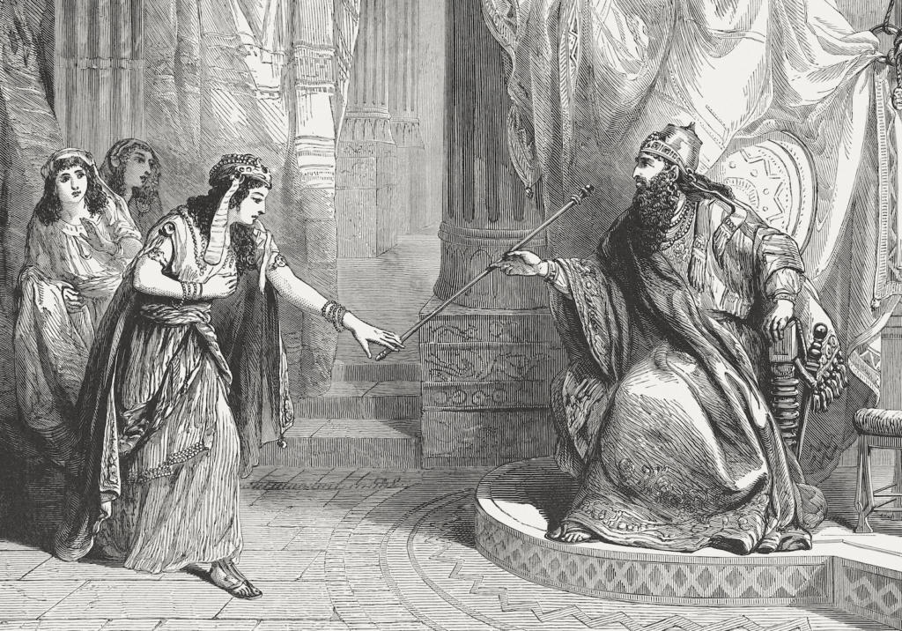
Ester Before Ahasuerus, Biblical Engraving from The Popular Pictorial Bible, Containing the Old and New Testaments, Published in 1862.
(ד) וַתֹּ֣אמֶר אֶסְתֵּ֔ר אִם־עַל־הַמֶּ֖לֶךְ ט֑וֹב יָב֨וֹא הַמֶּ֤לֶךְ וְהָמָן֙ הַיּ֔וֹם אֶל־הַמִּשְׁתֶּ֖ה אֲשֶׁר־עָשִׂ֥יתִי לֽוֹ׃(ה) וַיֹּ֣אמֶר הַמֶּ֔לֶךְ מַהֲרוּ֙ אֶת־הָמָ֔ן לַעֲשׂ֖וֹת אֶת־דְּבַ֣ר אֶסְתֵּ֑ר וַיָּבֹ֤א הַמֶּ֙לֶךְ֙ וְהָמָ֔ן אֶל־הַמִּשְׁתֶּ֖ה אֲשֶׁר־עָשְׂתָ֥ה אֶסְתֵּֽר׃(ו) וַיֹּ֨אמֶר הַמֶּ֤לֶךְ לְאֶסְתֵּר֙ בְּמִשְׁתֵּ֣ה הַיַּ֔יִן מַה־שְּׁאֵלָתֵ֖ךְ וְיִנָּ֣תֵֽן לָ֑ךְ וּמַה־בַּקָּשָׁתֵ֛ךְ עַד־חֲצִ֥י הַמַּלְכ֖וּת וְתֵעָֽשׂ׃(ז) וַתַּ֥עַן אֶסְתֵּ֖ר וַתֹּאמַ֑ר שְׁאֵלָתִ֖י וּבַקָּשָׁתִֽי׃(ח) אִם־מָצָ֨אתִי חֵ֜ן בְּעֵינֵ֣י הַמֶּ֗לֶךְ וְאִם־עַל־הַמֶּ֙לֶךְ֙ ט֔וֹב לָתֵת֙ אֶת־שְׁאֵ֣לָתִ֔י וְלַעֲשׂ֖וֹת אֶת־בַּקָּשָׁתִ֑י יָב֧וֹא הַמֶּ֣לֶךְ וְהָמָ֗ן אֶל־הַמִּשְׁתֶּה֙ אֲשֶׁ֣ר אֶֽעֱשֶׂ֣ה לָהֶ֔ם וּמָחָ֥ר אֶֽעֱשֶׂ֖ה כִּדְבַ֥ר הַמֶּֽלֶךְ׃
(4) “If it please Your Majesty,” Esther replied, “let Your Majesty and Haman come today to the feast that I have prepared for him.”(5) The king commanded, “Tell Haman to hurry and do Esther’s bidding.” So the king and Haman came to the feast that Esther had prepared.(6) At the wine feast, the king asked Esther, “What is your wish? It shall be granted you. And what is your request? Even to half the kingdom, it shall be fulfilled.”(7) “My wish,” replied Esther, “my request—(8) if Your Majesty will do me the favor, if it please Your Majesty to grant my wish and accede to my request—let Your Majesty and Haman come to the feast which I will prepare for them; and tomorrow I will do Your Majesty’s bidding.”
(ב) וַיֹּ֩אמֶר֩ הַמֶּ֨לֶךְ לְאֶסְתֵּ֜ר גַּ֣ם בַּיּ֤וֹם הַשֵּׁנִי֙ בְּמִשְׁתֵּ֣ה הַיַּ֔יִן מַה־שְּׁאֵלָתֵ֛ךְ אֶסְתֵּ֥ר הַמַּלְכָּ֖ה וְתִנָּ֣תֵֽן לָ֑ךְ וּמַה־בַּקָּשָׁתֵ֛ךְ עַד־חֲצִ֥י הַמַּלְכ֖וּת וְתֵעָֽשׂ׃(ג) וַתַּ֨עַן אֶסְתֵּ֤ר הַמַּלְכָּה֙ וַתֹּאמַ֔ר אִם־מָצָ֨אתִי חֵ֤ן בְּעֵינֶ֙יךָ֙ הַמֶּ֔לֶךְ וְאִם־עַל־הַמֶּ֖לֶךְ ט֑וֹב תִּנָּֽתֶן־לִ֤י נַפְשִׁי֙ בִּשְׁאֵ֣לָתִ֔י וְעַמִּ֖י בְּבַקָּשָׁתִֽי׃(ד) כִּ֤י נִמְכַּ֙רְנוּ֙ אֲנִ֣י וְעַמִּ֔י לְהַשְׁמִ֖יד לַהֲר֣וֹג וּלְאַבֵּ֑ד וְ֠אִלּ֠וּ לַעֲבָדִ֨ים וְלִשְׁפָח֤וֹת נִמְכַּ֙רְנוּ֙ הֶחֱרַ֔שְׁתִּי כִּ֣י אֵ֥ין הַצָּ֛ר שֹׁוֶ֖ה בְּנֵ֥זֶק הַמֶּֽלֶךְ׃ {ס}
(ה) וַיֹּ֙אמֶר֙ הַמֶּ֣לֶךְ אֲחַשְׁוֵר֔וֹשׁ וַיֹּ֖אמֶר לְאֶסְתֵּ֣ר הַמַּלְכָּ֑ה מִ֣י ה֥וּא זֶה֙ וְאֵֽי־זֶ֣ה ה֔וּא אֲשֶׁר־מְלָא֥וֹ לִבּ֖וֹ לַעֲשׂ֥וֹת כֵּֽן׃(ו) וַתֹּ֣אמֶר אֶסְתֵּ֔ר אִ֚ישׁ צַ֣ר וְאוֹיֵ֔ב הָמָ֥ן הָרָ֖ע הַזֶּ֑ה וְהָמָ֣ן נִבְעַ֔ת מִלִּפְנֵ֥י הַמֶּ֖לֶךְ וְהַמַּלְכָּֽה׃(ז) וְהַמֶּ֜לֶךְ קָ֤ם בַּחֲמָתוֹ֙ מִמִּשְׁתֵּ֣ה הַיַּ֔יִן אֶל־גִּנַּ֖ת הַבִּיתָ֑ן וְהָמָ֣ן עָמַ֗ד לְבַקֵּ֤שׁ עַל־נַפְשׁוֹ֙ מֵֽאֶסְתֵּ֣ר הַמַּלְכָּ֔ה כִּ֣י רָאָ֔ה כִּֽי־כָלְתָ֥ה אֵלָ֛יו הָרָעָ֖ה מֵאֵ֥ת הַמֶּֽלֶךְ׃(ח) וְהַמֶּ֡לֶךְ שָׁב֩ מִגִּנַּ֨ת הַבִּיתָ֜ן אֶל־בֵּ֣ית ׀ מִשְׁתֵּ֣ה הַיַּ֗יִן וְהָמָן֙ נֹפֵ֗ל עַל־הַמִּטָּה֙ אֲשֶׁ֣ר אֶסְתֵּ֣ר עָלֶ֔יהָ וַיֹּ֣אמֶר הַמֶּ֔לֶךְ הֲ֠גַ֠ם לִכְבּ֧וֹשׁ אֶת־הַמַּלְכָּ֛ה עִמִּ֖י בַּבָּ֑יִת הַדָּבָ֗ר יָצָא֙ מִפִּ֣י הַמֶּ֔לֶךְ וּפְנֵ֥י הָמָ֖ן חָפֽוּ׃ {ס}
(2) On the second day, the king again asked Esther at the wine feast, “What is your wish, Queen Esther? It shall be granted you. And what is your request? Even to half the kingdom, it shall be fulfilled.”(3) Queen Esther replied: “If Your Majesty will do me the favor, and if it pleases Your Majesty, let my life be granted me as my wish, and my people as my request.(4) For we have been sold, my people and I, to be destroyed, massacred, and exterminated. Had we only been sold as bondmen and bondwomen, I would have kept silent; for the adversary is not worthy of the king’s trouble.”
(5) Thereupon King Ahasuerus demanded of Queen Esther, “Who is he and where is he who dared to do this?”(6) “The adversary and enemy,” replied Esther, “is this evil Haman!” And Haman cringed in terror before the king and the queen.(7) The king, in his fury, left the wine feast for the palace garden, while Haman remained to plead with Queen Esther for his life; for he saw that the king had resolved to destroy him.(8) When the king returned from the palace garden to the banquet room, Haman was lying prostrate on the couch on which Esther reclined. “Does he mean,” cried the king, “to ravish the queen in my own palace?” No sooner did these words leave the king’s lips than Haman’s face was covered.
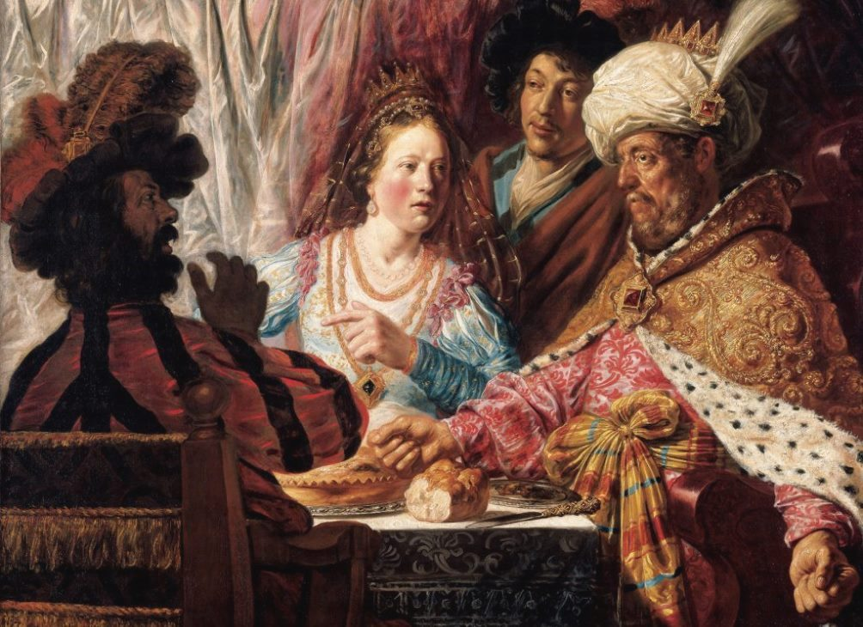
The Feast of Esther, Jan Lievens circa 1625
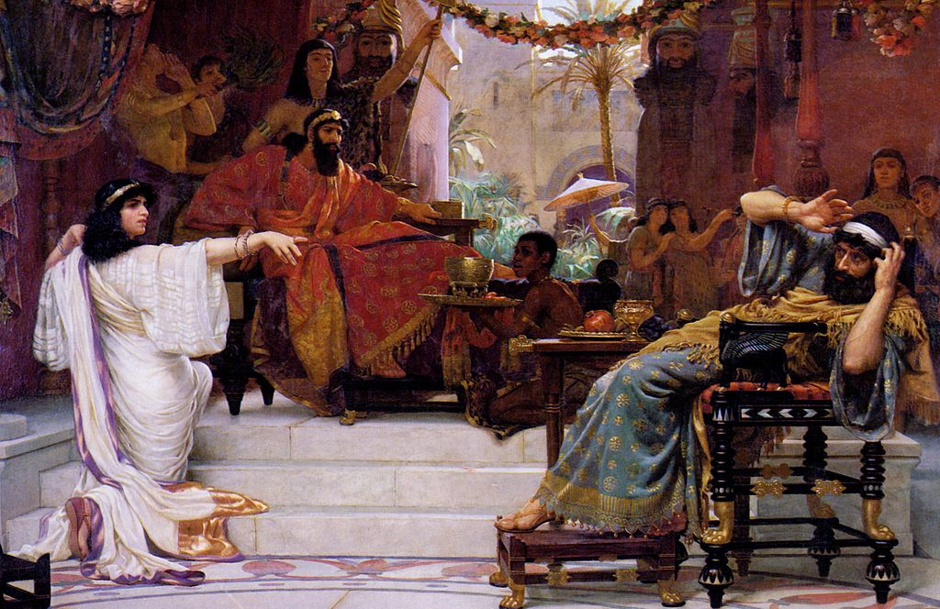
Esther Denouncing Haman, Ernest Normand (1859–1923)