


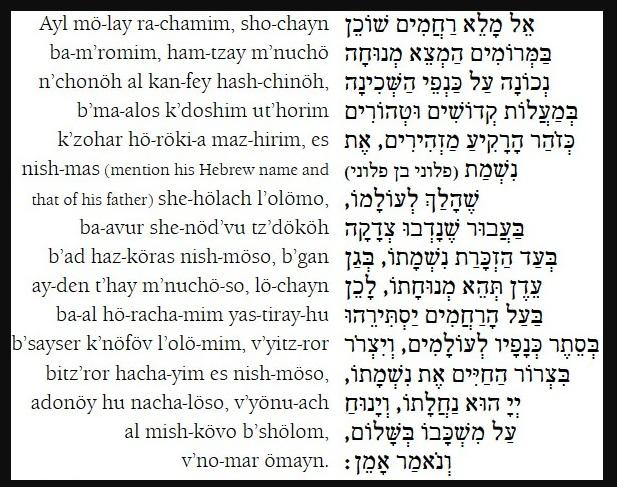
O G‑d, full of compassion, Who dwells on high, grant true rest upon the wings of the Shechinah (Divine Presence), in the exalted spheres of the holy and pure, who shine as the resplendence of the firmament, to the soul of
Alan son of ___(fathers name)______
who has gone to his [supernal] world, for charity has been donated in remembrance of his soul; may his place of rest be in Gan Eden. Therefore, may the All-Merciful One shelter him with the cover of His wings forever, and bind his soul in the bond of life. The Lord is his heritage; may he rest in his resting-place in peace; and let us say: Amen.
(א) יֹ֭שֵׁב בְּסֵ֣תֶר עֶלְי֑וֹן בְּצֵ֥ל שַׁ֝דַּ֗י יִתְלוֹנָֽן׃ (ב) אֹמַ֗ר לַ֭ה' מַחְסִ֣י וּמְצוּדָתִ֑י אֱ֝לֹקַ֗י אֶבְטַח־בּֽוֹ׃ (ג) כִּ֤י ה֣וּא יַ֭צִּילְךָ מִפַּ֥ח יָק֗וּשׁ מִדֶּ֥בֶר הַוּֽוֹת׃ (ד) בְּאֶבְרָת֨וֹ ׀ יָ֣סֶךְ לָ֭ךְ וְתַחַת־כְּנָפָ֣יו תֶּחְסֶ֑ה צִנָּ֖ה וְסֹחֵרָ֣ה אֲמִתּֽוֹ׃ (ה) לֹֽא־תִ֭ירָא מִפַּ֣חַד לָ֑יְלָה מֵ֝חֵ֗ץ יָע֥וּף יוֹמָֽם׃ (ו) מִ֭דֶּבֶר בָּאֹ֣פֶל יַהֲלֹ֑ךְ מִ֝קֶּ֗טֶב יָשׁ֥וּד צׇהֳרָֽיִם׃ (ז) יִפֹּ֤ל מִצִּדְּךָ֨ ׀ אֶ֗לֶף וּרְבָבָ֥ה מִימִינֶ֑ךָ אֵ֝לֶ֗יךָ לֹ֣א יִגָּֽשׁ׃ (ח) רַ֭ק בְּעֵינֶ֣יךָ תַבִּ֑יט וְשִׁלֻּמַ֖ת רְשָׁעִ֣ים תִּרְאֶֽה׃ (ט) כִּֽי־אַתָּ֣ה ה' מַחְסִ֑י עֶ֝לְי֗וֹן שַׂ֣מְתָּ מְעוֹנֶֽךָ׃ (י) לֹא־תְאֻנֶּ֣ה אֵלֶ֣יךָ רָעָ֑ה וְ֝נֶ֗גַע לֹא־יִקְרַ֥ב בְּאׇהֳלֶֽךָ׃ (יא) כִּ֣י מַ֭לְאָכָיו יְצַוֶּה־לָּ֑ךְ לִ֝שְׁמׇרְךָ֗ בְּכׇל־דְּרָכֶֽיךָ׃ (יב) עַל־כַּפַּ֥יִם יִשָּׂא֑וּנְךָ פֶּן־תִּגֹּ֖ף בָּאֶ֣בֶן רַגְלֶֽךָ׃ (יג) עַל־שַׁ֣חַל וָפֶ֣תֶן תִּדְרֹ֑ךְ תִּרְמֹ֖ס כְּפִ֣יר וְתַנִּֽין׃ (יד) כִּ֤י בִ֣י חָ֭שַׁק וַאֲפַלְּטֵ֑הוּ אֲ֝שַׂגְּבֵ֗הוּ כִּֽי־יָדַ֥ע שְׁמִֽי׃ (טו) יִקְרָאֵ֨נִי ׀ וְֽאֶעֱנֵ֗הוּ עִמּֽוֹ־אָנֹכִ֥י בְצָרָ֑ה אֲ֝חַלְּצֵ֗הוּ וַאֲכַבְּדֵֽהוּ׃ (טז) אֹ֣רֶךְ יָ֭מִים אַשְׂבִּיעֵ֑הוּ וְ֝אַרְאֵ֗הוּ בִּישׁוּעָתִֽי׃ {פ}
1. You who dwells in the shelter of the Most High, who abides in the shadow of the Omnipotent:
2. I say of the Lord who is my refuge and my stronghold, my God in whom I trust,
3. that He will save you from the ensnaring trap, from the destructive pestilence.
4. He will cover you with His pinions and you will find refuge under His wings; His truth is a shield and an armor.
5. You will not fear the terror of the night, nor the arrow that flies by day;
6. the pestilence that prowls in the darkness, nor the destruction that ravages at noon.
7. A thousand may fall at your [left] side, and ten thousand at your right, but it shall not reach you.
8. You need only look with your eyes, and you will see the retribution of the wicked.
9. Because you [have said,] "The Lord is my shelter," and you have made the Most High your haven,
10. no evil will befall you, no plague will come near your tent.
11. For He will instruct His angels in your behalf, to guard you in all your ways.
12. They will carry you in their hands, lest you injure your foot upon a rock.
13. You will tread upon the lion and the viper; you will trample upon the young lion and the serpent.
14. Because he desires Me, I will deliver him; I will fortify him, for he knows My Name.
15. When he calls on Me, I will answer him; I am with him in distress. I will deliver him and honor him.
16. I will satiate him with long life, and show him My deliverance.
(ה) כֵּיצַד מְאַיְּמִין אֶת הָעֵדִים עַל עֵדֵי נְפָשׁוֹת, הָיוּ מַכְנִיסִין אוֹתָן וּמְאַיְּמִין עֲלֵיהֶן. שֶׁמָּא תֹאמְרוּ מֵאֹמֶד, וּמִשְּׁמוּעָה, עֵד מִפִּי עֵד וּמִפִּי אָדָם נֶאֱמָן שָׁמַעְנוּ, אוֹ שֶׁמָּא אִי אַתֶּם יוֹדְעִין שֶׁסּוֹפֵנוּ לִבְדֹּק אֶתְכֶם בִּדְרִישָׁה וּבַחֲקִירָה. הֱווּ יוֹדְעִין שֶׁלֹּא כְדִינֵי מָמוֹנוֹת דִּינֵי נְפָשׁוֹת. דִּינֵי מָמוֹנוֹת, אָדָם נוֹתֵן מָמוֹן וּמִתְכַּפֵּר לוֹ. דִּינֵי נְפָשׁוֹת, דָּמוֹ וְדַם זַרְעִיּוֹתָיו תְּלוּיִין בּוֹ עַד סוֹף הָעוֹלָם, שֶׁכֵּן מָצִינוּ בְקַיִן שֶׁהָרַג אֶת אָחִיו, שֶׁנֶּאֱמַר (בראשית ד) דְּמֵי אָחִיךָ צֹעֲקִים, אֵינוֹ אוֹמֵר דַּם אָחִיךָ אֶלָּא דְּמֵי אָחִיךָ, דָּמוֹ וְדַם זַרְעִיּוֹתָיו. דָּבָר אַחֵר, דְּמֵי אָחִיךָ, שֶׁהָיָה דָמוֹ מֻשְׁלָךְ עַל הָעֵצִים וְעַל הָאֲבָנִים. לְפִיכָךְ נִבְרָא אָדָם יְחִידִי, לְלַמֶּדְךָ, שֶׁכָּל הַמְאַבֵּד נֶפֶשׁ אַחַת מִיִּשְׂרָאֵל, מַעֲלֶה עָלָיו הַכָּתוּב כְּאִלּוּ אִבֵּד עוֹלָם מָלֵא. וְכָל הַמְקַיֵּם נֶפֶשׁ אַחַת מִיִּשְׂרָאֵל, מַעֲלֶה עָלָיו הַכָּתוּב כְּאִלּוּ קִיֵּם עוֹלָם מָלֵא. וּמִפְּנֵי שְׁלוֹם הַבְּרִיּוֹת, שֶׁלֹּא יֹאמַר אָדָם לַחֲבֵרוֹ אַבָּא גָדוֹל מֵאָבִיךָ. וְשֶׁלֹּא יְהוּ מִינִין אוֹמְרִים, הַרְבֵּה רָשֻׁיּוֹת בַּשָּׁמָיִם. וּלְהַגִּיד גְּדֻלָּתוֹ שֶׁל הַקָּדוֹשׁ בָּרוּךְ הוּא, שֶׁאָדָם טוֹבֵעַ כַּמָּה מַטְבְּעוֹת בְּחוֹתָם אֶחָד וְכֻלָּן דּוֹמִין זֶה לָזֶה, וּמֶלֶךְ מַלְכֵי הַמְּלָכִים הַקָּדוֹשׁ בָּרוּךְ הוּא טָבַע כָּל אָדָם בְּחוֹתָמוֹ שֶׁל אָדָם הָרִאשׁוֹן וְאֵין אֶחָד מֵהֶן דּוֹמֶה לַחֲבֵרוֹ. לְפִיכָךְ כָּל אֶחָד וְאֶחָד חַיָּב לוֹמַר, בִּשְׁבִילִי נִבְרָא הָעוֹלָם. וְשֶׁמָּא תֹאמְרוּ מַה לָּנוּ וְלַצָּרָה הַזֹּאת, וַהֲלֹא כְבָר נֶאֱמַר (ויקרא ה) וְהוּא עֵד אוֹ רָאָה אוֹ יָדָע אִם לוֹא יַגִּיד וְגוֹ'. וְשֶׁמָּא תֹאמְרוּ מַה לָּנוּ לָחוּב בְּדָמוֹ שֶׁל זֶה, וַהֲלֹא כְבָר נֶאֱמַר (משלי יא) וּבַאֲבֹד רְשָׁעִים רִנָּה:
(5) How does the court intimidate the witnesses in giving testimony for cases of capital law? They would bring the witnesses in and intimidate them by saying to them: Perhaps what you say in your testimony is based on conjecture, or perhaps it is based on a rumor, perhaps it is testimony based on hearsay, e.g., you heard a witness testify to this in a different court, or perhaps it is based on the statement of a trusted person. Perhaps you do not know that ultimately we examine you with inquiry and interrogation, and if you are lying, your lie will be discovered. The court tells them: You should know that cases of capital law are not like cases of monetary law. In cases of monetary law, a person who testifies falsely, causing money to be given to the wrong party, can give the money to the proper owner and his sin is atoned for. In cases of capital law, if one testifies falsely, the blood of the accused and the blood of his offspring that he did not merit to produce are ascribed to the witness’s testimony until eternity. The proof for this is as we found with Cain, who killed his brother, as it is stated concerning him: “The voice of your brother’s blood [demei] cries out to Me from the ground” (Genesis 4:10). The verse does not state: Your brother’s blood [dam], in the singular, but rather: “Your brother’s blood [demei],” in the plural. This serves to teach that the loss of both his brother’s blood and the blood of his brother’s offspring are ascribed to Cain. The mishna notes: Alternatively, the phrase “your brother’s blood [demei],” written in the plural, teaches that that his blood was not gathered in one place but was splattered on the trees and on the stones. The court tells the witnesses: Therefore, Adam the first man was created alone, to teach you that with regard to anyone who destroys one soul from the Jewish people, i.e., kills one Jew, the verse ascribes him blame as if he destroyed an entire world, as Adam was one person, from whom the population of an entire world came forth. And conversely, anyone who sustains one soul from the Jewish people, the verse ascribes him credit as if he sustained an entire world. The mishna cites another reason Adam the first man was created alone: And this was done due to the importance of maintaining peace among people, so that one person will not say to another: My father, i.e., progenitor, is greater than your father. And it was also so that the heretics who believe in multiple gods will not say: There are many authorities in Heaven, and each created a different person. And this serves to tell of the greatness of the Holy One, Blessed be He, as when a person stamps several coins with one seal, they are all similar to each other. But the supreme King of kings, the Holy One, Blessed be He, stamped all people with the seal of Adam the first man, as all of them are his offspring, and not one of them is similar to another. Therefore, since all humanity descends from one person, each and every person is obligated to say: The world was created for me, as one person can be the source of all humanity, and recognize the significance of his actions. The court says to the witnesses: And perhaps you will say: Why would we want this trouble? Perhaps it would be better not to testify at all. But be aware, as is it not already stated: “And he being a witness, whether he has seen or known, if he does not utter it, then he shall bear his iniquity” (Leviticus 5:1)? It is a transgression not to testify when one can do so. And perhaps you will say: Why would we want to be responsible for the blood of this person? But be aware, as is it not already stated: “When the wicked perish, there is song” (Proverbs 11:10)?
(יב) הִלֵּל וְשַׁמַּאי קִבְּלוּ מֵהֶם. הִלֵּל אוֹמֵר, הֱוֵי מִתַּלְמִידָיו שֶׁל אַהֲרֹן, אוֹהֵב שָׁלוֹם וְרוֹדֵף שָׁלוֹם, אוֹהֵב אֶת הַבְּרִיּוֹת וּמְקָרְבָן לַתּוֹרָה:
(12) ... Hillel used to say: be of the disciples of Aaron, loving peace and pursuing peace, loving mankind and drawing them close to the Torah.
(יד) הוּא הָיָה אוֹמֵר, אִם אֵין אֲנִי לִי, מִי לִי. וּכְשֶׁאֲנִי לְעַצְמִי, מָה אֲנִי. וְאִם לֹא עַכְשָׁיו, אֵימָתָי:
(14) He [also] used to say: If I am not for myself, who is for me? But if I am for my own self [only], what am I? And if not now, when?
(ד) הוּא הָיָה אוֹמֵר, עֲשֵׂה רְצוֹנוֹ כִרְצוֹנְךָ, כְּדֵי שֶׁיַּעֲשֶׂה רְצוֹנְךָ כִרְצוֹנוֹ. בַּטֵּל רְצוֹנְךָ מִפְּנֵי רְצוֹנוֹ, כְּדֵי שֶׁיְּבַטֵּל רְצוֹן אֲחֵרִים מִפְּנֵי רְצוֹנֶךָ. הִלֵּל אוֹמֵר, אַל תִּפְרֹשׁ מִן הַצִּבּוּר, וְאַל תַּאֲמִין בְּעַצְמְךָ עַד יוֹם מוֹתְךָ, וְאַל תָּדִין אֶת חֲבֵרְךָ עַד שֶׁתַּגִּיעַ לִמְקוֹמוֹ, וְאַל תֹּאמַר דָּבָר שֶׁאִי אֶפְשָׁר לִשְׁמֹעַ, שֶׁסּוֹפוֹ לְהִשָּׁמַע. וְאַל תֹּאמַר לִכְשֶׁאִפָּנֶה אֶשְׁנֶה, שֶׁמָּא לֹא תִפָּנֶה:
(4) ... Hillel said: do not separate yourself from the community, Do not trust in yourself until the day of your death, Do not judge your fellow man until you have reached his place. Do not say something that cannot be understood [trusting] that in the end it will be understood. Say not: ‘when I shall have leisure I shall study;’ perhaps you will not have leisure.
(טו) רַבִּי טַרְפוֹן אוֹמֵר, הַיּוֹם קָצָר וְהַמְּלָאכָה מְרֻבָּה, וְהַפּוֹעֲלִים עֲצֵלִים, וְהַשָּׂכָר הַרְבֵּה, וּבַעַל הַבַּיִת דּוֹחֵק:
(טז) הוּא הָיָה אוֹמֵר, לֹא עָלֶיךָ הַמְּלָאכָה לִגְמֹר, וְלֹא אַתָּה בֶן חוֹרִין לִבָּטֵל מִמֶּנָּה. אִם לָמַדְתָּ תוֹרָה הַרְבֵּה, נוֹתְנִים לְךָ שָׂכָר הַרְבֵּה. וְנֶאֱמָן הוּא בַעַל מְלַאכְתְּךָ שֶׁיְּשַׁלֵּם לְךָ שְׂכַר פְּעֻלָּתֶךָ. וְדַע מַתַּן שְׂכָרָן שֶׁל צַדִּיקִים לֶעָתִיד לָבֹא:
(15) Rabbi Tarfon said: the day is short, and the work is plentiful, and the laborers are lazy and the reward is great, and the master of the house is insistent.
(16) He [Rabbi Tarfon] used to say: It is not your duty to finish the work, but neither are you at liberty to neglect it; If you have studied much Torah, you shall be given much reward. Faithful is your employer to pay you the reward of your labor; And know that the grant of reward unto the righteous is in the age to come.
(א) בֶּן זוֹמָא אוֹמֵר, אֵיזֶהוּ חָכָם, הַלּוֹמֵד מִכָּל אָדָם, שֶׁנֶּאֱמַר (תהלים קיט) מִכָּל מְלַמְּדַי הִשְׂכַּלְתִּי כִּי עֵדְוֹתֶיךָ שִׂיחָה לִּי. אֵיזֶהוּ גִבּוֹר, הַכּוֹבֵשׁ אֶת יִצְרוֹ, שֶׁנֶּאֱמַר (משלי טז) טוֹב אֶרֶךְ אַפַּיִם מִגִּבּוֹר וּמשֵׁל בְּרוּחוֹ מִלֹּכֵד עִיר. אֵיזֶהוּ עָשִׁיר, הַשָּׂמֵחַ בְּחֶלְקוֹ, שֶׁנֶּאֱמַר (תהלים קכח) יְגִיעַ כַּפֶּיךָ כִּי תֹאכֵל אַשְׁרֶיךָ וְטוֹב לָךְ. אַשְׁרֶיךָ, בָּעוֹלָם הַזֶּה. וְטוֹב לָךְ, לָעוֹלָם הַבָּא. אֵיזֶהוּ מְכֻבָּד, הַמְכַבֵּד אֶת הַבְּרִיּוֹת, שֶׁנֶּאֱמַר (שמואל א ב) כִּי מְכַבְּדַי אֲכַבֵּד וּבֹזַי יֵקָלּוּ:
(1) Ben Zoma said: Who is wise? He who learns from every man, as it is said: “From all who taught me have I gained understanding” (Psalms 119:99). Who is mighty? He who subdues his [evil] inclination, as it is said: “He that is slow to anger is better than the mighty; and he that rules his spirit than he that takes a city” (Proverbs 16:32). Who is rich? He who rejoices in his lot, as it is said: “You shall enjoy the fruit of your labors, you shall be happy and you shall prosper” (Psalms 128:2) “You shall be happy” in this world, “and you shall prosper” in the world to come. Who is he that is honored? He who honors his fellow human beings as it is said: “For I honor those that honor Me, but those who spurn Me shall be dishonored” (I Samuel 2:30).
(טו) רַבִּי יַנַּאי אוֹמֵר, אֵין בְּיָדֵינוּ לֹא מִשַּׁלְוַת הָרְשָׁעִים וְאַף לֹא מִיִּסּוּרֵי הַצַּדִּיקִים. רַבִּי מַתְיָא בֶן חָרָשׁ אוֹמֵר, הֱוֵי מַקְדִּים בִּשְׁלוֹם כָּל אָדָם. וֶהֱוֵי זָנָב לָאֲרָיוֹת, וְאַל תְּהִי רֹאשׁ לַשּׁוּעָלִים:
(טז) רַבִּי יַעֲקֹב אוֹמֵר, הָעוֹלָם הַזֶּה דּוֹמֶה לִפְרוֹזְדוֹר בִּפְנֵי הָעוֹלָם הַבָּא. הַתְקֵן עַצְמְךָ בַפְּרוֹזְדוֹר, כְּדֵי שֶׁתִּכָּנֵס לַטְּרַקְלִין:
(יז) הוּא הָיָה אוֹמֵר, יָפָה שָׁעָה אַחַת בִּתְשׁוּבָה וּמַעֲשִׂים טוֹבִים בָּעוֹלָם הַזֶּה, מִכָּל חַיֵּי הָעוֹלָם הַבָּא. וְיָפָה שָׁעָה אַחַת שֶׁל קוֹרַת רוּחַ בָּעוֹלָם הַבָּא, מִכָּל חַיֵּי הָעוֹלָם הַזֶּה:
(15) Rabbi Yannai said: it is not in our hands [to explain the reason] either of the security of the wicked, or even of the afflictions of the righteous. Rabbi Mathia ben Harash said: Upon meeting people, be the first to extend greetings; And be a tail unto lions, and not a head unto foxes.
(16) Rabbi Jacob said: this world is like a vestibule before the world to come; prepare yourself in the vestibule, so that you may enter the banqueting-hall.
(17) He used to say: more precious is one hour in repentance and good deeds in this world, than all the life of the world to come; And more precious is one hour of the tranquility of the world to come, than all the life of this world.