


(יא) פִּֽינְחָ֨ס בֶּן־אֶלְעָזָ֜ר בֶּן־אַהֲרֹ֣ן הַכֹּהֵ֗ן הֵשִׁ֤יב אֶת־חֲמָתִי֙ מֵעַ֣ל בְּנֵֽי־יִשְׂרָאֵ֔ל בְּקַנְא֥וֹ אֶת־קִנְאָתִ֖י בְּתוֹכָ֑ם וְלֹא־כִלִּ֥יתִי אֶת־בְּנֵֽי־יִשְׂרָאֵ֖ל בְּקִנְאָתִֽי׃
(יב) לָכֵ֖ן אֱמֹ֑ר הִנְנִ֨י נֹתֵ֥ן ל֛וֹ אֶת־בְּרִיתִ֖י שָׁלֽוֹם׃
(יג) וְהָ֤יְתָה לּוֹ֙ וּלְזַרְע֣וֹ אַחֲרָ֔יו בְּרִ֖ית כְּהֻנַּ֣ת עוֹלָ֑ם תַּ֗חַת אֲשֶׁ֤ר קִנֵּא֙לֵֽאלֹקָ֔יו וַיְכַפֵּ֖ר עַל־בְּנֵ֥י יִשְׂרָאֵֽל׃
(11) “Phinehas, son of Eleazar son of Aaron the priest, has turned back My wrath from the Israelites by displaying among them his passion for Me, so that I did not wipe out the Israelite people in My passion.
(12) Say, therefore, ‘I grant him My covenant of peace.
(13) It shall be for him and his descendants after him a covenant of priesthood for all time, because he took impassioned action for his God, thus making expiation for the Israelites.’”
A thought experiment, conducted on Saturday 27 July 2024, the 295th day of Israel's "war on Hamas":
This verse seems to suggest that in order to NOT be wiped out by God, bnei Israel would do well to resonate with / acting out of "passion" (? jealousy).
For example: here, God is telling Moses that by "displaying his [Pinchas'] passion for God, he has turned away God's passion from acting violently toward the people".
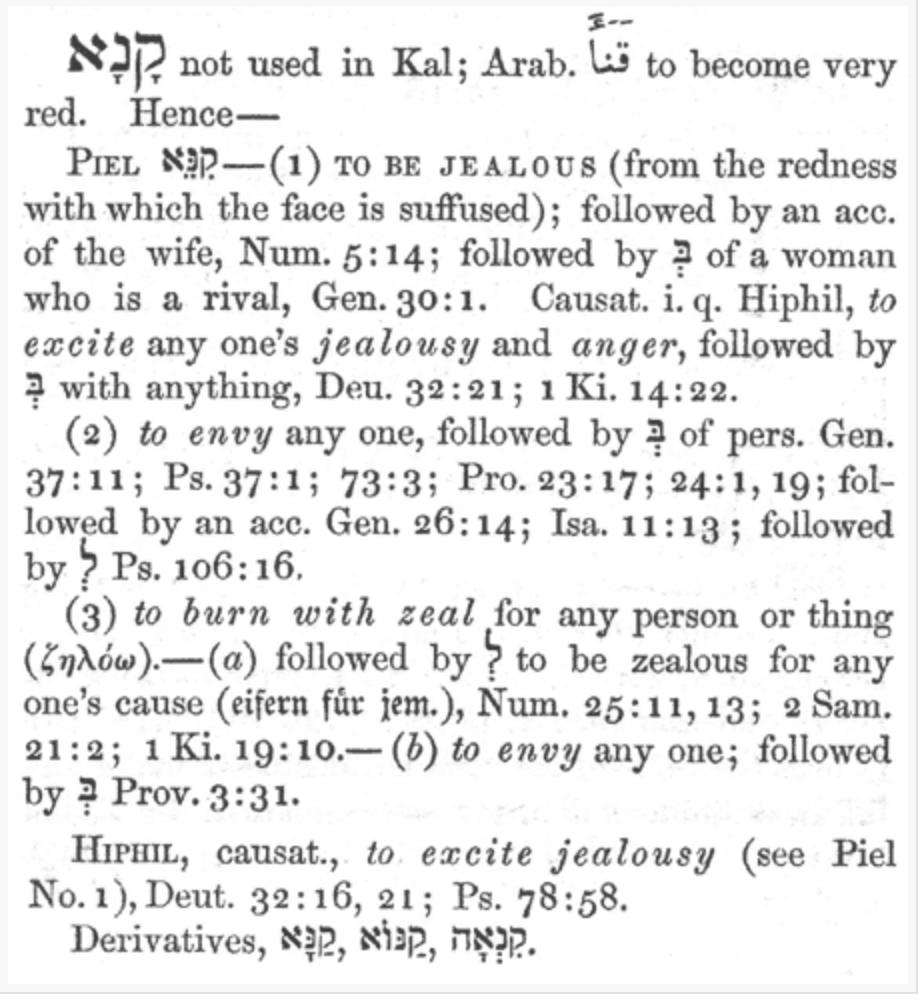
In this verse, we have three words from the shoresh √קָנָא.
בְּקַנְא֥וֹ אֶת־קִנְאָתִ֖י
בְּקִנְאָתִֽי
What does this mean?
Is "passion" the best translation?
I suggest: envy; jealousy; red hot anger… with sexual reverberations. Allusions to the trope of God as jealous spouse.
Perhaps Gesenius can help us in our exploration of these ideas:
And let's explore the quality of God's that Pinchas has turned back by resonating with God's envy / jealousy/ passion/ red hot anger:
הֵשִׁ֤יב אֶת־חֲמָתִי֙ מֵעַ֣ל בְּנֵֽי־יִשְׂרָאֵ֔ל
חֲמָתִי֙
"my [ie God's] חֵמָה
a noun - "hot displeasure" - from the shoresh: √יָחַם
and what is this shoresh?
Gesenius:
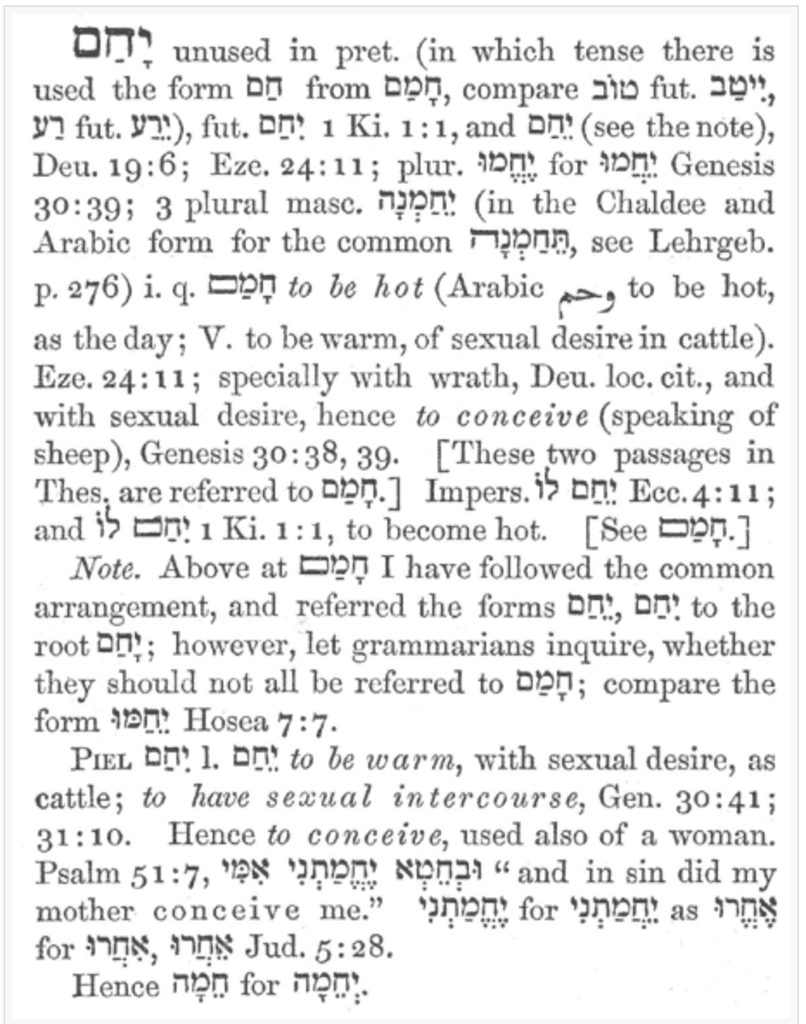
I suggest that we're in the realm of the rubor of arousal, the intersectionality of sexual desire, power, violence, that can be found as a subtext in many parts of Tanakh.
Pinchas acted out of "zeal" - red hot jealousy - and thereby was an agent of God's similar jealousy.
We're reminded here of the trope of "the people" / "the nation" as handmaiden or wife to God. And God as the jealous spouse.
Can we cultivate a more egalitarian relationship with God, one in which we question, advocate, argue. Certainly this model of engaging with the Divine is amply modeled throughout the Torah, by Abraham and by Moses, by Zelophechad's daughters, by Hannah.
Continuing our thought experiment:
The three verses from the start of Parshat Pinchas (at the start of this source sheet) seem to suggest that being in a relationship of "brit shalom" with God arises from taking impassioned action for God.
תַּ֗חַת אֲשֶׁ֤ר קִנֵּא֙ לֵֽאלֹהָ֔יו
Again we see the suggestion that the most effective way of acting "for" God is to be in a state of impassioned jealousy or envy as a means of representing God.
And let's take note of this: the verse says: "his God" - אלֹקָ֔יו. Pinchas took violent, impassioned action for "his God".
I wonder: why doesn't the verse simply say "when he took passionate action for God"?
Does this suggest that we each have our own God? Or that there's a different "version" of God for us at different times, or when we are in different states of mind?
Can we cultivate different states of mind, different ways of taking action for justice and mercy and kindness, that could activate different experiences of God for us?
Can we activate connection rather than the disconnection of violence and strife?
Can we reach across divides of discord, as Isaac and Ishmael did, when they buried their father Abraham?
(ח) וַיִּגְוַ֨ע וַיָּ֧מׇת אַבְרָהָ֛ם בְּשֵׂיבָ֥ה טוֹבָ֖ה זָקֵ֣ן וְשָׂבֵ֑עַ וַיֵּאָ֖סֶף אֶל־עַמָּֽיו׃(ט)וַיִּקְבְּר֨וּ אֹת֜וֹ יִצְחָ֤ק וְיִשְׁמָעֵאל֙ בָּנָ֔יו אֶל־מְעָרַ֖ת הַמַּכְפֵּלָ֑ה אֶל־שְׂדֵ֞ה עֶפְרֹ֤ן בֶּן־צֹ֙חַר֙ הַֽחִתִּ֔י אֲשֶׁ֖ר עַל־פְּנֵ֥י מַמְרֵֽא׃
(8) And Abraham breathed his last, dying at a good ripe age, old and contented; and he was gathered to his kin.*kin (So NJPS.) See the Dictionary under “predecessors.”(9)His sons Isaac and Ishmael buried him in the cave of Machpelah, in the field of Ephron son of Zohar the Hittite, facing Mamre...
Now more than ever, on Shabbat Pinchas 5784, on the 295th day that Israel is destroying the fabric of human and humane life in Gaza, on the 295th day when it is legitimate to question whether Israel is prioritizing the return of hostages, we must interrogate the notion that covenants of peace can ever arise from violent and passionate hatred.
Now more than ever, we need to be change agents so that for us and our vulnerable world, a brit shalom arises not out of violence, but out of love.
Now, at this exceptionally inflamed moment in the Levant, in the United States, in so many parts of the world, we need to search, to dig for wells of kindness and peace in the parched deserts of hatred and anger
(יח) וַיָּ֨שׇׁב יִצְחָ֜ק וַיַּחְפֹּ֣ר ׀ אֶת־בְּאֵרֹ֣ת הַמַּ֗יִם אֲשֶׁ֤ר חָֽפְרוּ֙ בִּימֵי֙ אַבְרָהָ֣ם אָבִ֔יו וַיְסַתְּמ֣וּם פְּלִשְׁתִּ֔ים אַחֲרֵ֖י מ֣וֹת אַבְרָהָ֑ם וַיִּקְרָ֤א לָהֶן֙ שֵׁמ֔וֹת כַּשֵּׁמֹ֕ת אֲשֶׁר־קָרָ֥א לָהֶ֖ן אָבִֽיו׃(יט) וַיַּחְפְּר֥וּ עַבְדֵֽי־יִצְחָ֖ק בַּנָּ֑חַל וַיִּ֨מְצְאוּ־שָׁ֔ם בְּאֵ֖ר מַ֥יִם חַיִּֽים׃(כ) וַיָּרִ֜יבוּ רֹעֵ֣י גְרָ֗ר עִם־רֹעֵ֥י יִצְחָ֛ק לֵאמֹ֖ר לָ֣נוּ הַמָּ֑יִם וַיִּקְרָ֤א שֵֽׁם־הַבְּאֵר֙ עֵ֔שֶׂק כִּ֥י הִֽתְעַשְּׂק֖וּ עִמּֽוֹ׃(כא) וַֽיַּחְפְּרוּ֙ בְּאֵ֣ר אַחֶ֔רֶת וַיָּרִ֖יבוּ גַּם־עָלֶ֑יהָ וַיִּקְרָ֥א שְׁמָ֖הּ שִׂטְנָֽה׃(כב) וַיַּעְתֵּ֣ק מִשָּׁ֗ם וַיַּחְפֹּר֙ בְּאֵ֣ר אַחֶ֔רֶת וְלֹ֥א רָב֖וּ עָלֶ֑יהָ וַיִּקְרָ֤א שְׁמָהּ֙ רְחֹב֔וֹת וַיֹּ֗אמֶר כִּֽי־עַתָּ֞ה הִרְחִ֧יב ה׳ לָ֖נוּ וּפָרִ֥ינוּ בָאָֽרֶץ׃
(18)Isaac dug anew the wellswhich had been dug in the days of his father Abraham and which the Philistines had stopped up after Abraham’s death; and he gave them the same names that his father had given them.
(19) But when Isaac’s servants, digging in the wadi, found there a well of spring water,
(20) the herdsmen of Gerar quarreled with Isaac’s herdsmen, saying, “The water is ours.” He named that well Esek,*Esek I.e., “contention.” because they contended with him.
(21) And when they dug another well, they disputed over that one also; so he named it hatred.*Sitnah I.e., “harassment.”
(22) He moved from there and dug yet another well, and they did not quarrel over it; so he called it Rehoboth, saying, “Now at last ה׳ has granted us ample space*ample space Heb. hirḥib, connected with “Rehoboth.” to increase in the land.”
May we be guided to drink deeply from Isaac's third well - Rehoboth - deep and broad, and not from the first two wells of contention and hatred.
May we clasp hands in unity across divided of discord, as did Isaac and Ishmael when they buried their father Abraham.
Let the flowing waters of justice that quench our parched selves flow with a justice that arises from flowing streams of compassion and love.
At this time when so much of the world is inflamed with passionate hatred, with the blindness that arises from refusing to see our own reflection in the face of the other, let us be soothed by the flowing waters of justice and righteousness.
(כד) וְיִגַּ֥ל כַּמַּ֖יִם מִשְׁפָּ֑ט וּצְדָקָ֖ה כְּנַ֥חַל אֵיתָֽן׃
(24) But let justice well up like water,
Righteousness like an unfailing stream.
Righteousness like an unfailing stream.
My prayer for this moment:
I want to argue like Abraham;
I want to do him one better;
(old Abe, he didn’t go far enough)
Yes, I want to argue like Abraham.
I would have said:
listen:
there are
most
certainly
righteous people there
I hope I would have said:
stop
I would have said,
I hope I would have said,
I know that is wrong, and
I know this is right
righteous ones
innocent ones
they are most certainly there,
and we must love them
I want to argue like Abraham
I want to argue
even better than Abraham
and I want to dig like Isaac
I want to dig like Isaac
but not
out of contention
not
out of hatred
I want to dig
like Isaac finally did
dig that new third well
undiscovered til now
yet surely there all along
רחבות
רחבות
broad
deep
ample in its abundance
ample in its teaching
Yes, I want to dig like Isaac
I want to dig even deeper than he
so let me be
an instrument
divining rod
let my hands be filled
with truth and trust
care and willingness
let my hands be filled
with the courage to be empty
to listen
to argue
to dig
beyond hatred and contention
as I learn from Proverbs:
יָפוּצוּ מַעְיְנֹתֶיךָ חוּצָה בָּרְחֹבוֹת פַּלְגֵי־מָיִם׃
okay, I’ll say it like this:
fill my hands
with waters that flow
broadly and deeply
רחבות
broad
deep
ample in abundance
ample in truth
fill my hands
with readiness to receive
and then to share
fill my hands
with sustaining streams
that flow from Source