


כִּ֣י יִקָּרֵ֣א קַן־צִפּ֣וֹר ׀ לְפָנֶ֡יךָ בַּדֶּ֜רֶךְ בְּכׇל־עֵ֣ץ ׀ א֣וֹ עַל־הָאָ֗רֶץ אֶפְרֹחִים֙ א֣וֹ בֵיצִ֔ים וְהָאֵ֤ם רֹבֶ֙צֶת֙ עַל־הָֽאֶפְרֹחִ֔ים א֖וֹ עַל־הַבֵּיצִ֑ים לֹא־תִקַּ֥ח הָאֵ֖ם עַל־הַבָּנִֽים׃
If, along the road, you chance upon a bird’s nest, in any tree or on the ground, with fledglings or eggs and the mother sitting over the fledglings or on the eggs, do not take the mother together with her young.
כי יקרא. פְּרָט לִמְזֻמָּן (חולין קל"ט):
כי יקרא IF [A BIRD’S NEST] CHANCE TO BE [BEFORE THEE IN THE WAY … THOU SHALT NOT TAKE THE MOTHER WITH THE YOUNG] — If it chance to be, this excludes that which is always ready at hand (in thy court yard) (Sifrei Devarim 227:1; Chullin 139a).
לא תקח האם. בְּעוֹדָהּ עַל בָּנֶיהָ:
לא תקח האם THOU SHALT NOT TAKE THE MOTHER so long as she is sitting upon the young.
שַׁלֵּ֤חַ תְּשַׁלַּח֙ אֶת־הָאֵ֔ם וְאֶת־הַבָּנִ֖ים תִּֽקַּֽח־לָ֑ךְ לְמַ֙עַן֙ יִ֣יטַב לָ֔ךְ וְהַאֲרַכְתָּ֖ יָמִֽים׃ {ס}
Send shall you send away the mother bird and the young shall you take for yourself, so that it shall be good for you and you prolong days [(a fortiori, the granting of reward for the observance of more onerous mitzvoth)].
למען ייטב לך וגו'. אִם מִצְוָה קַלָּה שֶׁאֵין בָּהּ חֶסְרוֹן כִּיס אָמְרָה תוֹרָה "לְמַעַן יִיטַב לָךְ וְהַאֲרַכְתָּ יָמִים", קַל וָחֹמֶר לְמַתַּן שְׂכָרָן שֶׁל מִצְווֹת חֲמוּרוֹת (שם קמ"ב):
למען ייטב לך וגו׳ THAT IT MAY BE WELL WITH THEE etc. — If in the case of an easy command which involves no monetary loss, Scripture states “Do this in order that it may be well with thee and thou mayest prolong thy days”, it follows à fortiori that this at least will be the grant of the reward for the fulfilment of commands which are more difficult to observe (Chullin 142a).
מַתְנִי׳ הָאוֹמֵר: ״עַל קַן צִיפּוֹר יַגִּיעוּ רַחֲמֶיךָ״, וְ״עַל טוֹב יִזָּכֵר שְׁמֶךָ״, ״מוֹדִים, מוֹדִים״ — מְשַׁתְּקִין אוֹתוֹ.
MISHNA: Concluding the laws of prayer in this tractate, the mishna raises several prayer-related matters. This mishna speaks of certain innovations in the prayer formula that warrant the silencing of a communal prayer leader who attempts to introduce them in his prayers, as their content tends toward heresy. One who recites in his supplication: Just as Your mercy is extended to a bird’s nest, as You have commanded us to send away the mother before taking her chicks or eggs (Deuteronomy 22:6–7), so too extend Your mercy to us; and one who recites: May Your name be mentioned with the good or one who recites: We give thanks, we give thanks twice, they silence him.
מתני' האומר – בתפלתו:
One who says... in his Tefillah.
על קן צפור יגיעו רחמיך – אנשים שהיו מראים עצמם כמתכונים להעמיק בלשון תחנונים ואומרים רחום וחנון אתה ועל קן צפור יגיעו רחמיך שאמרת לשלח את האם או שאומר על טוב שאתה עושה לנו יזכר שמך או שאומר מודים מודים משתקין אותו:
Your mercy reaches the mother bird... [The Mishnah is referring to] men who present themselves as consciencious in deepening their entreaties to God by saying "you are merciful so that you even extend your mercy to the mother bird, as you command to send away the mother bird.
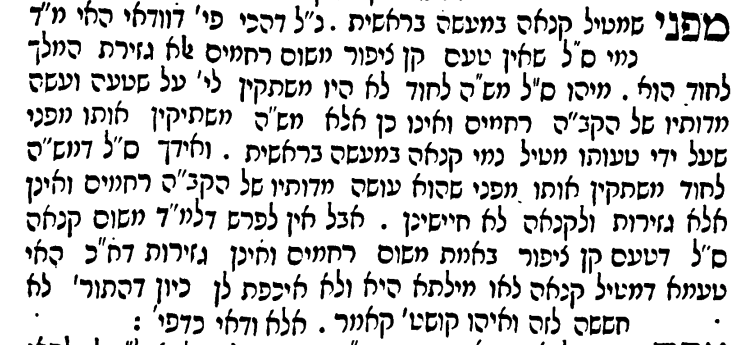
גמ׳ בשלמא מודים מודים משתקין אותו משום דמיחזי כשתי רשויות ועל טוב יזכר שמך נמי משמע על הטובה ולא על הרעה ותנן חייב אדם לברך על הרעה כשם שמברך על הטובה אלא על קן צפור יגיעו רחמיך מאי טעמאפליגי בה תרי אמוראי במערבא רבי יוסי בר אבין ורבי יוסי בר זבידא חד אמר מפני שמטיל קנאה במעשה בראשית וחד אמר מפני שעושה מדותיו של הקדוש ברוך הוא רחמים ואינן אלא גזרות
GEMARA: Our mishna cited three instances where the communal prayer leader is silenced. The Gemara clarifies: Granted, they silence one who repeats: We give thanks, we give thanks, as it appears like he is acknowledging and praying to two authorities. And granted that they also silence one who says: May Your name be mentioned with the good, as clearly he is thanking God only for the good and not for the bad, and we learned in a mishna: One is required to bless God for the bad just as he blesses Him for the good. However, in the case of one who recites: Just as Your mercy is extended to a bird’s nest, why do they silence him?Two amora’im in Eretz Yisrael disputed this question; Rabbi Yosei bar Avin and Rabbi Yosei bar Zevida; one said that this was because he engenders jealousy among God’s creations, as it appears as though he is protesting the fact that the Lord favored one creature over all others. And one said that this was because he transforms the attributes of the Holy One, Blessed be He, into expressions of mercy, when they are nothing but decrees of the King that must be fulfilled without inquiring into the reasons behind them.
גמ' שמטיל קנאה – לומר על אלה חס ולא על שאר בריותיו:
Promotes jealousy... by saying that God is concerned for these [birds] but not for his other creations.
מדותיו - מצותיו והוא לא לרחמים עשה אלא להטיל על ישראל חקי גזרותיו להודיע שהם עבדיו ושומרי מצותיו וגזרות חקותיו אף בדברי' שיש לשטן ולעכו"ם להשיב עליהם ולומר מה צורך במצוה זו:
שמטיל קנאה כו'. למאן דס"ל הכי אפשר דמצוה זו מצד הרחמים היא כמו צדקה וכמה מצות אלא כיון שמזכיר כן בתפלה הרי הוא מטיל קנאה במעשה כו' כאלו אלו העופות נבראו כן ברחמים ולא שאר נבראים ואינו כן אלא שכולם נבראו ברחמים כמ"ש ביום ברוא יהוה אלהים וגו':ומ"ד מפני שעושה מדותיו כו' רחמים ואינן אלא גזירות. ר"ל במצות שאין מפורש טעמם כמו בשלוח הקן כיון דאינו מפורש בה טעם המצוה אין בידינו שהיא מצד הרחמים אלא שיש לנו לקיים אותם מצד גזירותיו שקבול השכר על גזירותיו הם ודאי ביותר דבר שהשטן מונה בו כדאיתא במדרשות ומה שיש לדקדק בזה בדברי התוס' פרק הקורא עומד ע"ש בחדושי הלכות:
מִי שֶׁאָמַר בְּתַחֲנוּנִים מִי שֶׁרִחֵם עַל קַן צִפּוֹר שֶׁלֹּא לִקַּח הָאֵם עַל הַבָּנִים אוֹ שֶׁלֹּא לִשְׁחֹט אוֹתוֹ וְאֶת בְּנוֹ בְּיוֹם אֶחָד יְרַחֵם עָלֵינוּ וְכַיּוֹצֵא בְּעִנְיָן זֶה מְשַׁתְּקִין אוֹתוֹ. מִפְּנֵי שֶׁמִּצְוֹת אֵלּוּ גְּזֵרַת הַכָּתוּב הֵן וְאֵינָן רַחֲמִים. שֶׁאִלּוּ הָיוּ מִפְּנֵי רַחֲמִים לֹא הָיָה מַתִּיר לָנוּ שְׁחִיטָה כָּל עִקָּר. וְכֵן לֹא יַרְבֶּה בְּכִנּוּיִים שֶׁל שֵׁם וְיֹאמַר (דברים י יז) ״הָאֵל הַגָּדוֹל הַגִּבּוֹר וְהַנּוֹרָא״ וְהֶחָזָק וְהָאַמִּיץ וְהָעִזּוּז. שֶׁאֵין כֹּחַ בָּאָדָם לְהַגִּיעַ בְּסוֹף שְׁבָחָיו. אֶלָּא אוֹמֵר מַה שֶּׁאָמַר משֶׁה רַבֵּנוּ עָלָיו הַשָּׁלוֹם:
Whoever says in his prayers, "He that dealt mercifully with a nest of birds, forbidding the taking of the mother-bird together with the nestlings (Deuteronomy 22:6-7) and the slaughtering of a beast and its young in one day (Leviticus 22:28)—may He have mercy upon us", or offers petitions of a similar character is silenced; for these precepts are divine decrees set forth in Scripture and have not been ordained in a spirit of compassion. Were this the motive, the slaughtering of all animals would have been prohibited. It is also forbidden to multiply epithets and say: "O God, Great, Mighty, Awe-inspiring, Powerful, Puissant", since it is beyond human power to exhaust the praises of God. One should therefore limit himself to the attributes used by Moses, our teacher, Peace be upon him.
וכן אסר לשחוט 'אותו ואת בנו' 'ביום אחד' - להשמר ולהרחיק לשחוט משניהם הבן לעיני האם כי צער בעלי חיים בזה גדול מאד אין הפרש בין צער האדם עליו וצער שאר בעלי חיים כי אהבת האם ורחמיה על הולד אינו נמשך אחר השכל רק אחר פועל הכח המדמה הנמצא ברוב בעלי חיים כמו שנמצא באדם. והיה זה הדין מיוחד ב'שור ושיהוה מפני שהם - מותר לנו אכילתם מן הביתיות הנהוג לאכלם והם אשר תכיר מהם האם מן הולד:
It is also prohibited to kill an animal with its young on the same day (Lev. 22:28), in order that people should be restrained and prevented from killing the two together in such a manner that the young is slain in the sight of the mother; for the pain of the animals under such circumstances is very great. There is no difference in this case between the pain of man and the pain of other living beings, since the love and tenderness of the mother for her young ones is not produced by reasoning, but by imagination, and this faculty exists not only in man but in most living beings. This law applies only to ox and lamb, because of the domestic animals used as food these alone are permitted to us, and in these cases the mother recognises her young.
וזה הטעם גם כן ב'שילוח הקן' כי הביצים אשר שכבה האם עליהם והאפרוחים הצריכים לאמם על הרוב אינם ראויים לאכילה וכשישלח האם ותלך לה לא תצטער בראות לקיחת הבנים. ועל הרוב יהיה סיבה להניח הכל כי מה שהיה לוקח ברוב הפעמים אינו ראוי לאכילה: ואם אלו הצערים הנפשיים חסר התורה עליהם בבהמות ובעופות כל שכן בבני האדם כולם. ולא תקשה עלי באמרם 'ז"ל' "האומר על קן צפור יגיעו רחמיך וגו'" - כי הוא לפי אחת משני הדעות אשר זכרנום - רצוני לומר דעת מי שחושב שאין טעם לתורה אלא הרצון לבד ואנחנו נמשכנו אחר הדעת השני:
The same reason applies to the law which enjoins that we should let the mother fly away when we take the young. The eggs over which the bird sits, and the young that are in need of their mother, are generally unfit for food, and when the mother is sent away she does not see the taking of her young ones, and does not feel any pain. In most cases, however, this commandment will cause man to leave the whole nest untouched, because [the young or the eggs], which he is allowed to take, are, as a rule, unfit for food. If the Law provides that such grief should not be caused to cattle or birds, how much more careful must we be that we should not cause grief to our fellowmen. When in the Talmud (Ber. p. 33b) those are blamed who use in their prayer the phrase, "Thy mercy extendeth to young birds," it is the expression of the one of the two opinions mentioned by us, namely, that the precepts of the Law have no other reason but the Divine will. We follow the other opinion.
כִּי יִקָּרֵא קַן צִפּוֹר לְפָנֶיךָ, גַּם זוֹ מִצְוָה מְבֹאֶרֶת, מִן אֹתוֹ וְאֶת בְּנוֹ לֹא תִשְׁחֲטוּ בְּיוֹם אֶחָד (ויקרא כב כח), כִּי הַטַּעַם בִּשְׁנֵיהֶם לְבִלְתִּי הֱיוֹת לָנוּ לֵב אַכְזָרִי וְלֹא נְרַחֵם, אוֹ שֶׁלֹּא יַתִּיר הַכָּתוּב לַעֲשׂוֹת הַשְׁחָתָה לַעֲקֹר הַמִּין אע"פ שֶׁהִתִּיר הַשְּׁחִיטָה בַּמִּין הַהוּא, וְהִנֵּה הַהוֹרֵג הָאֵם וְהַבָּנִים בְּיוֹם אֶחָד, אוֹ לוֹקֵחַ אוֹתָם בִּהְיוֹת לָהֶם דְּרוֹר לָעוֹף, כְּאִלּוּ יַכְרִית הַמִּין הַהוּא. וְכָתַב הָרַב בְּמוֹרֶה הַנְּבֻכִים (ג מח) כִּי טַעַם שִׁלּוּחַ הַקֵּן וְטַעַם אֹתוֹ וְאֶת בְּנוֹ לֹא תִשְׁחֲטוּ בְּיוֹם אֶחָד כְּדֵי לְהַזְהִיר שֶׁלֹּא יִשְׁחֹט הַבֵּן בְּעֵינֵי הָאֵם, כִּי יֵשׁ לַבְּהֵמוֹת דְּאָגָה גְּדוֹלָה בָּזֶה, וְאֵין הֶפְרֵשׁ בֵּין דַּאֲגַת הָאָדָם לְדַאֲגַת הַבְּהֵמוֹת עַל בְּנֵיהֶם, כִּי אַהֲבַת הָאֵם וְחַנּוֹתָהּ לִבְנֵי בִּטְנָהּ אֵינֶנּוּ נִמְשָׁךְ אַחֲרֵי הַשֵּׂכֶל וְהַדִּבּוּר אֲבָל הוּא מִפְּעֻלַּת כֹּחַ הַמַּחְשָׁבָה הַמְּצוּיָה בַּבְּהֵמוֹת כַּאֲשֶׁר הִיא מְצוּיָה בָּאָדָם. וְאִם כֵּן אֵין עִקַּר הָאִסּוּר בְּאוֹתוֹ וְאֶת בְּנוֹ רַק בִּבְנוֹ וְאוֹתוֹ, אֲבָל הַכֹּל הַרְחָקָה וְיוֹתֵר נָכוֹן בַּעֲבוּר שֶׁלֹּא נִתְאַכְזֵר. וְאָמַר הָרַב, וְאַל תָּשִׁיב עָלַי מִמַּאֲמָר הַחֲכָמִים (ברכות לג) הָאוֹמֵר עַל קַן צִפּוֹר יַגִּיעוּ רַחֲמֶיךָ, כִּי זוֹ אַחַת מִשְׁתֵּי סְבָרוֹת, סְבָרַת מִי שֶׁיִּרְאֶה כִּי אֵין טַעַם לַמִּצְוֹת אֶלָּא חֵפֶץ הַבּוֹרֵא, וַאֲנַחְנוּ מַחְזִיקִים בַּסְּבָרָא הַשְּׁנִיָּה, שֶׁיִּהְיֶה בְּכָל הַמִּצְוֹת טַעַם. וְהֻקְשָׁה עָלָיו עוֹד מָה שֶׁמָּצָא בב"ר (מד א), וְכִי מָה אִכְפַּת לוֹ להקב"ה בֵּין שׁוֹחֵט מִן הַצַּוָּאר לְשׁוֹחֵט מִן הָעֹרֶף, הָא לֹא נִתְּנוּ הַמִּצְוֹת אֶלָּא לְצָרֵף בָּהֶם אֶת הַבְּרִיּוֹת, שֶׁנֶּאֱמַר (משלי ל ה) כָּל אִמְרַת אֱלוֹהַּ צְרוּפָה. וְזֶה הָעִנְיָן שֶׁגָּזַר הָרַב בַּמִּצְוֹת שֶׁיֵּשׁ לָהֶם טַעַם, מְבֹאָר הוּא מְאֹד, כִּי בְּכָל אֶחָד טַעַם וְתוֹעֶלֶת וְתִקּוּן לָאָדָם מִלְּבַד שְׂכָרָן מֵאֵת הַמְצַוֶּה בָּהֶן יִתְבָּרַךְ. וּכְבָר ארז"ל (סנהדרין כא), מִפְּנֵי מָה לֹא נִתְגַּלּוּ טַעֲמֵי תּוֹרָה וְכוּ', וְדָרְשׁוּ (פסחים קיט) וְלִמְכַסֶּה עָתִיק, זֶה הַמְגַלֶּה דְּבָרִים שֶׁכִּסָּה עַתִּיק יוֹמִין, וּמַאי נִיהוּ טַעְמֵי תּוֹרָה. וּכְבָר דָּרְשׁוּ בְּפָרָה אֲדֻמָּה (במדב"ר יט ג ד), שֶׁאָמַר שְׁלֹמֹה, עַל הַכֹּל עָמַדְתִּי, וּפָרָשָׁה שֶׁל פָּרָה אֲדֻמָּה חָקַרְתִּי וְשָׁאַלְתִּי וּפִשְׁפַּשְׁתִּי, אָמַרְתִּי אֶחְכָּמָה וְהִיא רְחוֹקָה מִמֶּנִּי (קהלת ז כג). וְאָמַר ר' יוֹסֵי בר' חֲנִינָא, אָמַר לוֹ הַקָּבָּ"ה לְמֹשֶׁה, לְךָ אֲנִי מְגַלֶּה טַעַם פָּרָה אֲדֻמָּה אֲבָל לַאֲחֵרִים חֻקָּה...וּכְתִיב (שם) אֵלֶּה הַדְּבָרִים עֲשִׂיתִם וְלֹא עֲזַבְתִּים, שֶׁכְּבָר עֲשִׂיתִים לְר' עֲקִיבָא. הִנֵּה בֵּאֲרוּ שֶׁאֵין מְנִיעוּת טַעְמֵי תּוֹרָה מִמֶּנּוּ אֶלָּא עִוָּרוֹן בְּשִׂכְלֵנוּ, וְשֶׁכְּבָר נִתְגַּלָּה טַעַם הַחֲמוּרָה שֶׁבָּהֶם לְחַכְמֵי יִשְׂרָאֵל...אֲבָל אֵלּוּ הַהַגָּדוֹת אֲשֶׁר נִתְקַשּׁוּ עַל הָרַב, כְּפִי דַּעְתִּי עִנְיָן אַחֵר לָהֶם, שֶׁרָצוּ לוֹמַר שֶׁאֵין הַתּוֹעֶלֶת בַּמִּצְוֹת להקב"ה בְּעַצְמוֹ יִתְעַלֶּה, אֲבָל הַתּוֹעֶלֶת בָּאָדָם עַצְמוֹ, לִמְנֹעַ מִמֶּנּוּ נֶזֶק אוֹ אֱמוּנָה רָעָה אוֹ מִדָּה מְגֻנָּה, אוֹ לִזְכֹּר הַנִּסִּים וְנִפְלְאוֹת הַבּוֹרֵא יִתְבָּרַךְ וְלָדַעַת אֶת הַשֵּׁם. וְזֶהוּ לְצָרֵף בָּהֶן, שֶׁיִּהְיוּ כְּכֶסֶף צָרוּף, כִּי הַצּוֹרֵף הַכֶּסֶף אֵין מַעֲשֵׂהוּ בְּלֹא טַעַם, אֲבָל לְהוֹצִיא מִמֶּנּוּ כָּל סִיג, וְכֵן הַמִּצְוֹת לְהוֹצִיא מִלִּבֵּנוּ כָּל אֱמוּנָה רָעָה וּלְהוֹדִיעֵנוּ הָאֱמֶת וּלְזָכְרוֹ תָּמִיד.וּלְשׁוֹן זוֹ הָאַגָּדָה עַצְמָהּ הֻזְכְּרָה בִּילַמְּדֵנוּ (תנחומא שמיני ח) בְּפָרָשַׁת זֹאת הַחַיָּה, וְכִי מָה אִכְפַּת לוֹ להקב"ה בֵּין שׁוֹחֵט בְּהֵמָה וְאוֹכֵל אוֹ נוֹחֵר וְאוֹכֵל, כְּלוּם אַתָּה מוֹעִילוֹ אוֹ כְּלוּם אַתָּה מַזִּיקוֹ, אוֹ מַה אִכְפַּת לוֹ בֵּין אוֹכֵל טְהוֹרוֹת אוֹ אוֹכֵל טְמֵאוֹת, אִם חָכַמְתָּ חָכַמְתָּ לָּךְ (משלי ט יב), הָא לֹא נִתְּנוּ הַמִּצְוֹת אֶלָּא לְצָרֵף אֶת הַבְּרִיּוֹת, שֶׁנֶּאֱמַר (תהלים יב ז) אִמֲרוֹת יהוה אֲמָרוֹת טְהֹרוֹת, וְנֶאֱמַר כָּל אִמְרַת אֱלוֹהַּ צְרוּפָה. לָמָּה, שֶׁיְּהֵא מֵגֵן עָלֶיךָ. הִנֵּה מְפֹרָשׁ בְּכָאן שֶׁלֹּא בָּאוּ לוֹמַר אֶלָּא שֶׁאֵין הַתּוֹעֶלֶת אֵלָיו יִתְעַלֶּה שֶׁיִּצְטָרֵךְ לְאוֹרָהּ כַּמְּחֻשָּׁב מִן הַמְּנוֹרָה, וְשֶׁיִּצְטָרֵךְ לְמַאֲכַל הַקָּרְבָּנוֹת וְרֵיחַ הַקְּטֹרֶת כַּנִּרְאֶה מִפְּשׁוּטֵיהֶם, וַאֲפִלּוּ הַזֵּכֶר לְנִפְלְאוֹתָיו שֶׁעָשָׂה שֶׁצִּוָּה לַעֲשׂוֹת לְזֵכֶר לִיצִיאַת מִצְרַיִם וּמַעֲשֵׂה בְּרֵאשִׁית אֵין הַתּוֹעֶלֶת לוֹ, רַק שֶׁנֵּדַע אֲנַחְנוּ הָאֱמֶת וְנִזְכֶּה בּוֹ עַד שֶׁנִּהְיֶה רְאוּיִים לִהְיוֹת מָגֵן עָלֵינוּ, כִּי דִּבּוּרֵנוּ וְזָכְרֵנוּ בְּנִפְלְאוֹתָיו מֵאֶפֶס וָתֹהוּ נֶחְשְׁבוּ לוֹ...אֶלָּא לָנוּ הֵם לְהַדְרִיכֵנוּ בִּנְתִיבוֹת הָרַחֲמִים גַּם בְּעֵת הַשְּׁחִיטָה...אֲבָל כָּל מָה שֶׁנִּצְטַוִּינוּ שֶׁיִּהְיוּ בְּרִיּוֹתָיו צְרוּפוֹת וּמְזֻקָּקוֹת בְּלֹא סִיגֵי מַחֲשָׁבוֹת רָעוֹת וּמִדּוֹת מְגֻנּוֹת. וְכֵן מָה שֶׁאָמְרוּ (ברכות לג) לְפִי שֶׁעוֹשֶׂה מִדּוֹתָיו שֶׁל הקב"ה רַחֲמִים וְאֵינָן אֶלָּא גְּזֵרוֹת, לוֹמַר שֶׁלֹּא חָס הָאֵל עַל קַן צִפּוֹר וְלֹא הִגִּיעוּ רַחֲמָיו עַל אוֹתוֹ וְאֶת בְּנוֹ, שֶׁאֵין רַחֲמָיו מַגִּיעִין בְּבַעֲלֵי הַנֶּפֶשׁ הַבַּהֲמִית לִמְנֹעַ אוֹתָנוּ מִלַּעֲשׂוֹת בָּהֶם צָרְכֵּנוּ, שֶׁאִם כֵּן הָיָה אוֹסֵר הַשְּׁחִיטָה, אֲבָל טַעַם הַמְּנִיעָה לְלַמֵּד אוֹתָנוּ מִדַּת הָרַחְמָנוּת וְשֶׁלֹּא נִתְאַכְזֵר, כִּי הָאַכְזָרִיּוּת תִּתְפַּשֵּׁט בְּנֶפֶשׁ הָאָדָם, כַּיָּדוּעַ בַּטַּבָּחִים שׁוֹחֲטֵי הַשְּׁוָרִים הַגְּדוֹלִים וְהַחֲמוֹרִים, שֶׁהֵם אַנְשֵׁי דָּמִים זוֹבְחֵי אָדָם, אַכְזָרִים מְאֹד. וּמִפְּנֵי זֶה אָמְרוּ (קידושין פב) טוֹב שֶׁבַּטַּבָּחִים שֻׁתָּפוֹ שֶׁל עֲמָלֵק. וְהִנֵּה הַמִּצְוֹת הָאֵלֶּה בַּבְּהֵמָה וּבָעוֹף אֵינָן רַחֲמָנוּת עֲלֵיהֶם אֶלָּא גְּזֵרוֹת בָּנוּ, לְהַדְרִיכֵנוּ וּלְלַמֵּד אוֹתָנוּ הַמִּדּוֹת הַטּוֹבוֹת...
IF A BIRD’S NEST CHANCE TO BE BEFORE THEE. This also is an explanatory commandment, of the prohibition ye shall not kill it [the dam] and its young both in one day, because the reason for both [commandments] is that we should not have a cruel heart and be discompassionate, or it may be that Scripture does not permit us to destroy a species altogether, although it permits slaughter [for food] within that group. Now, he who kills the dam and the young in one day or takes them when they are free to fly [it is regarded] as though he cut off that species.
Now, he [Rabbi Moshe ben Maimon] wrote in the Moreh Nebuchim that the reason for the commandment to release the mother bird when taking its nest and the prohibition against killing the dam with its young on one day is in order to admonish us against killing the young within the mother’s sight, for animals feel great distress under such circumstances. There is no difference between the distress of man and the distress of animals for their young, since the love of the mother and her tenderness to the children of her womb are not the result of reasoning or [the faculty of intelligent] speech, but are produced by the faculty of mental images which exists among animals even as it is present in man. But if so the main prohibition in killing the dam and its young applies only when killing [first] the young and [then] the dam [but not vice versa, whereas the Torah forbids it to be done either way]! But it is all an extraordinary precaution, and it is more correct [to explain them as prohibitions] to prevent us from acting cruelly.
And the Rabbi [Moshe ben Maimon] said further: “Do not contradict me by quoting the saying of the Sages, ‘He who says in his prayer: Even to a bird’s nest do Thy mercies extend [etc., they silence him,’ which would seem to imply that there is no reason other than the Will of G-d for the commandment to release a dam when taking its nest], for that is one of two opinions, namely, the opinion of the Sage who holds that the commandments [of the Torah] have no other reason but the Will of the Creator. We follow the second opinion that there is a reason for all commandments.” And the Rabbi [Moshe ben Maimon] raised a difficulty from a text in Bereshith Rabbah [which contradicts his theory that there is a reason for every commandment]. The text reads: “And what difference does it make to the Holy One, blessed be He, whether an animal is slaughtered from the front of the neck or the back? Surely you must say the commandments have been given only for the purpose of refining [disciplining] men through them, as it is said, Every word of G-d is refined.”
Now, this theory, categorically stated by the Rabbi [Moshe ben Maimon] concerning the commandments that there is a reason for them, is indeed very clear. There is a reason, benefit, and improvement for man in each of them, aside from the reward by Him Who commanded it, blessed be He! Our Sages have already stated: “Why were the reasons for the commandments not revealed? etc.” And they further interpreted: “And for stately clothing — this refers to one who uncovers matters that were concealed by the Ancient of days. And what are these matters? They are the reasons for [the commandments of] the Torah.” The Rabbis have further expressed themselves on the subject of the Red Heifer concerning which Solomon said, “I achieved [a knowledge of the reasons for] everything, but the section of the Red Heifer I examined, inquired into, and searched; All this have I tried by wisdom; I said, ‘I will get wisdom,’ but it was far from me. And Rabbi Yosei the son of Rabbi Chanina said: The Holy One, blessed be He, said to Moses, ‘To you I reveal the reason of the Red Heifer, but for others it is a statute [a commandment for which we know no reason].’ For it is written, And it shall come to pass in that day, that there shall not be light, but heavy clouds ‘v’kipaon’ (and thick). The word is spelled yekipaon, intimating that matters concealed from you in this world are destined ‘to be revealed’ in the World to Come, like a blind man who suddenly sees, as it is written, And I will bring the blind by a way that they knew not, and it is further written, These things have I done and I did not leave them undone, for I have done them already to Rabbi Akiba” [meaning that the explanations were revealed to Rabbi Akiba].
Thus the Rabbis explained that our lack of knowledge of the reasons of [the commandments of] the Torah is but a barrier in our minds, and that the reason for the most difficult of the commandments [i.e., the Red Heifer] has already been revealed to the Sages of Israel [such as Rabbi Akiba, as mentioned in the above Midrash]. There are many such texts among the words of the Rabbis, and Torah and Scripture, which teach to that effect; and the Rabbi [Moshe ben Maimon] mentioned some of them. But those Agadic [homiletic] statements, presenting difficulty to the Rabbi, are in my opinion, intended to express another thought as follows:
The benefit from the commandments is not derived by the Holy One Himself, exalted be He. Rather, the advantage is to man himself, to withhold from him physical harm or some evil belief, or unseemly trait of character, or to recall the miracles and wonders of the Creator, blessed be He, in order to know the Eternal. It is this [which the Rabbis intended in saying] that the commandments were given “for the purpose of refining men,” that they may become like “refined silver,” for he who refines silver does not act without purpose, but to remove therefrom any impurity. So, also, the commandments eliminate from our hearts all evil belief, and [are given] in order to inform us of the truth and to recall it always. Now this very same Agadah [homily] is mentioned in the Yelamdeinu in the section of These are the living things:”And what difference does it make to the Holy One, blessed be He, whether one eats of an animal which is ritually slaughtered or if he just stabs it? Do you benefit Him or harm Him at all? Or what does it matter to Him if one eats clean animals or unclean? If thou art wise, thou art wise for thyself. Surely the commandments have been given only to refine men, as it is said, The words of the Eternal are pure words, and it is further said, Every word of G-d is refined. Why? So that [the word of G-d] should protect you.” Thus it is clearly stated here that the Rabbis [in this Midrash], meant to say merely that the benefit [accruing from observance of the commandments] is not for His sake exalted be He, [nor] that He is in need of the light of the candelabrum as one might think, or that He needs the food of the offerings and the odor of the incense as might appear from their simple meanings. Even regarding the memorial He hath made for His wonderful works, that He commanded us to perform in memory of the Exodus and Creation, the benefit is not for Him, but so, that we should know the truth and be meritorious enough to be worthy that He protects us, for our utterances and remembrances of His wonders are accounted by Him as things of nought, and vanity. And the Midrash brought proof from [the law specifying] slaughter by cutting the neck in front or in the back, meaning to state that all the benefits are to us and not to the Holy One, blessed be He, because it is impossible to say concerning slaughter that there is more benefit and glory to the Creator, blessed be He, by cutting the neck in front than by cutting it in the back or by stabbing the animal. Rather, all these advantages are to us — to lead us in paths of compassion even during [the process of] slaughtering. And then the Rabbis brought another proof: “Or what does it matter to Him if one eats clean things,” — that is, foods permissible to the eater — “or eats unclean things,” that is, forbidden food concerning which the Torah declared they are unclean unto you. However, He implied that [these laws were given to us] so that we might develop a fine soul and be wise men perceptive to the truth. By quoting the verse, If thou art wise, thou art wise for thyself the Rabbis [in the above Midrash] mentioned the principle that the commandments pertaining to rites such as slaughter by [cutting of] the neck are to teach us traits of good character. The Divinely ordained commandments which define the species [of animals and birds which are permissible to us] are to refine our souls, just as the Torah has said, and ye shall not make your souls detestable by beast, or by fowl, or by any thing wherewith the ground teemeth, which I have set apart for you to hold unclean. If so, all the commandments are solely to our advantage. This is as Elihu said, If thou hast sinned, what doest thou against Him? And if thy transgression be multiplied, what doest thou unto Him? And again he states, If thou be righteous, what givest thou Him? Or what receiveth He of thy hands? This is a consensus in all the words of our Rabbis. Thus they asked in Yerushalmi Nedarim whether they may open the way [to release one from a vow or oath] by reason of the honor due to G-d in matters between man and G-d. On this question the Rabbis answered [there]: “What is an example of [a vow being released because of] the honor due to G-d? [If you say that it is a case where he swore] ‘I shall not make a Booth, I shall not take the palm-branch, I shall not put on phylacteries’ — but do you call this ‘by reason of the honor due to G-d?’ It is for oneself that [the observance of the commandments] helps, just as it is said, If thou be righteous, what givest thou Him? Or what receiveth He of thy hands? If thou hast sinned, what doest thou against Him? And if thy transgression be multiplied, what doest thou unto Him?” Thus the Rabbis have explained that even the palm-branch, the Booth, and the phylacteries concerning which He commanded that they shall be for a sign upon thy hand, and for frontlets between thine eyes; for by strength of hand the Eternal brought us forth out of Egypt — are not ordained to honor G-d, blessed be He, but to have compassion on our souls. And the Sages have already arranged it for us in the [Closing] Prayer on the Day of Atonement, stating: “Thou hast distinguished man from the beginning, and hast recognized him [to be privileged] to stand before Thee, for who shall say unto Thee, ‘What doest Thou?’ and if he be righteous what can he give Thee?” Similarly, it states in the Torah, which I command thee this day for thy good, as I have explained. So also, And the Eternal commanded us to do all these statutes, to fear the Eternal our G-d, for our good always. And the intent in all these expressions is “for our good,” and not for His, blessed and exalted be He! Rather, everything we have been commanded is so that His creatures be refined and purified, free from the dross of evil thoughts and blameworthy traits of character.
So, too, what the Rabbis have stated, “Because he treats the ordinances of G-d like expressions of mercy, whereas they are decrees” means to say — that it was not a matter of G-d’s mercy extending to the bird’s nest or the dam and its young, since His mercies did not extend so far into animal life as to prevent us from accomplishing our needs with them, for, if so, He would have forbidden slaughter altogether. But the reason for the prohibition [against taking the dam with its nest, or against killing the dam with its young in one day] is to teach us the trait of compassion and that we should not be cruel, for cruelty proliferates in man’s soul as it is known that butchers, those who slaughter large oxen and asses are men of blood;they that slaughter men, are extremely cruel. It is on account of this [cruelty] that the Rabbis have said: “The most seemly among butchers is a partner of Amalek.” Thus these commandments with respect to cattle and fowl are not [a result of] compassion upon them, but they are decrees upon us to guide us and to teach us traits of good character. So, too, the Rabbis refer to all commandments of the Torah — positive and negative — as “decrees,” as they said in the parable of “the king who entered a country, and his attendants said to him, ‘Promulgate decrees upon them.’ He, however, refused, saying, ‘When they will have accepted my sovereignty, I will promulgate decrees upon them.’ Similarly did the Holy One, blessed be He, [say to Israel], ‘You have accepted My sovereignty: I am the Eternal thy G-d, accept My decrees: Thou shalt have no other gods etc.’”
However, in the Midrash of Rabbi Nechunya ben Hakanah there is an interpretation with respect to releasing a mother bird when taking its nest, which states that there is a secret in this commandment. “Rabbi Rechimaie said, What is the meaning of that which is written, Thou shalt in any wise let the dam go, and it did not say ‘the father?’ [This implies that the verse commands] only Thou shalt in any wise let the dam go with the honor of that ‘understanding’ which is termed ‘the mother of the world,’ as it is written, Yea ‘im’ (if) thou call for understanding. And what is the meaning of the phrase, and the young, take thou to thee? Said Rabbi Rechimaie, It means those young that she raised. And what are they? They are the seven days of [the Festival of] Tabernacles, and the laws of the seven days of the week etc.” Thus this commandment alludes to a great matter, and therefore the reward for the observance thereof is abundant, [as it is said], that it may be well with thee, and that thou mayest prolong thy days.
Now, he [Rabbi Moshe ben Maimon] wrote in the Moreh Nebuchim that the reason for the commandment to release the mother bird when taking its nest and the prohibition against killing the dam with its young on one day is in order to admonish us against killing the young within the mother’s sight, for animals feel great distress under such circumstances. There is no difference between the distress of man and the distress of animals for their young, since the love of the mother and her tenderness to the children of her womb are not the result of reasoning or [the faculty of intelligent] speech, but are produced by the faculty of mental images which exists among animals even as it is present in man. But if so the main prohibition in killing the dam and its young applies only when killing [first] the young and [then] the dam [but not vice versa, whereas the Torah forbids it to be done either way]! But it is all an extraordinary precaution, and it is more correct [to explain them as prohibitions] to prevent us from acting cruelly.
And the Rabbi [Moshe ben Maimon] said further: “Do not contradict me by quoting the saying of the Sages, ‘He who says in his prayer: Even to a bird’s nest do Thy mercies extend [etc., they silence him,’ which would seem to imply that there is no reason other than the Will of G-d for the commandment to release a dam when taking its nest], for that is one of two opinions, namely, the opinion of the Sage who holds that the commandments [of the Torah] have no other reason but the Will of the Creator. We follow the second opinion that there is a reason for all commandments.” And the Rabbi [Moshe ben Maimon] raised a difficulty from a text in Bereshith Rabbah [which contradicts his theory that there is a reason for every commandment]. The text reads: “And what difference does it make to the Holy One, blessed be He, whether an animal is slaughtered from the front of the neck or the back? Surely you must say the commandments have been given only for the purpose of refining [disciplining] men through them, as it is said, Every word of G-d is refined.”
Now, this theory, categorically stated by the Rabbi [Moshe ben Maimon] concerning the commandments that there is a reason for them, is indeed very clear. There is a reason, benefit, and improvement for man in each of them, aside from the reward by Him Who commanded it, blessed be He! Our Sages have already stated: “Why were the reasons for the commandments not revealed? etc.” And they further interpreted: “And for stately clothing — this refers to one who uncovers matters that were concealed by the Ancient of days. And what are these matters? They are the reasons for [the commandments of] the Torah.” The Rabbis have further expressed themselves on the subject of the Red Heifer concerning which Solomon said, “I achieved [a knowledge of the reasons for] everything, but the section of the Red Heifer I examined, inquired into, and searched; All this have I tried by wisdom; I said, ‘I will get wisdom,’ but it was far from me. And Rabbi Yosei the son of Rabbi Chanina said: The Holy One, blessed be He, said to Moses, ‘To you I reveal the reason of the Red Heifer, but for others it is a statute [a commandment for which we know no reason].’ For it is written, And it shall come to pass in that day, that there shall not be light, but heavy clouds ‘v’kipaon’ (and thick). The word is spelled yekipaon, intimating that matters concealed from you in this world are destined ‘to be revealed’ in the World to Come, like a blind man who suddenly sees, as it is written, And I will bring the blind by a way that they knew not, and it is further written, These things have I done and I did not leave them undone, for I have done them already to Rabbi Akiba” [meaning that the explanations were revealed to Rabbi Akiba].
Thus the Rabbis explained that our lack of knowledge of the reasons of [the commandments of] the Torah is but a barrier in our minds, and that the reason for the most difficult of the commandments [i.e., the Red Heifer] has already been revealed to the Sages of Israel [such as Rabbi Akiba, as mentioned in the above Midrash]. There are many such texts among the words of the Rabbis, and Torah and Scripture, which teach to that effect; and the Rabbi [Moshe ben Maimon] mentioned some of them. But those Agadic [homiletic] statements, presenting difficulty to the Rabbi, are in my opinion, intended to express another thought as follows:
The benefit from the commandments is not derived by the Holy One Himself, exalted be He. Rather, the advantage is to man himself, to withhold from him physical harm or some evil belief, or unseemly trait of character, or to recall the miracles and wonders of the Creator, blessed be He, in order to know the Eternal. It is this [which the Rabbis intended in saying] that the commandments were given “for the purpose of refining men,” that they may become like “refined silver,” for he who refines silver does not act without purpose, but to remove therefrom any impurity. So, also, the commandments eliminate from our hearts all evil belief, and [are given] in order to inform us of the truth and to recall it always. Now this very same Agadah [homily] is mentioned in the Yelamdeinu in the section of These are the living things:”And what difference does it make to the Holy One, blessed be He, whether one eats of an animal which is ritually slaughtered or if he just stabs it? Do you benefit Him or harm Him at all? Or what does it matter to Him if one eats clean animals or unclean? If thou art wise, thou art wise for thyself. Surely the commandments have been given only to refine men, as it is said, The words of the Eternal are pure words, and it is further said, Every word of G-d is refined. Why? So that [the word of G-d] should protect you.” Thus it is clearly stated here that the Rabbis [in this Midrash], meant to say merely that the benefit [accruing from observance of the commandments] is not for His sake exalted be He, [nor] that He is in need of the light of the candelabrum as one might think, or that He needs the food of the offerings and the odor of the incense as might appear from their simple meanings. Even regarding the memorial He hath made for His wonderful works, that He commanded us to perform in memory of the Exodus and Creation, the benefit is not for Him, but so, that we should know the truth and be meritorious enough to be worthy that He protects us, for our utterances and remembrances of His wonders are accounted by Him as things of nought, and vanity. And the Midrash brought proof from [the law specifying] slaughter by cutting the neck in front or in the back, meaning to state that all the benefits are to us and not to the Holy One, blessed be He, because it is impossible to say concerning slaughter that there is more benefit and glory to the Creator, blessed be He, by cutting the neck in front than by cutting it in the back or by stabbing the animal. Rather, all these advantages are to us — to lead us in paths of compassion even during [the process of] slaughtering. And then the Rabbis brought another proof: “Or what does it matter to Him if one eats clean things,” — that is, foods permissible to the eater — “or eats unclean things,” that is, forbidden food concerning which the Torah declared they are unclean unto you. However, He implied that [these laws were given to us] so that we might develop a fine soul and be wise men perceptive to the truth. By quoting the verse, If thou art wise, thou art wise for thyself the Rabbis [in the above Midrash] mentioned the principle that the commandments pertaining to rites such as slaughter by [cutting of] the neck are to teach us traits of good character. The Divinely ordained commandments which define the species [of animals and birds which are permissible to us] are to refine our souls, just as the Torah has said, and ye shall not make your souls detestable by beast, or by fowl, or by any thing wherewith the ground teemeth, which I have set apart for you to hold unclean. If so, all the commandments are solely to our advantage. This is as Elihu said, If thou hast sinned, what doest thou against Him? And if thy transgression be multiplied, what doest thou unto Him? And again he states, If thou be righteous, what givest thou Him? Or what receiveth He of thy hands? This is a consensus in all the words of our Rabbis. Thus they asked in Yerushalmi Nedarim whether they may open the way [to release one from a vow or oath] by reason of the honor due to G-d in matters between man and G-d. On this question the Rabbis answered [there]: “What is an example of [a vow being released because of] the honor due to G-d? [If you say that it is a case where he swore] ‘I shall not make a Booth, I shall not take the palm-branch, I shall not put on phylacteries’ — but do you call this ‘by reason of the honor due to G-d?’ It is for oneself that [the observance of the commandments] helps, just as it is said, If thou be righteous, what givest thou Him? Or what receiveth He of thy hands? If thou hast sinned, what doest thou against Him? And if thy transgression be multiplied, what doest thou unto Him?” Thus the Rabbis have explained that even the palm-branch, the Booth, and the phylacteries concerning which He commanded that they shall be for a sign upon thy hand, and for frontlets between thine eyes; for by strength of hand the Eternal brought us forth out of Egypt — are not ordained to honor G-d, blessed be He, but to have compassion on our souls. And the Sages have already arranged it for us in the [Closing] Prayer on the Day of Atonement, stating: “Thou hast distinguished man from the beginning, and hast recognized him [to be privileged] to stand before Thee, for who shall say unto Thee, ‘What doest Thou?’ and if he be righteous what can he give Thee?” Similarly, it states in the Torah, which I command thee this day for thy good, as I have explained. So also, And the Eternal commanded us to do all these statutes, to fear the Eternal our G-d, for our good always. And the intent in all these expressions is “for our good,” and not for His, blessed and exalted be He! Rather, everything we have been commanded is so that His creatures be refined and purified, free from the dross of evil thoughts and blameworthy traits of character.
So, too, what the Rabbis have stated, “Because he treats the ordinances of G-d like expressions of mercy, whereas they are decrees” means to say — that it was not a matter of G-d’s mercy extending to the bird’s nest or the dam and its young, since His mercies did not extend so far into animal life as to prevent us from accomplishing our needs with them, for, if so, He would have forbidden slaughter altogether. But the reason for the prohibition [against taking the dam with its nest, or against killing the dam with its young in one day] is to teach us the trait of compassion and that we should not be cruel, for cruelty proliferates in man’s soul as it is known that butchers, those who slaughter large oxen and asses are men of blood;they that slaughter men, are extremely cruel. It is on account of this [cruelty] that the Rabbis have said: “The most seemly among butchers is a partner of Amalek.” Thus these commandments with respect to cattle and fowl are not [a result of] compassion upon them, but they are decrees upon us to guide us and to teach us traits of good character. So, too, the Rabbis refer to all commandments of the Torah — positive and negative — as “decrees,” as they said in the parable of “the king who entered a country, and his attendants said to him, ‘Promulgate decrees upon them.’ He, however, refused, saying, ‘When they will have accepted my sovereignty, I will promulgate decrees upon them.’ Similarly did the Holy One, blessed be He, [say to Israel], ‘You have accepted My sovereignty: I am the Eternal thy G-d, accept My decrees: Thou shalt have no other gods etc.’”
However, in the Midrash of Rabbi Nechunya ben Hakanah there is an interpretation with respect to releasing a mother bird when taking its nest, which states that there is a secret in this commandment. “Rabbi Rechimaie said, What is the meaning of that which is written, Thou shalt in any wise let the dam go, and it did not say ‘the father?’ [This implies that the verse commands] only Thou shalt in any wise let the dam go with the honor of that ‘understanding’ which is termed ‘the mother of the world,’ as it is written, Yea ‘im’ (if) thou call for understanding. And what is the meaning of the phrase, and the young, take thou to thee? Said Rabbi Rechimaie, It means those young that she raised. And what are they? They are the seven days of [the Festival of] Tabernacles, and the laws of the seven days of the week etc.” Thus this commandment alludes to a great matter, and therefore the reward for the observance thereof is abundant, [as it is said], that it may be well with thee, and that thou mayest prolong thy days.
כי יקרא קן צפור וגו' ...והרמב"ן כתב עליו שאמת הוא שיש במצות טעם ותועלת ותקון באדם אבל אין לומ' שטעם המצוה הזאת הוא להגיע רחמיו ית' אל הב"ח הללו. אך הטעם הנכון הוא להשלי' תכונת האדם ומדותיו ולהרחיק פעולות האכזריו' ממנו. והנה על האמת דברי הרמב"ן ז"ל אין להרהר עליהם כי אמת יהגה חכי. אבל אומר אני שבכלל דברי הרב המורה דבריו ושלא חדש בזה דבר עליו ונ"ל שמלבד הרחק' האכזריו' ותקון התכונ'...
ואין לשאול דא"כ למה לן כלל הך קרא דואת הבנים תקח לך די"ל דצריך לדרשא לך ולא לכלביך דכשהבנים טריפה פטור משילוח כמו שיתבאר וגם אין לשאול דאם אין חובה בלקיחת הבנים למה באמת פטרה תורה כשהן טריפה דאין זה שאלה כלל דאטו טעמי התורה גלויים לנו והרי גזירת מלך היא והגם שמפרשי התורה נתנו איזה טעמים זהו לאסבורי בעלמא אבל באמת נעו מעגלותיה לא תדע ומ"מ מי שזיכהו ד' במצוה זו יקיים קרא כדכתיב דכל רשות שבתורה היא כמצוה רק לגבי חובה רשות קרו לה ועוד דלפי טעמי החכמה שנאמרו במצוה זו בפי' הרמב"ן ובחיי וביותר בזוהר ותקונים בדווקא הוא ליקח את הבנים.
הני מוקדשין היכי דמי אילימא דהוה ליה קן בתוך ביתו ואקדשיה מי מיחייב (דברים כב, ו) כי יקרא קן צפור פרט למזומן
§ With regard to the statement of the mishna that sacrificial birds are not included in the mitzva of sending away the mother bird from the nest, the Gemara asks: What are the circumstances of these sacrificial birds discussed in the mishna? If we say that the mishna is referring to a case where one had a nest in his house and consecrated it, is one obligated to send away even a non-sacred bird in such a case? The verse states: “If a bird’s nest happens before you on the way” (Deuteronomy 22:6), which excludes a nest readily available in one’s home.
מתני׳ שלחה וחזרה אפי' ארבעה וחמשה פעמים חייב שנאמר (דברים כב, ז) שלח תשלח את האם...
MISHNA: If one sent away the mother bird and it returned to rest on the eggs, even if it returned four or five times, one is obligated to send it away again, as it is stated: “You shall send [shalle’aḥ teshallaḥ] the mother” (Deuteronomy 22:7). The doubled verb indicates that one must send away the mother bird multiple times if needed. If one said: I am hereby taking the mother and sending away the offspring, he is still obligated to send away the mother even if he sent away the offspring, as it is stated: “You shall send the mother.” If one sent away the mother and took the offspring and then returned them to the mother’s nest, and thereafter the mother returned and rested upon them, one is exempt from sending away the mother bird.
א"ל שלח אפילו מאה פעמים תשלח אין לי אלא לדבר הרשות לדבר מצוה מנין ת"ל תשלח מכל מקום
Rava said to him: Actually, the halakha that one must send away the mother multiple times is not derived from the phrase “shalle’aḥ teshallaḥ.” Rather, the word “shalle’aḥ” indicates that one must send away the mother bird even one hundred times, and the word “teshallaḥ” teaches another matter: I have derived only the obligation to send away the mother bird in a case where one takes the eggs or the fledglings and wants to take the mother bird for a discretionary purpose, e.g., to eat it. In a case where one takes the eggs or the fledglings and needs the mother bird for a matter involving a mitzva, e.g., the purification of a leper, from where is the halakha that he must send away the mother derived? The verse states: “Teshallaḥ,” to teach that in any case one must send away the mother bird.
לָקַח אֶת הַבָּנִים וְהֶחֱזִירָן לַקֵּן וְאַחַר כָּךְ חָזְרָה הָאֵם עֲלֵיהֶן פָּטוּר מִלְּשַׁלֵּחַ. שִׁלֵּחַ אֶת הָאֵם וְחָזַר וְצָד אוֹתָהּ הֲרֵי זֶה מֻתָּר...
If he [sent away the mother,] took the offspring and [then] returned them to the nest and the mother came back to them, he is not obligated to send [her] away.
It is permitted to send away the mother and then snare her again. The Torah forbade snaring only when she cannot fly away because of her offspring over which she is hovering so that they not be taken, as [ibid.:6] states: "And the mother is resting on the chicks." If, however, he removed her from his grasp and then snared her again, it is permitted.
It is permitted to send away the mother and then snare her again. The Torah forbade snaring only when she cannot fly away because of her offspring over which she is hovering so that they not be taken, as [ibid.:6] states: "And the mother is resting on the chicks." If, however, he removed her from his grasp and then snared her again, it is permitted.
וַיִּבְרָ֨א אֱלֹהִ֤ים ׀ אֶת־הָֽאָדָם֙ בְּצַלְמ֔וֹ בְּצֶ֥לֶם אֱלֹהִ֖ים בָּרָ֣א אֹת֑וֹ זָכָ֥ר וּנְקֵבָ֖ה בָּרָ֥א אֹתָֽם׃
And God created man in His image, in the image of God He created him; male and female He created them.
וַיְבָ֣רֶךְ אֹתָם֮ אֱלֹהִים֒ וַיֹּ֨אמֶר לָהֶ֜ם אֱלֹהִ֗ים פְּר֥וּ וּרְב֛וּ וּמִלְא֥וּ אֶת־הָאָ֖רֶץ וְכִבְשֻׁ֑הָ וּרְד֞וּ בִּדְגַ֤ת הַיָּם֙ וּבְע֣וֹף הַשָּׁמַ֔יִם וּבְכָל־חַיָּ֖ה הָֽרֹמֶ֥שֶׂת עַל־הָאָֽרֶץ׃
God blessed them and God said to them, “Be fertile and increase, fill the earth and master it; and rule the fish of the sea, the birds of the sky, and all the living things that creep on earth.”
תַּ֭מְשִׁילֵהוּ בְּמַעֲשֵׂ֣י יָדֶ֑יךָ כֹּ֝֗ל שַׁ֣תָּה תַֽחַת־רַגְלָֽיו׃
You have made him master over Your handiwork,
laying the world at his feet,
laying the world at his feet,
תמשילהו. המשלתו בכל הבריות:
תחת רגליו. ר״ל נכנעים אליו:
צֹנֶ֣ה וַאֲלָפִ֣ים כֻּלָּ֑ם וְ֝גַ֗ם בַּהֲמ֥וֹת שָׂדָֽי׃
sheep and oxen, all of them,
and wild beasts, too;
and wild beasts, too;
עיונים בדברי חז״ל ובלשונם - הרב חנוך הכהן אֶרנטרוי


...לֹא אָסְרָה תּוֹרָה אֶלָּא לָצוּד אוֹתָהּ וְהִיא אֵינָהּ יְכוֹלָה לִפְרֹחַ בִּשְׁבִיל הַבָּנִים שֶׁהִיא מְרַחֶפֶת עֲלֵיהֶן שֶׁלֹּא יִלָּקְחוּ שֶׁנֶּאֱמַר (דברים כב ו) "וְהָאֵם רֹבֶצֶת עַל הָאֶפְרֹחִים". אֲבָל אִם הוֹצִיאָהּ מִתַּחַת יָדוֹ וְחָזַר וְצָד אוֹתָהּ מֻתָּר:
...It is permitted to send away the mother and then snare her. The Torah forbade snaring only when she cannot fly away because of her offspring over which she is hovering so that they not be taken, as [ibid.:6] states: "And the mother is resting on the chicks." If, however, he removed her from his grasp and then snared her again, it is permitted.
...אַף עַל פִּי שֶׁכָּל חֻקֵּי הַתּוֹרָה גְּזֵרוֹת הֵם כְּמוֹ שֶׁבֵּאַרְנוּ בְּסוֹף מְעִילָה. רָאוּי לְהִתְבּוֹנֵן בָּהֶן וְכָל מַה שֶּׁאַתָּה יָכוֹל לִתֵּן לוֹ טַעַם תֵּן לוֹ טַעַם...
One may not use a clever technique to change the fetus of a consecrated animal to another purpose. Instead, it is consecrated with the holiness of its mother. The rationale is that the offspring of a consecrated animal become consecrated in the womb, as we explained. Thus every fetus is consecrated with the holiness of its mother and its holiness cannot be changed in the womb as one may with regard to a firstborn animal. The rationale is that a firstborn animal becomes consecrated only when it emerges from the womb.
Although all of the statutes of the Torah are decrees, as we explained in the conclusion of Hilchot Me'ilah, it is fit to meditate upon them and wherever it is possible to provide a reason, one should provide a reason. The Sages of the early generations said that King Solomon understood most of the rationales for all the statutes of the Torah.
It appears to me that the verse Leviticus 27:10: "It and the animal to which its holiness will be transferred shall be consecrated" shares a similar motivating rationale as the verse ibid.:15: "If the one who consecrates it shall redeem his house, he shall add a fifth of the money of the redemption valuation to it." The principle behind these laws is that the Torah descended to the bottom of a person's thoughts and the scope of his evil inclination. For human nature tends to increase his property and attach importance to his money. Even though he made a vow or consecrated something, it is possible that he will reconsider, change his mind, and redeem it for less than its worth. Hence the Torah states: "If he redeems it for himself, he must add a fifth." Similarly, if he consecrated an animal in a manner that its physical person becomes consecrated, he might reconsider. In this instance, since he cannot redeem it, he will exchange it for a lesser one. If he was given permission to exchange an inferior animal for a superior one, he will exchange a superior one for an inferior one and claim that it was superior. Therefore, the Torah removed that option, forbidding all exchanges and penalized him that if he made an exchange, "It and the animal to which its holiness will be transferred shall be consecrated."
All of these ordinances are to subjugate one's evil inclination and improve one's character. Similarly, most of the Torah's laws are nothing other than "counsels given from distance" from "He Who is of great counsel" to improve one's character and make one's conduct upright. And so it is written Proverbs 22:20-21: "Behold, I have written for you in the Torah prominent matters, to inform you of the veracity of the words of truth, so that you will respond truthfully to those who send to you."
Although all of the statutes of the Torah are decrees, as we explained in the conclusion of Hilchot Me'ilah, it is fit to meditate upon them and wherever it is possible to provide a reason, one should provide a reason. The Sages of the early generations said that King Solomon understood most of the rationales for all the statutes of the Torah.
It appears to me that the verse Leviticus 27:10: "It and the animal to which its holiness will be transferred shall be consecrated" shares a similar motivating rationale as the verse ibid.:15: "If the one who consecrates it shall redeem his house, he shall add a fifth of the money of the redemption valuation to it." The principle behind these laws is that the Torah descended to the bottom of a person's thoughts and the scope of his evil inclination. For human nature tends to increase his property and attach importance to his money. Even though he made a vow or consecrated something, it is possible that he will reconsider, change his mind, and redeem it for less than its worth. Hence the Torah states: "If he redeems it for himself, he must add a fifth." Similarly, if he consecrated an animal in a manner that its physical person becomes consecrated, he might reconsider. In this instance, since he cannot redeem it, he will exchange it for a lesser one. If he was given permission to exchange an inferior animal for a superior one, he will exchange a superior one for an inferior one and claim that it was superior. Therefore, the Torah removed that option, forbidding all exchanges and penalized him that if he made an exchange, "It and the animal to which its holiness will be transferred shall be consecrated."
All of these ordinances are to subjugate one's evil inclination and improve one's character. Similarly, most of the Torah's laws are nothing other than "counsels given from distance" from "He Who is of great counsel" to improve one's character and make one's conduct upright. And so it is written Proverbs 22:20-21: "Behold, I have written for you in the Torah prominent matters, to inform you of the veracity of the words of truth, so that you will respond truthfully to those who send to you."
טורי אבן - מגילה כ״ה.
זָכ֕וֹר אֵ֛ת אֲשֶׁר־עָשָׂ֥ה לְךָ֖ עֲמָלֵ֑ק בַּדֶּ֖רֶךְ בְּצֵאתְכֶ֥ם מִמִּצְרָֽיִם׃
Remember what Amalek did to you on your journey, after you left Egypt—
אֲשֶׁ֨ר קָֽרְךָ֜ בַּדֶּ֗רֶךְ וַיְזַנֵּ֤ב בְּךָ֙ כׇּל־הַנֶּחֱשָׁלִ֣ים אַֽחֲרֶ֔יךָ וְאַתָּ֖ה עָיֵ֣ף וְיָגֵ֑עַ וְלֹ֥א יָרֵ֖א אֱלֹהִֽים׃
how, undeterred by fear of God, he surprised you on the march, when you were famished and weary, and cut down all the stragglers in your rear.
אשר קרך בדרך. לְשׁוֹן מִקְרֶה; דָּבָר אַחֵר — לְשׁוֹן קֶרִי וְטֻמְאָה שֶׁהָיָה מְטַמְּאָן בְּמִשְׁכַּב זְכוּר; דָּ"אַ — לְשׁוֹן קֹר וְחֹם, צִנֶּנְךָ וְהִפְשִׁירְךָ מֵרְתִיחָתְךָ, שֶׁהָיוּ כָל הָאֻמּוֹת יְרֵאִים לְהִלָּחֵם בָּכֶם וּבָא זֶה וְהִתְחִיל וְהֶרְאָה מָקוֹם לַאֲחֵרִים; מָשָׁל לְאַמְבָּטִי רוֹתַחַת שֶׁאֵין כָּל בְּרִיָּה יְכוֹלָה לֵירֵד בְּתוֹכָהּ, בָּא בֶן בְּלִיַּעַל אֶחָד קָפַץ וְיָרַד לְתוֹכָהּ, אַעַ"פִּ שֶׁנִּכְוָה הֵקֵרָהּ אוֹתָהּ בִּפְנֵי אֲחֵרִים (תנחומא):
אשר קרך בדרך HOW HE MET THEE BY THE WAY — The word קרך is connected in meaning with מקרה “a sudden happening”, i.e., he came against thee by surprise. Another explanation is: it is connected in meaning with the term קרי, nocturnal pollution and uncleanness, because he polluted them by pederasty. Yet another explanation is that it is connected in meaning with the expression קור in the phrase קור וחום “cold and heat” and it means: he made you cold and lukewarm after the boiling heat you had before. For all the nations were afraid to war against you and this one came and began to point out the way to others. A parable! It may be compared to a boiling hot bath into which no living creature could descend. A good-for-nothing came, and sprang down into it; although he scalded himself he made it appear cold to others (Midrash Tanchuma, Ki Teitzei 9).
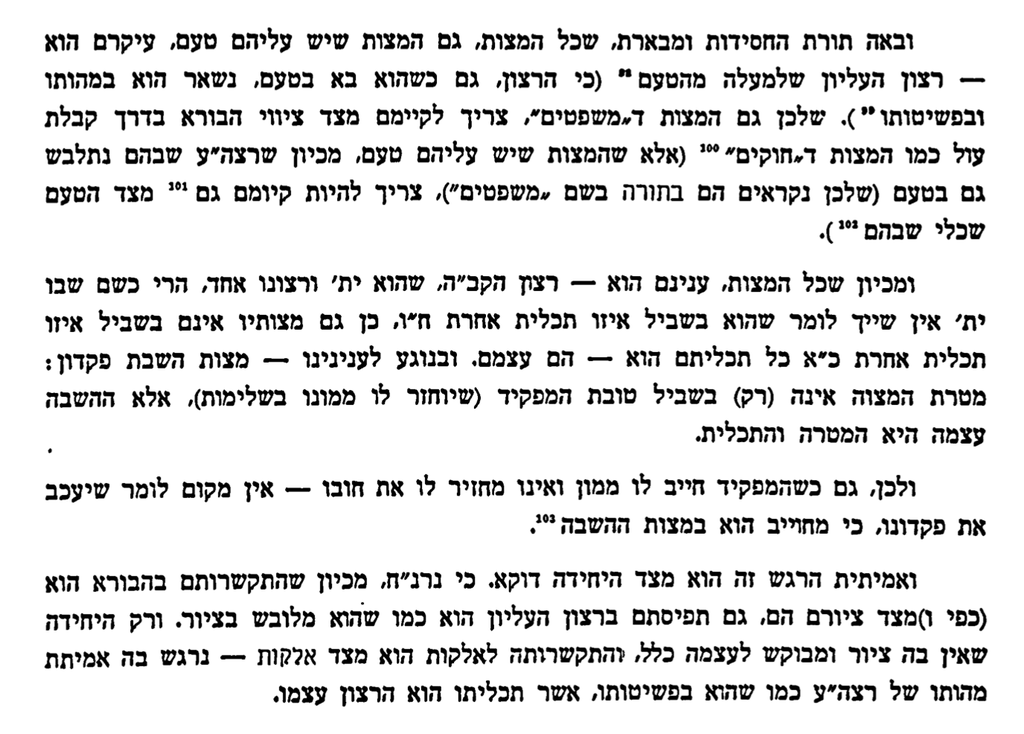
גאך אמרו רז״ל שבזמן הגלות אין השם שלם כו׳ (עמ״ש מזה ע״פ ועשית ציץ וע״פ זכור את אשר עשה לך עמלק ובמגלת אסתר בדרוש הראשון שעל מארז״ל חייב אינש לבסומי בפוריא) והיינו שאותיות ו״ה הם מפורדים מאותיות י״ה. והענין בעבודת יהוה הוא שאע״פ שמתבונן ומעמיק בגדולת יהוה ומעמיק דעתו בבחי׳ בטול אליו ית׳ בבחינה שלמעלה מהדעת עכ״ז אינן פועלים להיות נמשך בלב להפך המדות אהבה ויראה בהתגלות הלב ברשפי אש ותשוקה ליהוה לבדו והיינו בסיבת הגלות שמלובש בתאות וענינים גשמיים וע״ז נאמר ומלתם את ערלת לבבכם וגו׳ וביאור הענין כי הנה כתיב ומל יהוה אלהיך את לבבך.