


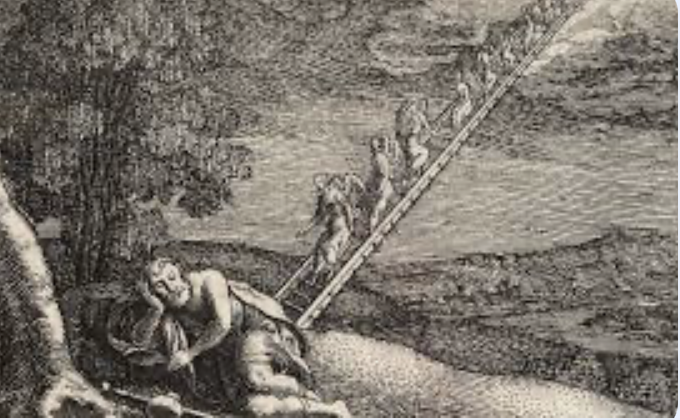
(יב) וַֽיַּחֲלֹ֗ם וְהִנֵּ֤ה סֻלָּם֙ מֻצָּ֣ב אַ֔רְצָה וְרֹאשׁ֖וֹ מַגִּ֣יעַ הַשָּׁמָ֑יְמָה וְהִנֵּה֙ מַלְאֲכֵ֣י אֱלֹקִ֔ים עֹלִ֥ים וְיֹרְדִ֖ים בּֽוֹ׃ (יג) וְהִנֵּ֨ה ה׳ נִצָּ֣ב עָלָיו֮ וַיֹּאמַר֒ אֲנִ֣י ה׳ אֱלֹקֵי֙ אַבְרָהָ֣ם אָבִ֔יךָ וֵאלֹקֵ֖י יִצְחָ֑ק הָאָ֗רֶץ אֲשֶׁ֤ר אַתָּה֙ שֹׁכֵ֣ב עָלֶ֔יהָ לְךָ֥ אֶתְּנֶ֖נָּה וּלְזַרְעֶֽךָ׃
(12) He [Jacob] had a dream; a stairway was set on the ground and its top reached to the sky, and messengers of God were going up and down on it. (13) And standing beside him was ה׳, who said, “I am ה׳, the God of your father Abraham’s [house] and the God of Isaac’s [house]: the ground on which you are lying I will assign to you and to your offspring.
Jacob's dream in Parashat Vayetzei isn't the first dream in the Torah; that honor goes to Abimelech's dream in Parashat Vayera, in which God warns him that in fact, Sarah is Abraham's wife and not his sister.
However, Jacob's dream of a ladder extending from earth to heaven, with angels going up and down, and God standing beside him, is surely the first dream in Tanakh that has broad - even universal - resonance, and has been the source of commentaries, works of art, and inspiration for millennia.
This week - the first week of December 2024, the first week of Kislev 5785 - I would like to explore Jacob's ladder with the intention of asking: Can we be like Jacob's ladder today, in this very moment? Can we be firmly planted on the ground, with God beside us, and aspire to heights of justice and ethics?
At the start of our Parsha, Jacob is at a crossroads in his life; he has departed from his home in Canaan after a series of his actions towards his brother Esau which have seriously upset the family order.
וַיִּפְגַּ֨ע בַּמָּק֜וֹם וַיָּ֤לֶן שָׁם֙ כִּי־בָ֣א הַשֶּׁ֔מֶשׁ וַיִּקַּח֙ מֵאַבְנֵ֣י הַמָּק֔וֹם וַיָּ֖שֶׂם מְרַֽאֲשֹׁתָ֑יו וַיִּשְׁכַּ֖ב בַּמָּק֥וֹם הַהֽוּא׃
He came upon a certain place and stopped there for the night, for the sun had set. Taking one of the stones of that place, he put it under his head and lay down in that place.
Note that in this one verse, we have the word for place - makom - הַמָּק֔וֹם - three times. Recall also that this word is one of the ways that Jews name God - הַמָּק֔וֹם - "the place". As Jacob will discover through the dream he will dream in this place, God is present - including, within him.
Rabbi Lawrence Kushner, in his powerful 1991 book, God Was in This Place and I, I Did Not Know It - finding self, spirituality, and ultimate meaning (which he calls an extended midrash on Genesis 28:16) writes:
"The beginning of knowing about God, in other words, is simply paying attention, being fully present where you are, or as Rashi suggests, waking up. We realize, like Jacob, that we have been asleep. We do not see what is happening all around us. For most of us, most of the time, the lights are on but nobody's home.
"Right now, for instance, you are a reader. You are consuming these words and the ideas they bear. But suppose you were a typographer, then you would also notice the shapes of the letters. Suppose you were a poet. A paper manufacturer. A blind person. A composer. We find what we seek and we seek who we are." (p. 26, 1994 edition, emphasis added)
As we engage with these verses from Parashat Vayetzei, what will we find about ourselves, in this particular moment? At this moment that, possibly more than other moments in Jewish history since the mid-20th century, we are called upon to probe deeply for what we understand to be just and live-giving?
Aren't we always searching for "the place", for God? If we were like the ladder in Jacob's dream - standing on the ground, reaching up to heaven - would we be optimally positioned to act in an ethical and just manner?
How can we be lifted up by our values of justice, respect for life, pikuach nefesh?
When we narrow our ethical field of vision, and turn away from our most deeply-held values, it's as if we're earth-bound, unable to ascend. In fact, in this week's Haftarah, Hosea 11:7 - 12:14, we read of a situation in which the people are not lifting themselves up to be close to God:
(ז) וְעַמִּ֥י תְלוּאִ֖ים לִמְשׁוּבָתִ֑י וְאֶל־עַל֙ יִקְרָאֻ֔הוּ יַ֖חַד לֹ֥א יְרוֹמֵֽם׃
(7) For My people persists in its defection from Me; when it is summoned upward, it does not rise at all.
We will read later in the Haftarah that the restorative action is to practice goodness and justice:
(ז) וְאַתָּ֖ה בֵּאלֹקֶ֣יךָ תָשׁ֑וּב חֶ֤סֶד וּמִשְׁפָּט֙ שְׁמֹ֔ר וְקַוֵּ֥ה אֶל־אֱלֹקֶ֖יךָ תָּמִֽיד׃
(7) You must return to your God!
Practice goodness and justice,
And constantly trust in your God.
Back to our Parsha and Jacob's dream:
It's often been noted that the angels are described first as going up and then only after this, coming down; in other words, they are starting from where we are, from here.
And God is standing near Jacob - וְהִנֵּ֨ה ה׳ נִצָּ֣ב עָלָיו֮ - v'hinei Adonai nitzav alav. This verb √נצב (natzav), can lead us to think of Parashat Nitzavim, and its powerful first few verses (all the more resonant for being included in Yom Kippur Shacharit in Reform congregations:
(ט) אַתֶּ֨ם נִצָּבִ֤ים הַיּוֹם֙ כֻּלְּכֶ֔ם לִפְנֵ֖י ה׳ אֱלֹקֵיכֶ֑ם רָאשֵׁיכֶ֣ם שִׁבְטֵיכֶ֗ם זִקְנֵיכֶם֙ וְשֹׁ֣טְרֵיכֶ֔ם כֹּ֖ל אִ֥ישׁ יִשְׂרָאֵֽל׃ (י) טַפְּכֶ֣ם נְשֵׁיכֶ֔ם וְגֵ֣רְךָ֔ אֲשֶׁ֖ר בְּקֶ֣רֶב מַחֲנֶ֑יךָ מֵחֹטֵ֣ב עֵצֶ֔יךָ עַ֖ד שֹׁאֵ֥ב מֵימֶֽיךָ׃ (יא) לְעׇבְרְךָ֗ בִּבְרִ֛ית ה׳ אֱלֹקֶ֖יךָ וּבְאָלָת֑וֹ אֲשֶׁר֙ ה׳ אֱלֹקֶ֔יךָ כֹּרֵ֥ת עִמְּךָ֖ הַיּֽוֹם׃
(9) You stand this day, all of you, before your God ה׳ —your tribal heads, your elders, and your officials, every householder in Israel, (10) your children, your wives, even the stranger within your camp, from woodchopper to waterdrawer— (11) to enter into the covenant of your God ה׳, which your God ה׳ is concluding with you this day...
אַתֶּ֨ם נִצָּבִ֤ים הַיּוֹם֙ (atem nitzavim hayom)
You [all of you - you plural] are standing this day.
Each part of this three word phrase is significant.
You - plural. A collective "you" - which, however of course is always made up of each of us, made up of each of our individual selves.
Stand, standing - to take a stand; to station oneself; to stand firm; to take an upright position (like Jacob's ladder?).
This day - hayom - הַיּוֹם֙. The concept of הַיּוֹם֙ is profoundly important: at every moment, it is always הַיּוֹם֙, this moment, right now. It is always the moment when you - individually and collectively - can stand up for what you understand is right.
In Jacob's dream, God standing near him says:
וְהָיָ֤ה זַרְעֲךָ֙ כַּעֲפַ֣ר הָאָ֔רֶץ וּפָרַצְתָּ֛ יָ֥מָּה וָקֵ֖דְמָה וְצָפֹ֣נָה וָנֶ֑גְבָּה וְנִבְרְכ֥וּ בְךָ֛ כׇּל־מִשְׁפְּחֹ֥ת הָאֲדָמָ֖ה וּבְזַרְעֶֽךָ׃
Your descendants shall be as the dust of the earth; you shall spread out to the west and to the east, to the north and to the south. All the families of the earth shall bless themselves by you and your descendants.
you shall spread out... וּפָרַצְתָּ֛
Let's interrogate this verb; we will discover that it has meanings in addition to "spreading out":
√פרץ paratz
-
to break through or down or over, burst, breach
-
(Qal)
-
to break or burst out (from womb or enclosure)
-
to break through or down, make a breach in
-
to break into
-
to break open
-
to break up, break in pieces
-
to break out (violently) upon
-
to break over (limits), increase
-
to use violence
-
to burst open
-
to spread, distribute
-
-
(Niphal) to be broken through
-
(Pual) to be broken down
-
(Hithpael) to break away
-

It seems as if the predominant array of meanings for this verb have to do with breaking / breaking through / breaking forth; we could say, "spreading out" as a result of an active or even violent or destructive event.
So a question arises: could it be that, within God's "promise" to Jacob, is a hidden warning about what consequences could be when his descendants "break forth" (rather than "spreading out")?
Along with this, is it favorable that here, Jacob is told that his descendants will be "as the dust of the earth"? Earlier in the Book of Genesis, God has said to both Abraham and Isaac that their descendants will be as numerous as the stars in the sky or the sand on the seashore:
Also Genesis 22:17 and 26:4.
Here, however, in Jacob's dream, God tells him that his descendants will be "as the dust of the earth". What could this description of Jacob's descendants mean?
This word - עָפָ֥ר (afar) / dust - is surely at least bivalent; after all, it is what we humans are made of; the first of 110 occurrences of this word in Tanakh is in Genesis 2:7:
(ז) וַיִּ֩יצֶר֩ ה׳ אֱלֹקִ֜ים אֶת־הָֽאָדָ֗ם עָפָר֙ מִן־הָ֣אֲדָמָ֔ה וַיִּפַּ֥ח בְּאַפָּ֖יו נִשְׁמַ֣ת חַיִּ֑ים וַיְהִ֥י הָֽאָדָ֖ם לְנֶ֥פֶשׁ חַיָּֽה׃
(7) God ה׳ formed the Human from the dust, blowing into his nostrils the breath of life: the Human became a living being.
However, in addition to afar being the stuff that Adam was made from, many of the numerous occurrences in Tanakh have attributes of dryness, death, the grave.
After Genesis 2:7, is very next occurrence is also in Parashat Beresheit, when God tells the serpent:
(יד) וַיֹּ֩אמֶר֩ ה׳ אֱלֹקִ֥ים ׀ אֶֽל־הַנָּחָשׁ֮ כִּ֣י עָשִׂ֣יתָ זֹּאת֒ אָר֤וּר אַתָּה֙ מִכׇּל־הַבְּהֵמָ֔ה וּמִכֹּ֖ל חַיַּ֣ת הַשָּׂדֶ֑ה עַל־גְּחֹנְךָ֣ תֵלֵ֔ךְ וְעָפָ֥ר תֹּאכַ֖ל כׇּל־יְמֵ֥י חַיֶּֽיךָ׃
(14) Then God ה׳ said to the serpent, “Because you did this, more cursed shall you be than all cattle and all the wild beasts: on your belly shall you crawl and dirt [dust] shall you eat all the days of your life.
An example from Job:
(יא) עַ֭צְמוֹתָיו מָלְא֣וּ עֲלוּמָ֑ו וְ֝עִמּ֗וֹ עַל־עָפָ֥ר תִּשְׁכָּֽב׃
(11) His bones, still full of vigor, lie down in the dust [in the grave] with him.
So when in his dream, God tells Jacob that his descendants will be like the dust of the earth, and they will spread out in all directions... it seems useful to consider that there could be something problematic in this. Like the dust, not like the stars in the sky or the sand at the shore; breaking forth, not spreading out, in a manner that could be destructive.
It seems imperative, at this season, for Jews to consider whether our collective actions - or actions that are said to be taken on our behalf - represent a positive "spreading forth" or, conversely, a destructive "breaking forth". In the place we find ourselves, individually and collectively, let us ask, Who is the version of ourselves that we are seeking? Can we wake up to God's presence, so near us? Can we stand firmly on the foundation of what we know and lift ourselves up to act in ways of goodness and justice?
If we are fortunate, we will be lifted up, to ascend to a vantage point where God is with us.
Practice goodness and justice,
And constantly trust in your God.
May every day be הַיּוֹם֙ - hayom, the very day, when we find ourselves in the place where God is with us, and when we practice goodness and justice.