


As we approach the end of the Book of Genesis, and as Jacob approaches the end of his life, he offers a memoir of sorts, including a recollection of his encounter with God (in Parashat Vayetzei, in his dream of the ladder). As often happens in autobiography, there is a divergence in "the present" from the way the story was told "the first time around".
For example, here in Parashat Vayechi, Jacob recalls:
(ג) וַיֹּ֤אמֶר יַעֲקֹב֙ אֶל־יוֹסֵ֔ף אֵ֥ל שַׁדַּ֛י נִרְאָֽה־אֵלַ֥י בְּל֖וּז בְּאֶ֣רֶץ כְּנָ֑עַן וַיְבָ֖רֶךְ אֹתִֽי׃ (ד) וַיֹּ֣אמֶר אֵלַ֗י הִנְנִ֤י מַפְרְךָ֙ וְהִרְבִּיתִ֔ךָ וּנְתַתִּ֖יךָ לִקְהַ֣ל עַמִּ֑ים וְנָ֨תַתִּ֜י אֶת־הָאָ֧רֶץ הַזֹּ֛את לְזַרְעֲךָ֥ אַחֲרֶ֖יךָ אֲחֻזַּ֥ת עוֹלָֽם׃
(3) And Jacob said to Joseph, “El Shaddai, who appeared to me at Luz in the land of Canaan, blessed me— (4) and said to me, ‘I will make you fertile and numerous, making of you a community of peoples; and I will assign this land to your offspring to come for an everlasting possession.’
From Parashat Vayetzei:
(יב) וַֽיַּחֲלֹ֗ם וְהִנֵּ֤ה סֻלָּם֙ מֻצָּ֣ב אַ֔רְצָה וְרֹאשׁ֖וֹ מַגִּ֣יעַ הַשָּׁמָ֑יְמָה וְהִנֵּה֙ מַלְאֲכֵ֣י אֱלֹקִ֔ים עֹלִ֥ים וְיֹרְדִ֖ים בּֽוֹ׃ (יג) וְהִנֵּ֨ה ה׳ נִצָּ֣ב עָלָיו֮ וַיֹּאמַר֒ אֲנִ֣י ה׳ אֱלֹקֵי֙ אַבְרָהָ֣ם אָבִ֔יךָ וֵאלֹקֵ֖י יִצְחָ֑ק הָאָ֗רֶץ אֲשֶׁ֤ר אַתָּה֙ שֹׁכֵ֣ב עָלֶ֔יהָ לְךָ֥ אֶתְּנֶ֖נָּה וּלְזַרְעֶֽךָ׃ (יד) וְהָיָ֤ה זַרְעֲךָ֙ כַּעֲפַ֣ר הָאָ֔רֶץ וּפָרַצְתָּ֛ יָ֥מָּה וָקֵ֖דְמָה וְצָפֹ֣נָה וָנֶ֑גְבָּה וְנִבְרְכ֥וּ בְךָ֛ כׇּל־מִשְׁפְּחֹ֥ת הָאֲדָמָ֖ה וּבְזַרְעֶֽךָ׃
(12) He [Jacob] had a dream; a stairway was set on the ground and its top reached to the sky, and messengers of God were going up and down on it. (13) And standing beside him was ה׳, who said, “I am ה׳, the God of your father Abraham’s [house] and the God of Isaac’s [house]: the ground on which you are lying I will assign to you and to your offspring. (14) Your descendants shall be as the dust of the earth; you shall spread out to the west and to the east, to the north and to the south. All the families of the earth shall bless themselves by you and your descendants.
Both of these accounts are referring to the same event: Jacob's encounter with God in his dream of the ladder.
In "the present moment" of Parashat Vayechi, Jacob recalls that God said "I will make you fertile and numerous, making of you a community of peoples; and I will assign this land to your offspring to come for an everlasting possession", whereas in the dream itself (decades before), God had said "the ground on which you are lying I will assign to you and to your offspring. Your descendants shall be as the dust of the earth; you shall spread out to the west and to the east, to the north and to the south. All the families of the earth shall bless themselves by you and your descendants."
To begin with, the promise was that Jacob's descendants would be "as the dust of the earth"; at the end of his life, Jacob recalls that God had said "I will make you fertile and numerous".
Also, to begin with, Jacob's "as the dust of the earth" descendants were to be spread out in all directions; at the end of his life, Jacob recalls that God had said that Jacob's descendants would be "a community of peoples".
The different between being spread out in all directions and being a "community of peoples" seems even more striking than the contrast between "as the dust of the earth" and "fertile and numerous."
And perhaps even more fascinating: although in "the present", Jacob is recalling that God had said that his descendants would be "a community of peoples", in fact, it was his Jacob's father Isaac who had said this to Jacob in his final blessing:
(א) וַיִּקְרָ֥א יִצְחָ֛ק אֶֽל־יַעֲקֹ֖ב וַיְבָ֣רֶךְ אֹת֑וֹ וַיְצַוֵּ֙הוּ֙ וַיֹּ֣אמֶר ל֔וֹ לֹֽא־תִקַּ֥ח אִשָּׁ֖ה מִבְּנ֥וֹת כְּנָֽעַן׃ (ב) ק֥וּם לֵךְ֙ פַּדֶּ֣נָֽה אֲרָ֔ם בֵּ֥יתָה בְתוּאֵ֖ל אֲבִ֣י אִמֶּ֑ךָ וְקַח־לְךָ֤ מִשָּׁם֙ אִשָּׁ֔ה מִבְּנ֥וֹת לָבָ֖ן אֲחִ֥י אִמֶּֽךָ׃ (ג) וְאֵ֤ל שַׁדַּי֙ יְבָרֵ֣ךְ אֹֽתְךָ֔ וְיַפְרְךָ֖ וְיַרְבֶּ֑ךָ וְהָיִ֖יתָ לִקְהַ֥ל עַמִּֽים׃
(1) So Isaac sent for Jacob and blessed him. He instructed him, saying, “You shall not take a wife from among the Canaanite women. (2) Up, go to Paddan-aram, to the house of Bethuel, your mother’s father, and take a wife there from among the daughters of Laban, your mother’s brother. (3) May El Shaddai bless you, make you fertile and numerous, so that you become an assembly [could also be translated as "a community"] of peoples.
Isn't this fascinating, that in the last hours of his life, as he is preparing to offer blessings to all of his sons, Jacob conflates words said to him by his father and by God? He likely is in that liminal state, as the moment of death approaches, when the quality of time and even of reality transform.
There is evidence for Jacob being in this sort of in-between-the-realms state even earlier in Parashat Vayechi, when he seems to open with a promise of "telling you what is to befall you in the days to come", but then seems to change his mind or lose his ability to do so, and moves on to specific blessings and pronouncements about each of his sons, "blessings" many of which contain critical comments about these men:
(1) And Jacob called his sons and said, “Come together that I may tell you what is to befall you in days to come. (2) Assemble and hearken, O sons of Jacob;
Hearken to Israel your father.
What might this mean, to be "an assembly" or "a community of peoples"?
At this moment in history, in the midst of wars and enmity, violence and hatred and alienation, I am particularly drawn to this question.
The word in Hebrew that is being translated as "community" or "assembly" is לִקְהַ֣ל
Isaac wishes for Jacob that he will "be" an "assembly of peoples"; God promises Jacob to make / give / bestow upon him and his descendants the status of "a community of peoples".
The verbal root √קהל (kahal) means to gather, to collect, to assemble. A kahal is a community, a group. And very importantly, it's not a random group: it's a group whose existence suggests that there were choices made, actions taken, to constitute the community.
to assemble, gather
-
(Niphal) to assemble
-
for religious reasons
-
for political reasons
-
-
(Hiphil) to summon an assembly
-
for war, judgment
-
for religious purposes
-
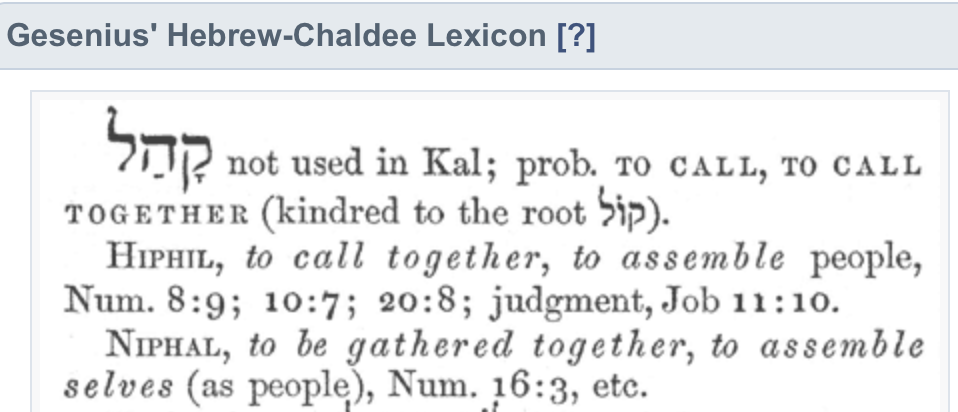
Here is another fascinating element: Gesenius tells us that the verbal root √קהל is "kindred to the root קול" - in other words, kahal is "kindred" to a noun that that has to do with the voice, with speech, with words (per Gesenius, the verbal root √קול is not used); the voice, speech, one of the most human of features and capacities:
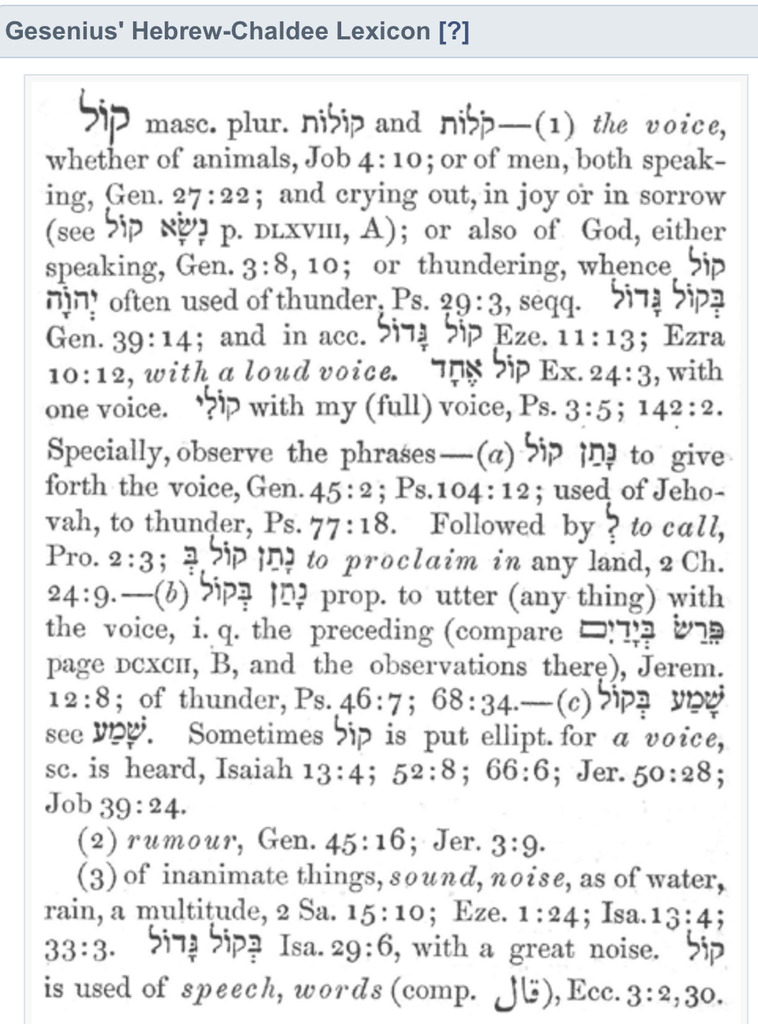
The word קול - voice - appears many times in Tanakh (506 times). It most often refers to God's voice, or to one person's voice; sometimes it is used metaphorically to refer to the sound of thunder.
Many Jews will be familiar with the word קוֹלֵֽנוּ - koleinu - our voice - from the prayer Shma Koleinu - hear our voice - both from the weekday Amidah (one of the 19 blessings in the Amiday) and also from the High Holiday liturgy.
Notable is that this this phrase says "Hear our [one] voice", not "hear our voices". An interesting contrast to this is the fact that most often, when the word קול appears in Tanakh and refers to a human voice, and not God's "voice", it is in the singular - one person's voice.
What does it mean for "us" to have "one voice"? And when we are praying together, and raise our voices to say "Shma koleinu" it is in a chorus of many voices, joined as one.
And what could it mean for us to be a "community of peoples"? Or perhaps I could put it another way: what could it mean for us to be part of a "community of peoples" (in other words, leaving exceptionalism behind).
Might this mean: that all of bnei Israel could / would / should be a community of numerous peoples / groups? Or might it mean: that bnei Israel could / would should be one people among a community of many peoples?
A question for this week, the week of Parashat Vayechi: are there ways that we can assemble ourselves into communities that encompass differences and even rivalries and hatred (as was the case among Jacob's sons)? As Jacob was preparing to bless his sons in his last hours, his father's blessing to him rose up in his mind: "[may] you become an assembly /a community of peoples."
At this critical moment in Jewish history, in world history, in the history of most if not all communities into which we gather ourselves, let us listen to God's voice within us, and let us raise our own voices together in a unity that allows for differences and diversity.
(ז) שְׁמַע־ה׳ קוֹלִ֥י אֶקְרָ֗א וְחׇנֵּ֥נִי וַֽעֲנֵֽנִי׃
(7) God, hear my voice when I cry out;
have mercy on me, answer me.
(ו) בָּר֥וּךְ ה׳ כִּי־שָׁ֝מַ֗ע ק֣וֹל תַּחֲנוּנָֽי׃
(6) Blessed is Hashem, who hears the voice of my supplications.
(23) when the peoples gather together, the kingdoms, to serve the Divine principle...(my translation)